Light through a Prairie window
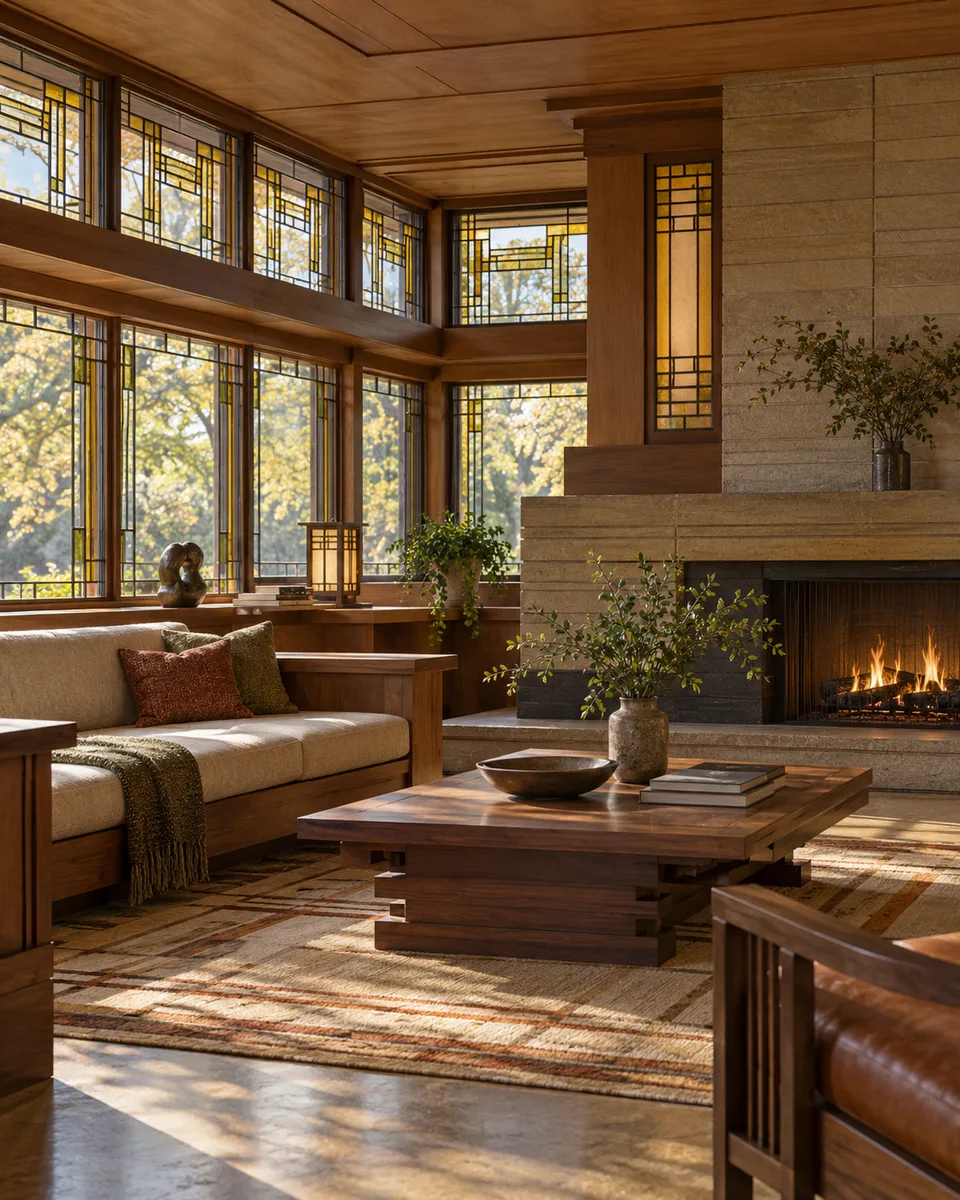
myAudience · AI-generated original illustration · Original AI-generated illustration; not documentary evidence; no third-party artwork reproduced.
Prairie architecture is often recognised by strong horizontal lines, but its organisation of space matters as much as its silhouette. Frank Lloyd Wright’s Robie House in Chicago is a documented example. Extended roofs, linked spaces and windows help establish relationships between enclosure and openness. A room can feel connected to another room or to the outside without every boundary being removed.
Look for how a line continues. A window band may draw the eye across a wall, a ceiling plane may tie several zones together, and a change in material can mark a transition without adding a door. These decisions guide movement and attention. Calling a plan open is therefore only a beginning: ask which activities remain distinct, how privacy works, and where someone naturally stops or turns.
You can test this idea in an ordinary room. Sketch its main edges, then trace one route from entrance to seating. Mark where daylight enters and where a person can see another space. Next, imagine moving one chair rather than demolishing a wall. Does the route become clearer, and does the seating gain a useful view? The exercise studies relationships and circulation, not a requirement to imitate a historic style.
Our warm interior is invented, not an exact Robie House room or a record of its furniture. Consult the Wright Trust’s documentation for the building’s actual fabric and conservation history. A historic interior is also the result of use, repair and interpretation, not only an architect’s first drawing. Distinguishing the documented house from an illustrative scene leaves room to appreciate both architecture and the care needed to understand it.
Image: illustration, not a documentary photograph.