Bread at the table
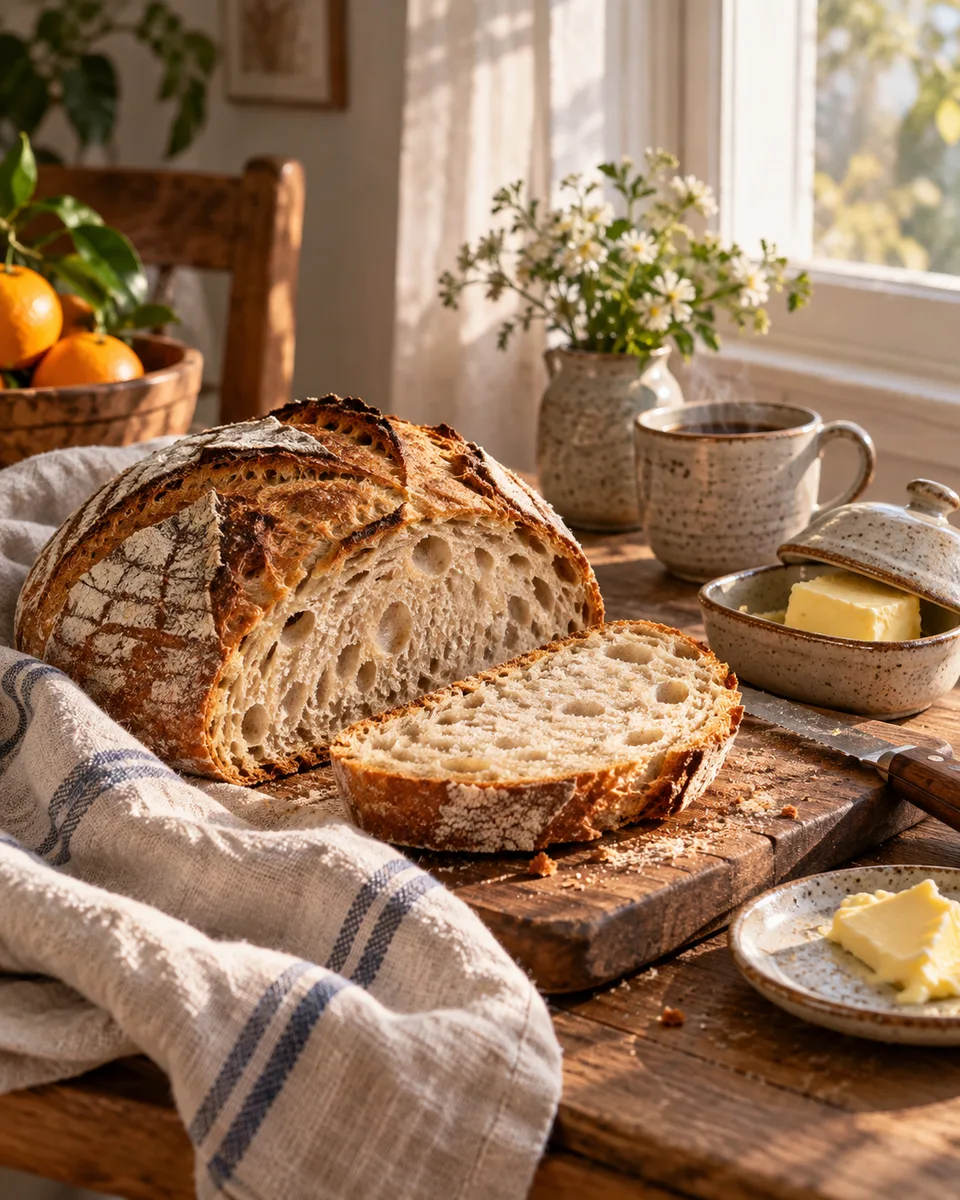
myAudience · AI-generated original illustration · Original AI-generated illustration; not documentary evidence; no third-party artwork reproduced.
Bread combines a structure with a history. Flour choice, hydration, fermentation and baking can produce very different crumbs and crusts, so a loaf is more informative when its name and method are known. A simple table gives room to notice those differences. This serving idea begins with a bread you can identify and a spread you enjoy; it does not claim to represent every household or a whole regional tradition.
Texture changes the experience as much as flavour. A crisp crust and a soft crumb respond differently to a spread, and slicing alters the balance between them. Warming or toasting can change aroma and moisture, but should follow the product’s appropriate instructions. Rather than call one texture universally better, compare how it suits the intended use: a sandwich, a soup accompaniment or a small piece served on its own.
Try a small tasting comparison using two labelled breads under similar conditions. Look at the crumb before tasting and describe what you can actually observe: hole size, firmness, crust thickness and how a spread sits on the surface. Keep the comparison modest and avoid claiming a particular processing history from appearance alone. A label or baker’s description can confirm details that a photograph cannot establish.
When sharing, check wheat, milk and other relevant allergen information for both bread and spread, including cross-contact considerations. Store products according to their instructions and keep foods requiring refrigeration appropriately chilled. The pictured loaf is an illustration rather than a tested recipe or a restaurant recommendation. A thoughtful table can be simple, while still making ingredients, preferences and other people’s requirements clear.
Image: illustration, not a documentary photograph.