A surface changed by oxygen
By Chemistry in small pieces · myAudience
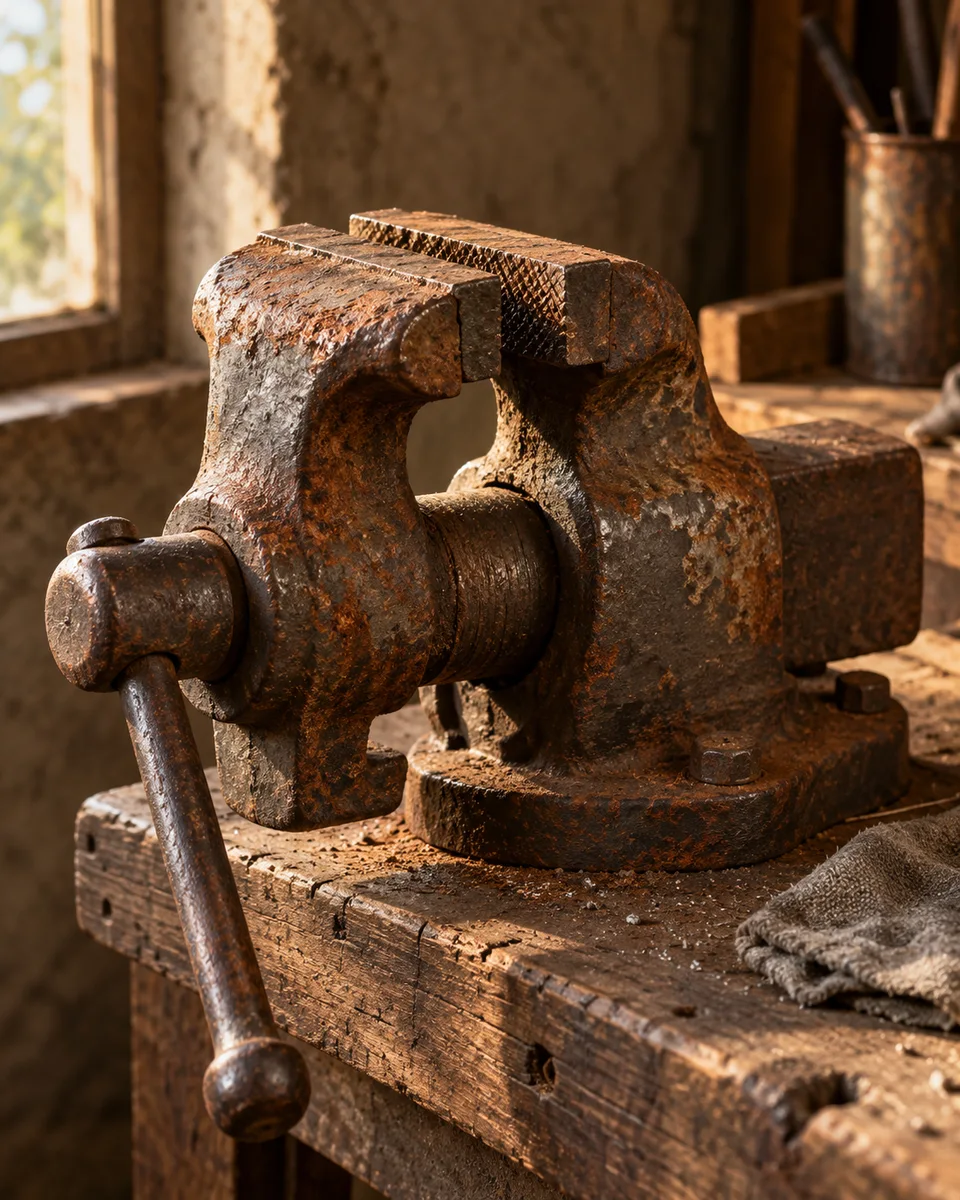
myAudience · AI-generated original illustration · Original AI-generated illustration; not documentary evidence; no third-party artwork reproduced.
Rusting is a chemical change involving iron, oxygen and water. Iron is oxidized, meaning that it loses electrons in the reactions involved. The rusted products contain iron combined with oxygen and often water; they are not simply iron painted a different color.
Rust can be porous and flaky, so it does not usually form a reliable protective barrier over the metal beneath. Fresh metal may remain exposed as corrosion progresses. This helps explain why a damaged iron object can continue deteriorating rather than becoming permanently sealed by its first reddish layer.
Painting or oiling can reduce contact with oxygen and water while the covering remains intact. Galvanizing adds zinc, which can protect iron through both a barrier and sacrificial action: zinc can oxidize preferentially. These approaches depend on material condition and exposure, so protection must not be inferred from appearance alone.
Worked comparison: three matched iron samples are exposed to air and water, dry air, and water from which dissolved oxygen has been removed under a controlled approved protocol. Their different conditions test the role of oxygen and water. Check: why is using different kinds of metal in the three samples a poor comparison? It changes material as well as the environmental factor.
The image is generated art, not a corrosion trial or a tool-safety assessment. A fair investigation needs comparable samples, time, temperature and a clear corrosion measure. Salt-containing water can change the rate, but an image alone cannot establish the composition of the liquid or the remaining strength of the object.
Image: illustration, not a documentary photograph.