An idea on the workbench
By How things are built · myAudience
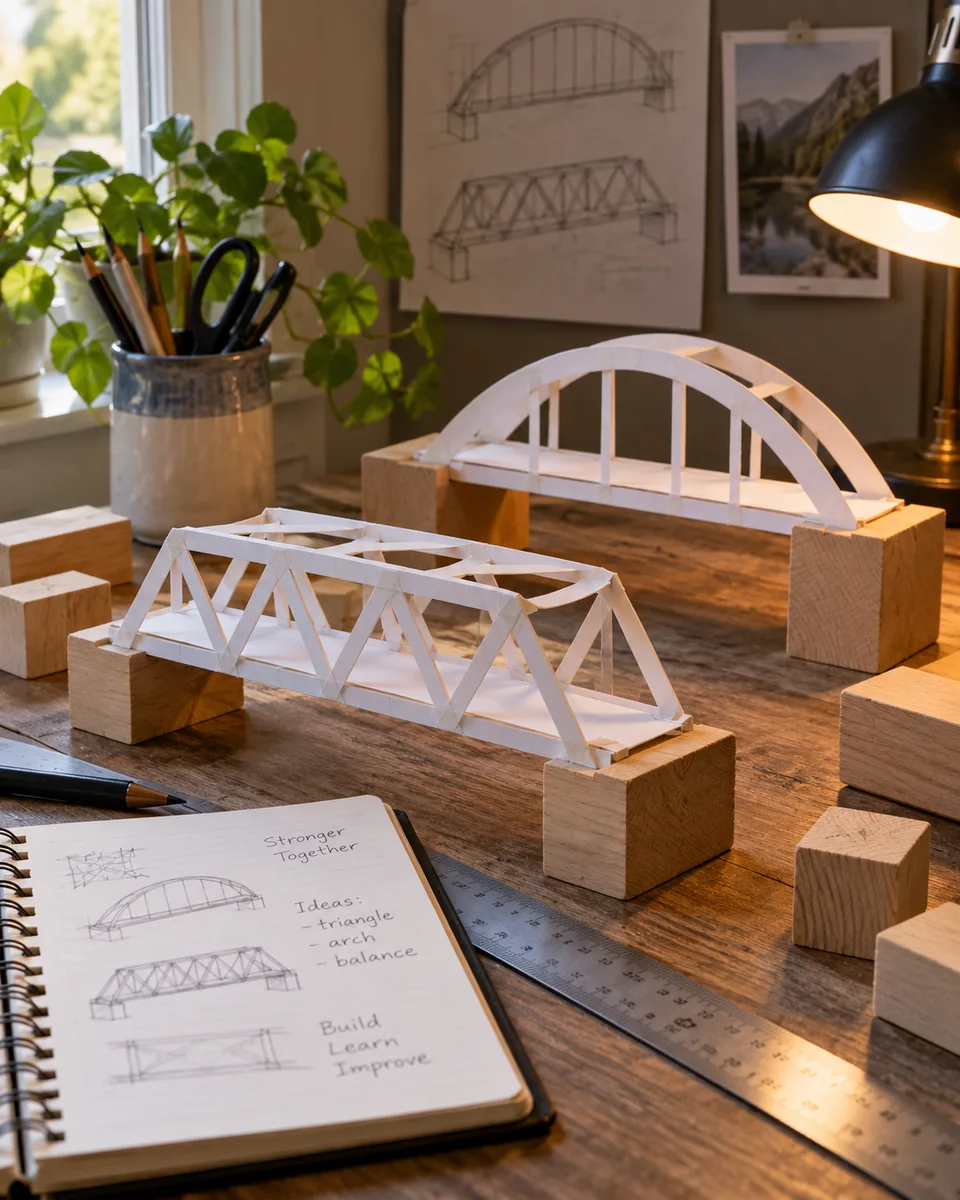
myAudience · AI-generated original illustration · Original AI-generated illustration; not documentary evidence; no third-party artwork reproduced.
A prototype is built to test a question about a proposed solution. The question might concern fit, strength, interaction or manufacturability. A model that tests the shape of an enclosure does not automatically demonstrate that its electronics, software or structural performance work.
Start with a requirement and a measurable test. Record what will count as success before looking at the result, then keep the relevant conditions comparable. Changing material, shape and load together makes it difficult to know which change caused a difference. Controlled comparisons turn a collection of attempts into useful design evidence.
Iteration means using a result to select the next change, not merely repeating construction. A failed test can reveal an unsuitable assumption or a weak connection. A successful test establishes performance under the tested conditions; it does not prove the solution works at every scale, temperature or load.
Worked example: a paper support must hold a fixed approved classroom load for 30 seconds. Design A lasts 18 seconds; after one change to its fold pattern, B lasts 35 seconds in the same setup. B meets that timed requirement in this trial, but repeat tests are needed to assess consistency. Check: could changing the load between trials support the same comparison? No; it introduces another explanation for the difference.
The workbench is generated art, not a certified invention or safety-approved apparatus. Small supervised models can investigate principles, while hazardous or load-bearing applications need expert procedures. Record the design version, test conditions and result so another person can understand why the next revision was made.
Image: illustration, not a documentary photograph.