The steps at Saqqara
By Egypt along the Nile · myAudience
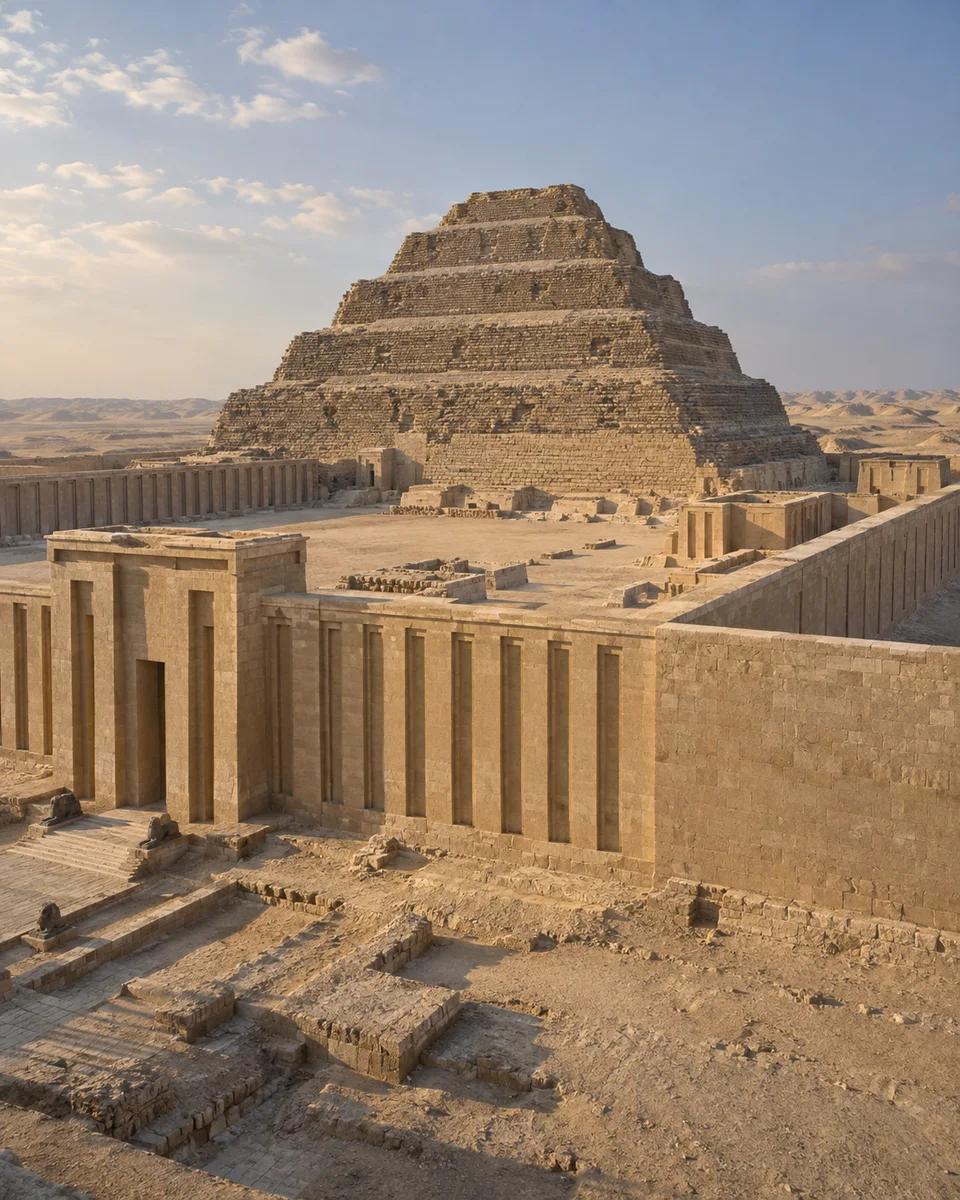
myAudience · AI-generated original illustration · Original AI-generated illustration; not documentary evidence; no third-party artwork reproduced.
Djoser’s Step Pyramid at Saqqara belongs to Egypt’s Third Dynasty, earlier than the great smooth-sided pyramids at Giza. Its rising stages developed through successive building changes rather than a single timeless pyramid formula. The monument stands within a larger royal funerary complex. Its setting is essential to understanding why such extensive architecture accompanied a burial.
The complex used stone in ways that could recall familiar architectural forms made from more perishable materials. Builders were not only stacking blocks; they were translating a ceremonial and architectural vocabulary into a lasting material. Columns, enclosure walls and courts organized an environment with controlled approaches and distinct spaces. Stone allowed those forms to survive, though not every original surface or function is recoverable.
Imhotep is traditionally associated with the project, but a named designer does not account for all the people who made it possible. Quarrying, dressing and moving stone, preparing foundations and maintaining a royal institution required many kinds of work. The project connects royal commemoration to experimentation in large-scale construction.
Our reconstructed surroundings are illustrative; compare them with excavated plans and surviving masonry. Start by noticing the stepped profile, then look beyond it to the courts and enclosure. What changes when a royal tomb becomes an extensive architectural landscape? Keep Saqqara distinct from later Giza monuments: their shared purpose does not make their shapes, building sequences or available evidence identical.
Image: speculative AI reconstruction; uncertain details.