Clay, paint and a firing
By Greece in the making · myAudience
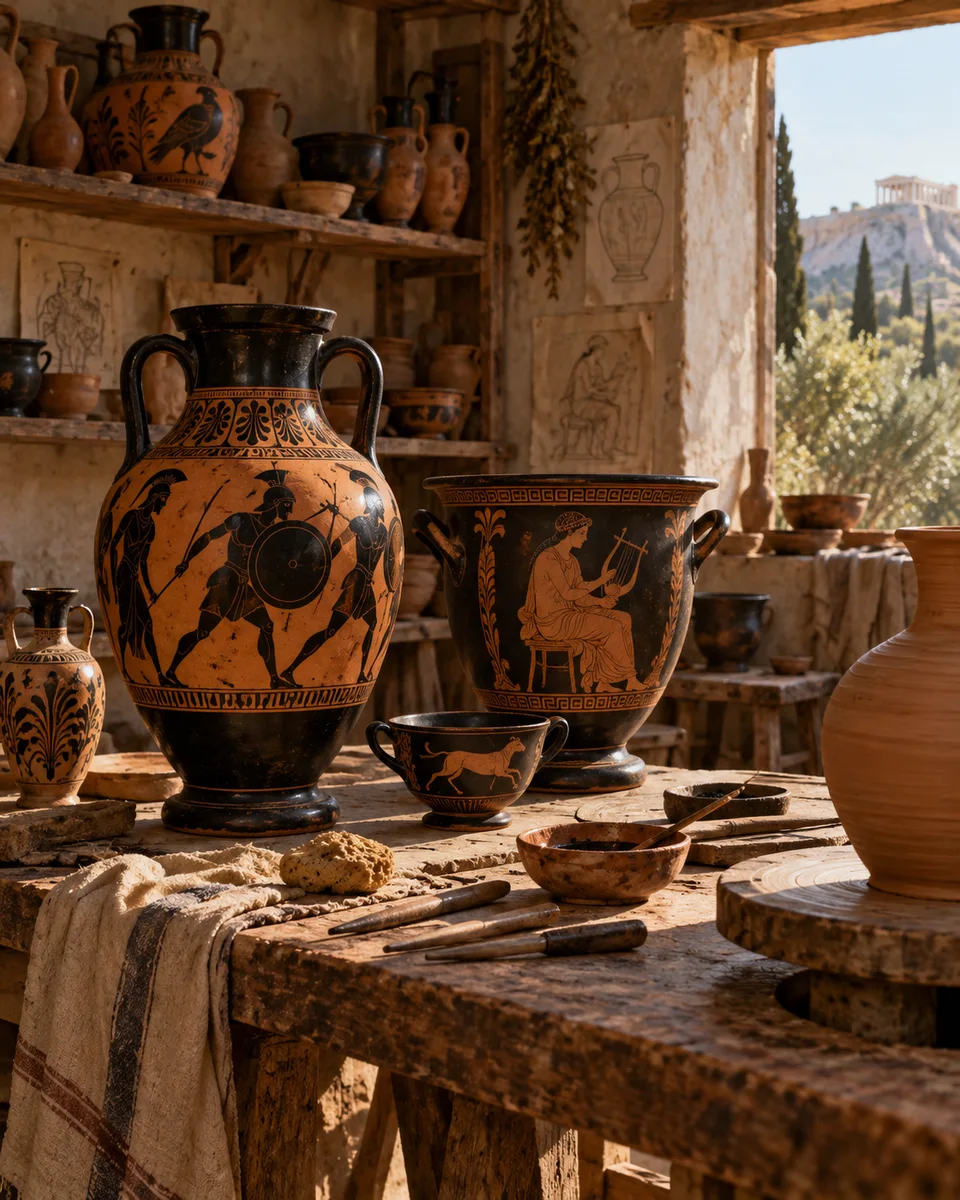
myAudience · AI-generated original illustration · Original AI-generated illustration; not documentary evidence; no third-party artwork reproduced.
A painted Greek vessel combines a three-dimensional container with a surface organized for looking. Handles, rim and base affect how it can be carried, filled and placed. Decoration follows those forms rather than floating independently over them. A large mixing vessel, a drinking cup and an oil container could ask the painter to solve different problems of scale and viewing.
In black-figure and red-figure traditions, the contrast between dark areas and clay-colored areas depended on carefully managed ceramic production. Potters prepared and shaped clay, let the vessel dry and controlled firing conditions; painters used slips and details suited to the chosen technique. The dark surface is not best imagined as ordinary black paint brushed onto a finished modern pot.
Vessels circulated, broke and were deposited in different settings. Their images can show myth, ritual and activity, but they are designed representations rather than automatic photographs of everyday life. A scene on a cup and a scene on a funerary vessel may address different viewers. Shape, image and archaeological context should be considered together.
Our vessel is original illustration, with no authoritative ancient inscription. Look first at the profile: could its handle carry its weight, and where would a liquid pour? Next follow the decoration around the body. Does the curve reveal the image all at once or in stages? Those questions let craft and composition explain one another without inventing a workshop, painter or proven use for the generated object.
Image: speculative AI reconstruction; uncertain details.