A figure emerging from stone
By Greece in the making · myAudience
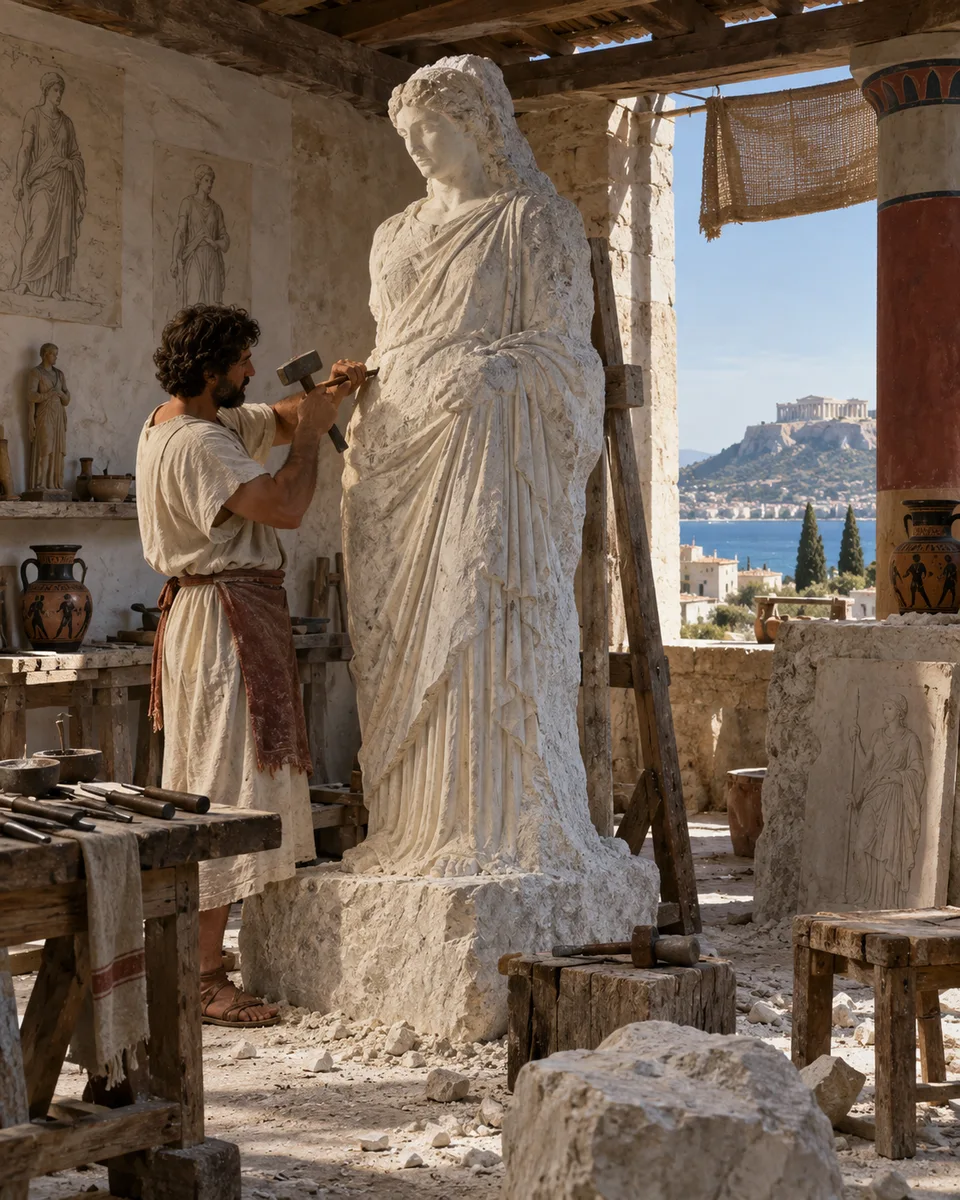
myAudience · AI-generated original illustration · Original AI-generated illustration; not documentary evidence; no third-party artwork reproduced.
Greek sculpture worked in stone, bronze and other materials; white marble is only part of the history. Stone carving is subtractive: the maker removes material while preserving what is needed for the final form. That places limits on projecting limbs and delicate connections. A bronze figure can solve some structural problems differently because it is produced by another process.
A block had to be selected, its broad form established and details refined. Tool marks and unfinished works can help explain stages that a polished statue conceals. It is useful to distinguish the process of roughing out a shape from finishing a surface. Neither a smooth face nor a convincing gesture shows how many adjustments or supporting choices were required along the way.
Ancient sculptures were not necessarily the unpainted white objects familiar from many modern displays. Surviving traces and scientific study provide evidence for color, though its reconstruction varies in certainty. A statue’s setting and purpose also matter: sanctuary offering, funerary monument and public commemoration are not interchangeable categories.
Our workshop does not identify a sculptor or restore a lost masterpiece. The body, tools and unfinished shape are artistic choices. Look for places where stone would be mechanically vulnerable, then ask what a real unfinished sculpture or surviving pigment trace could establish. Material, making and display offer a fuller account than a story in which an inspired individual simply reveals a perfect figure hidden inside a block.
Image: speculative AI reconstruction; uncertain details.