Color on a Babylonian gateway
By Between two rivers · myAudience
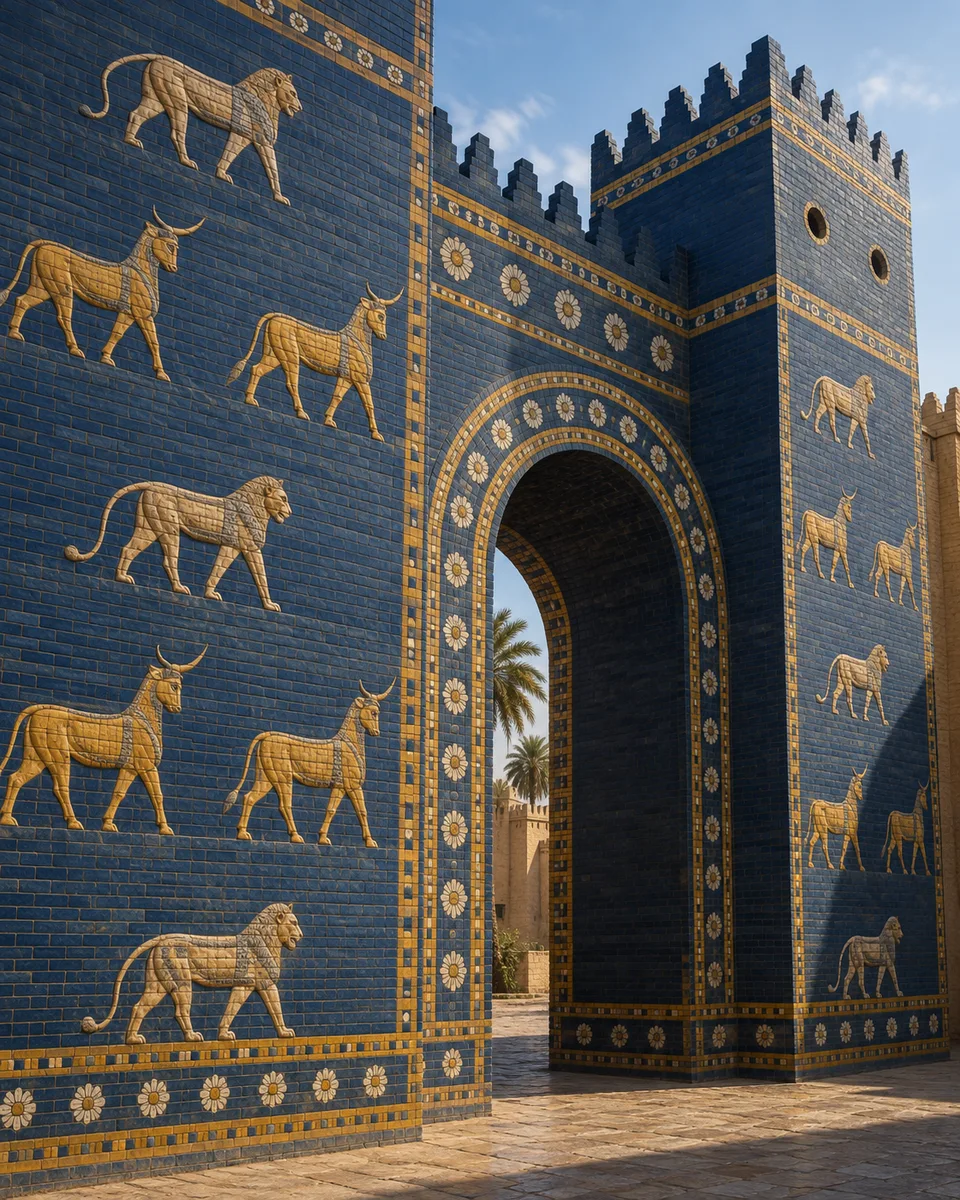
myAudience · AI-generated original illustration · Original AI-generated illustration; not documentary evidence; no third-party artwork reproduced.
The Ishtar Gate belonged to monumental Babylon during the reign of Nebuchadnezzar II. It formed part of a ceremonial and defensive urban setting linked with the Processional Way. Repeated animal figures and colored surfaces helped turn a route into a statement of royal and religious authority, rather than merely making an entrance decorative.
The famous blue appearance came from glazed brick. Individual shaped bricks could form portions of a relief, so the finished animal depended on arranging many components correctly. Firing and glazing, transport and setting-out connected workshop skill with large-scale building. The wall’s visual unity can hide how many separate pieces and stages were needed to produce it.
The reconstructed display in Berlin includes ancient material within a modern reconstruction. The archaeological site in Iraq has its own surviving remains and conservation history. Neither setting should be casually described as the untouched complete ancient gate. UNESCO specifically distinguishes archaeological fabric from problematic later rebuilding at Babylon.
Our image suggests the gateway tradition without copying a museum installation or supplying an exact missing pattern. Follow a repeated animal from brick to brick: where would a join interrupt the figure, and how would a builder keep the sequence aligned? Then compare documented remains. A convincing surface is not enough to establish dimensions or every lost feature; the evidence must support those claims separately.
Image: speculative AI reconstruction; uncertain details.