The Great Bath and its brickwork
By Ancient South Asian cities · myAudience
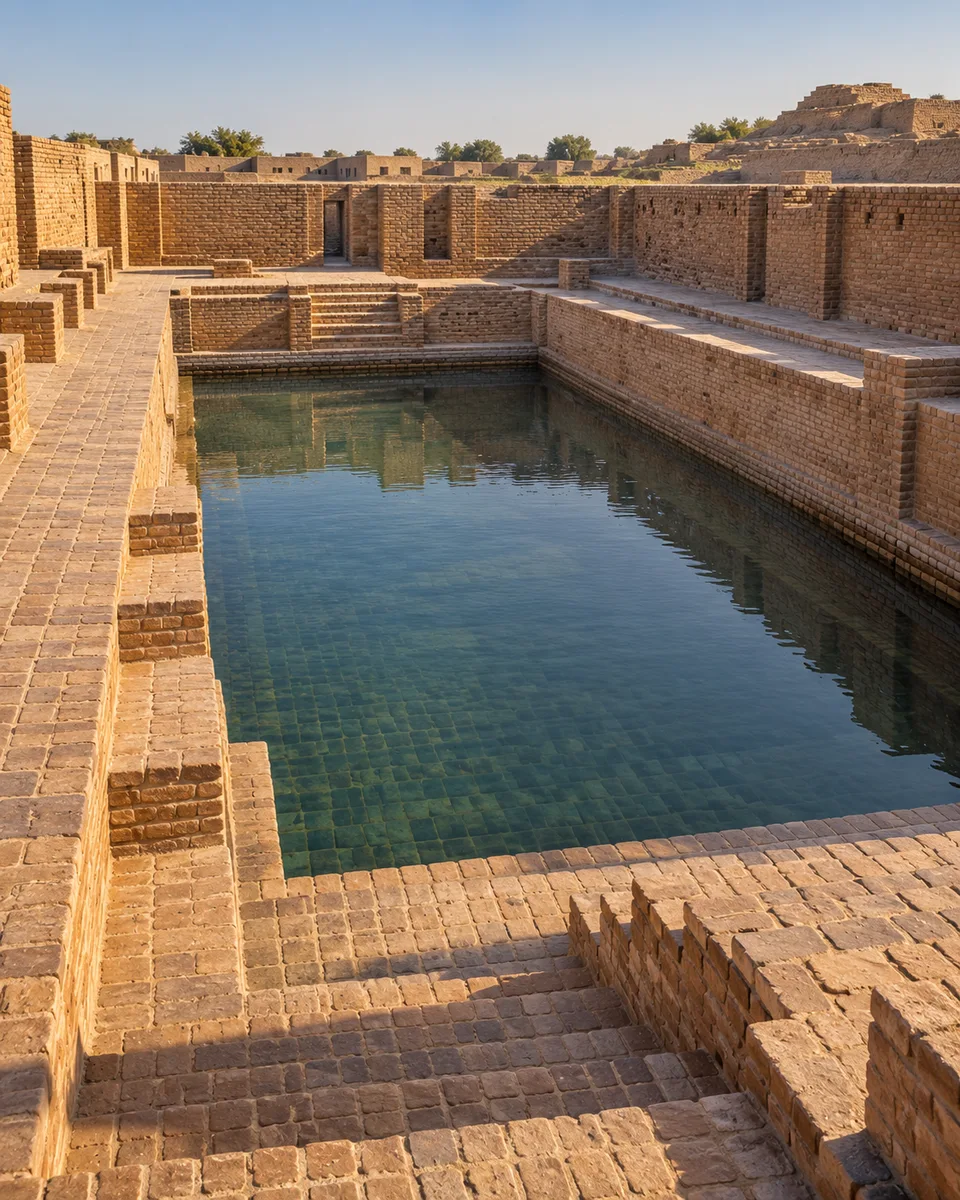
myAudience · AI-generated original illustration · Original AI-generated illustration; not documentary evidence; no third-party artwork reproduced.
The Great Bath at Mohenjo-daro makes a technical problem visible: keeping water inside a built tank while providing ways to enter and empty it. The surviving brick structure has steps and enclosing spaces. Its careful construction is evidence of a significant installation, but architecture alone does not give a complete account of who used it or what each ceremony meant.
Closely fitted bricks, plaster and a bituminous sealing layer helped resist leakage. The floor and outlet also mattered: a tank that could be filled needed a way to manage used water. These are separate tasks, so describing the building as merely a large pool misses the coordination between structure, surface treatment and drainage.
A ritual or communal purpose is often proposed, but the exact use should remain an interpretation rather than a proven historical scene. The wider settlement has evidence of water-related architecture; that context is useful without allowing every tank, bath and well to be assigned the same function. A plausible religious explanation and a demonstrated construction feature have different evidential status.
Our image supplies imagined surroundings and a moment of water-filled use. It does not recreate a witnessed event. Follow the tank’s edge and the route down the steps, then compare a documented plan. Where could water escape, and what must the builder do at a joint or corner? Those practical questions explain the achievement while keeping the unresolved questions about use honestly visible.
Image: speculative AI reconstruction; uncertain details.