Small things made carefully
By Ancient South Asian cities · myAudience
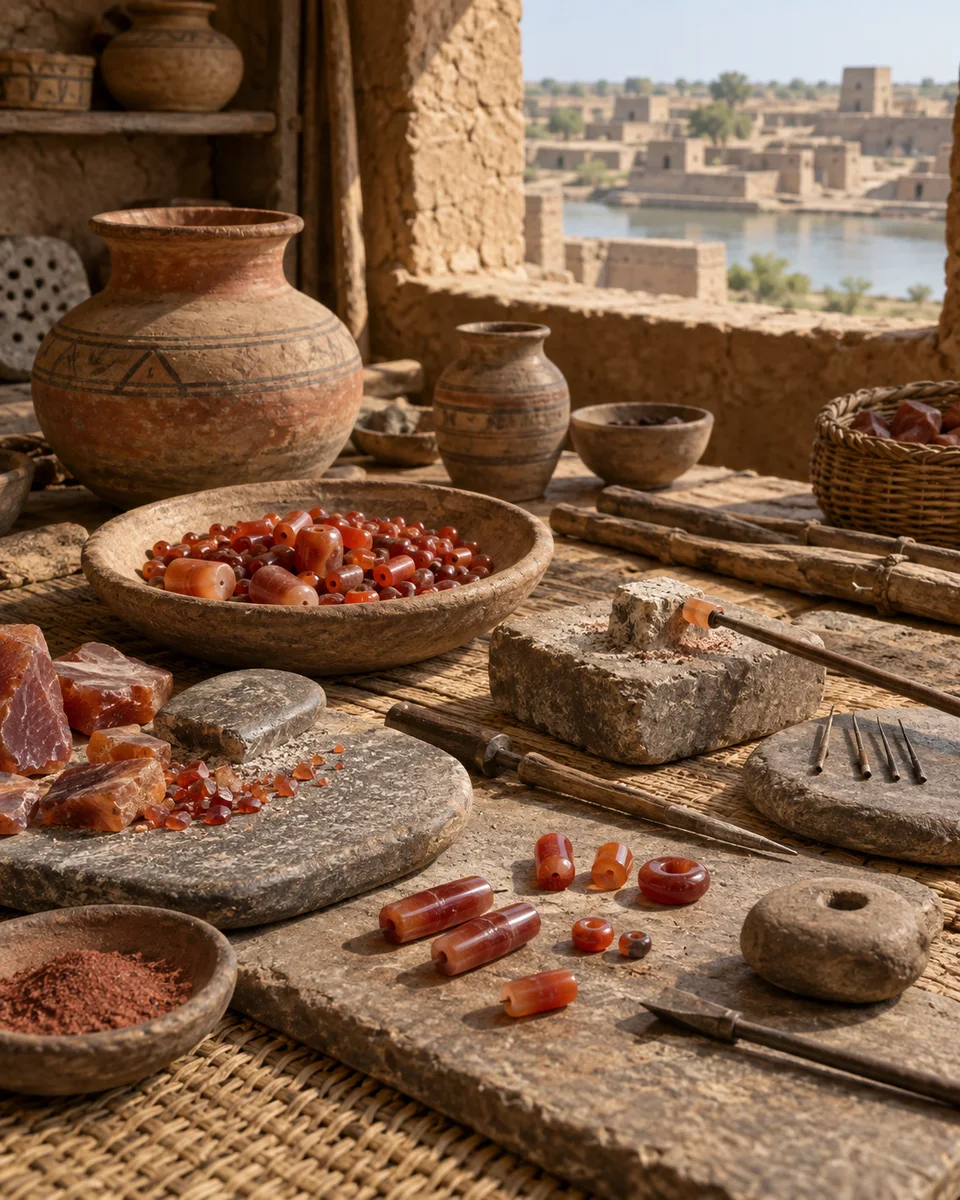
myAudience · AI-generated original illustration · Original AI-generated illustration; not documentary evidence; no third-party artwork reproduced.
Indus craft included work in stone, shell, metal and clay. Small finished objects can preserve remarkable precision, while unfinished pieces and manufacturing waste help reveal how they were produced. A workshop is therefore not identified only by finding attractive goods; the combination of tools, materials, debris and context matters.
A bead required more than selecting a colorful pebble. Shaping, drilling and finishing placed different demands on the material and tool. Repeated sizes or forms can suggest practiced methods, but they do not by themselves prove one centralized factory serving every settlement. Specialized skill could operate within several kinds of social and economic arrangement.
Indus communities participated in networks of exchange, including connections with Mesopotamia. Materials and objects can help researchers investigate those links, while the undeciphered script limits some kinds of direct explanation. A find far from its likely source is a clue to movement; it is not automatically the full biography of a trader or proof of a particular transaction.
The people, tools and exact working sequence in our image are illustrative. Compare a documented object and its find context before treating the workshop as an instruction sheet. Ask which marks a drill or abrasive process might leave, and what manufacturing waste would help test your idea. Bringing small things into view can make craft and exchange tangible without turning incomplete evidence into a fictional conversation between named ancient makers.
Image: speculative AI reconstruction; uncertain details.