The details below street level
By Ancient South Asian cities · myAudience
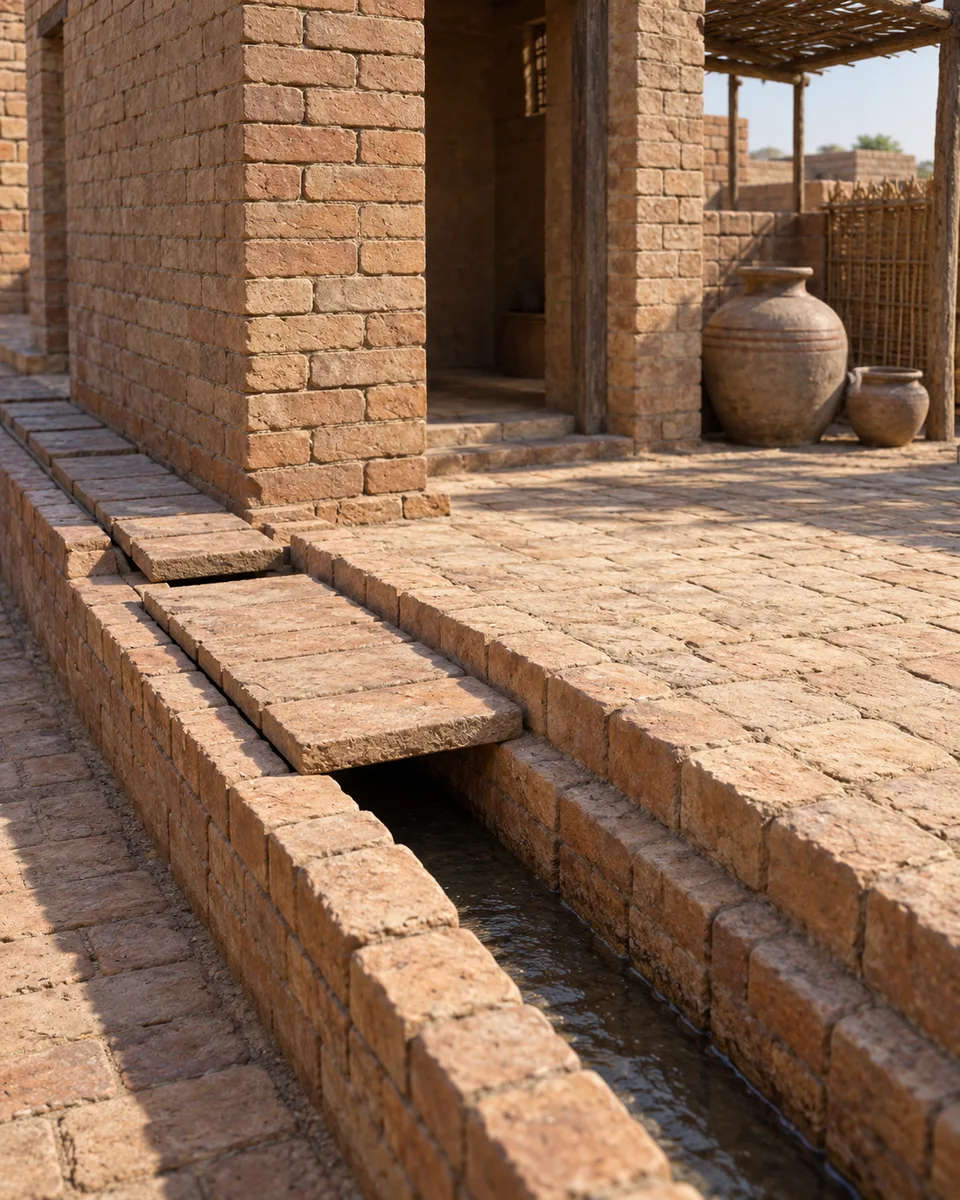
myAudience · AI-generated original illustration · Original AI-generated illustration; not documentary evidence; no third-party artwork reproduced.
Water systems at Indus settlements draw attention to the city below its skyline. Excavated bathing areas, wells and drains show that household routines could be connected with street infrastructure. Not every settlement had an identical system, and a feature found in one neighborhood should not automatically be extended across an entire civilization.
A drain needed a path, a suitable fall and a way to keep that path usable. Brick-lined channels could connect smaller household outlets with larger routes along streets. Covered sections and access for inspection made different demands from an exposed ditch. The important achievement was the relationship between parts, not simply the existence of a hole that carried water away.
Construction did not end the task. Material could collect in channels, surfaces could break, and users had to manage wastewater without obstructing access. The arrangement raises questions about maintenance and shared responsibility, but the surviving fabric does not identify every worker or rule. We should avoid both a romantic picture of perfect cleanliness and a claim that the precise social organization is known.
This courtyard and the depicted channel are invented. They are not a surveyed drainage route or a demonstration that a specific building operated exactly this way. Trace water from a washing area toward the street, then ask where it might pool or need clearing. Compare those practical demands with archaeological plans. Ordinary infrastructure can reveal careful urban work even when the institutions behind it remain uncertain.
Image: speculative AI reconstruction; uncertain details.