A courtyard in the Han era
By China through objects · myAudience
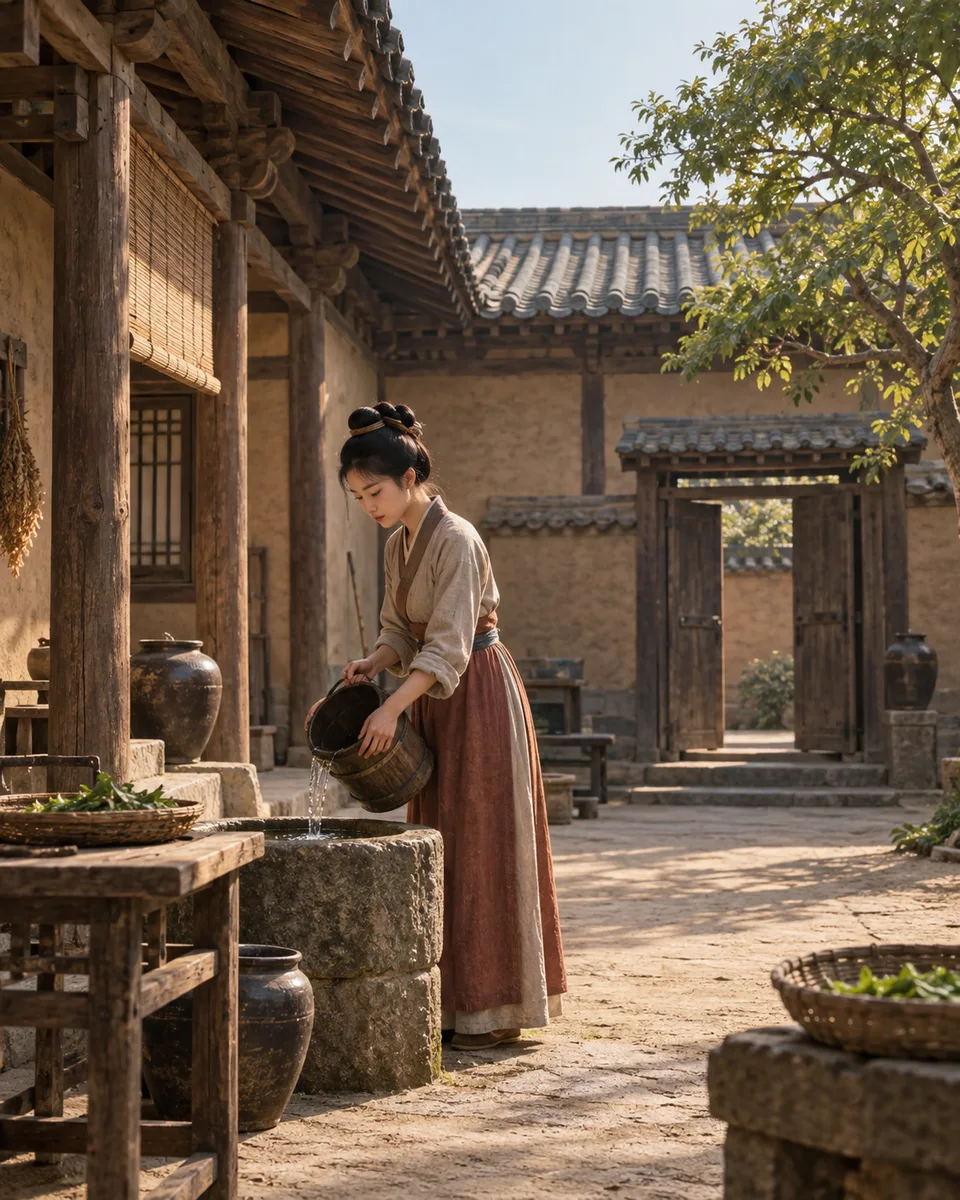
myAudience · AI-generated original illustration · Original AI-generated illustration; not documentary evidence; no third-party artwork reproduced.
The Han dynasty lasted across the final centuries BCE and the early centuries CE, with a major interruption dividing its Western and Eastern periods. Its society included cities, rural communities and powerful institutions. A courtyard is one useful lens on buildings and daily movement, but a single elegant household cannot represent the living conditions of everyone in that large and changing world.
A courtyard arrangement links rooms around an internal open space. It can organize light, access and the relationship between sheltered rooms and outdoor activity. Foundations, timber members and roofs have to work together; a convincing roof outline is not a full structural explanation. The depicted plan invites questions about circulation rather than proving the layout of a particular excavated house.
Han-period tomb objects include architectural models and representations of people and animals. They can preserve information about how settings were imagined, but funerary representation had its own purpose. A model may emphasize selected features or adjust proportions to fit its role. It should not be read as a scale survey of an ordinary household without further evidence.
Our courtyard supplies uncertain colors, people and arrangements. Compare a documented model or excavated plan, noticing what the object actually shows and what the illustration completes. Which rooms could share the court, and where would access become restricted? That comparison keeps architecture interesting as lived and represented space while avoiding the assumption that an attractive reconstruction is a photograph of Han daily life.
Image: speculative AI reconstruction; uncertain details.