A lacquered object catches light
By China through objects · myAudience
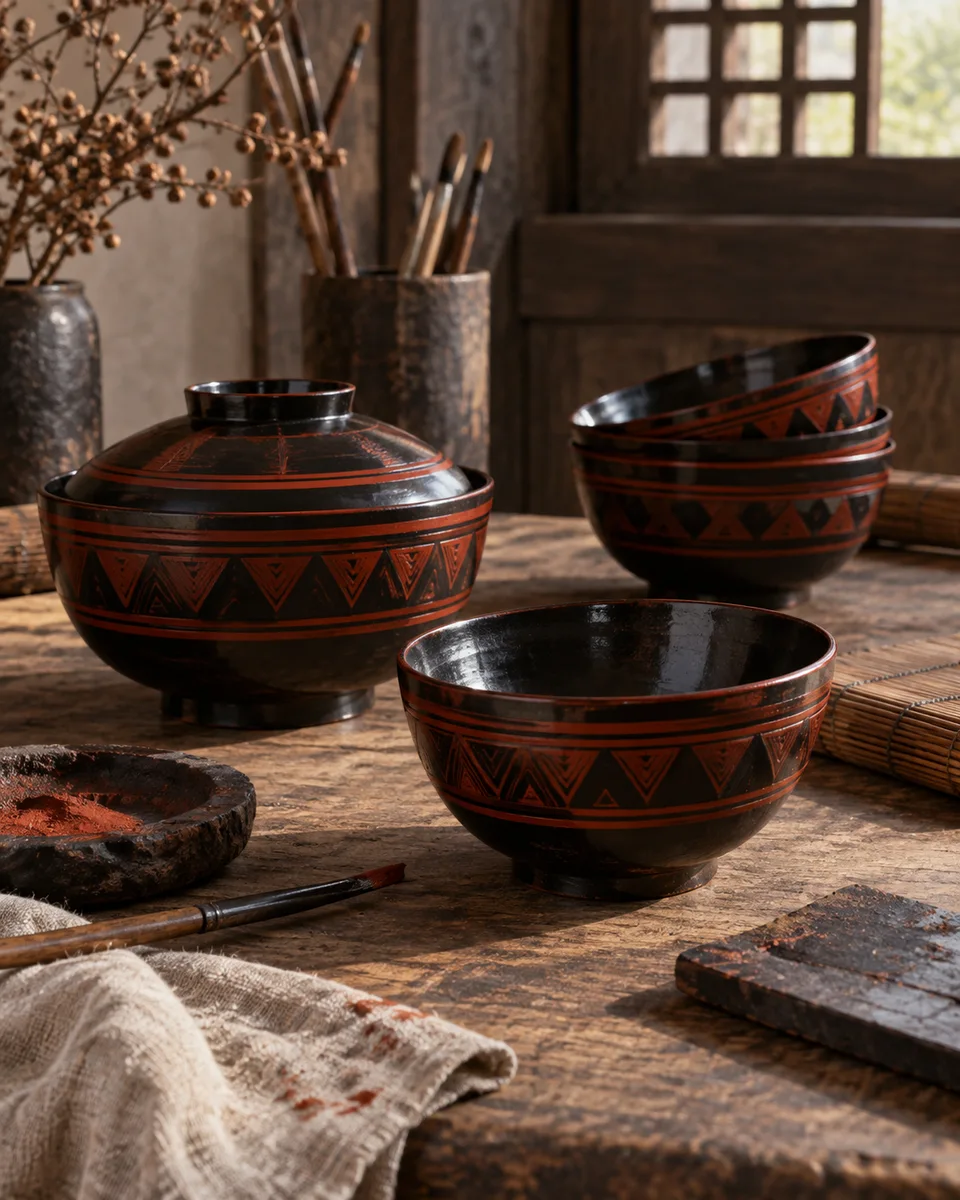
myAudience · AI-generated original illustration · Original AI-generated illustration; not documentary evidence; no third-party artwork reproduced.
Lacquerware combines a shaped object with a carefully built layered surface. In East Asian traditions, lacquer is a material derived from tree sap, not simply a modern glossy paint. Han-period examples include vessels and containers recovered from tombs. Their surviving finishes let craft be studied at a scale smaller than an imperial monument.
A core and its coating solve different problems. Wood or another support gives the object its form; prepared lacquer layers protect and decorate it. The process involves repeated application and curing, with surface preparation between stages. A deep shine can therefore conceal considerable labor rather than indicate one quick finishing operation.
Color, line and the relationship between interior and exterior invite close looking. Decoration can help communicate status or taste, but an invented pattern cannot be assigned a specific ancient meaning simply because it looks plausible. A documented find, inscription or comparison provides stronger evidence than a confident interpretation of a generated motif.
The illustrated vessel is an original design, not an excavated Han artifact or a copy of a museum object. Look at its rim and handle before admiring the reflection: how would the support and coating behave at an edge or joint? Then compare a documented lacquer object’s material, date and provenance. Distinguishing shape, surface and archaeological context turns a glossy image into a starting point for learning about skilled manufacture.
Image: speculative AI reconstruction; uncertain details.