Artemis beneath a marble colonnade
By Wonders, built by people · myAudience
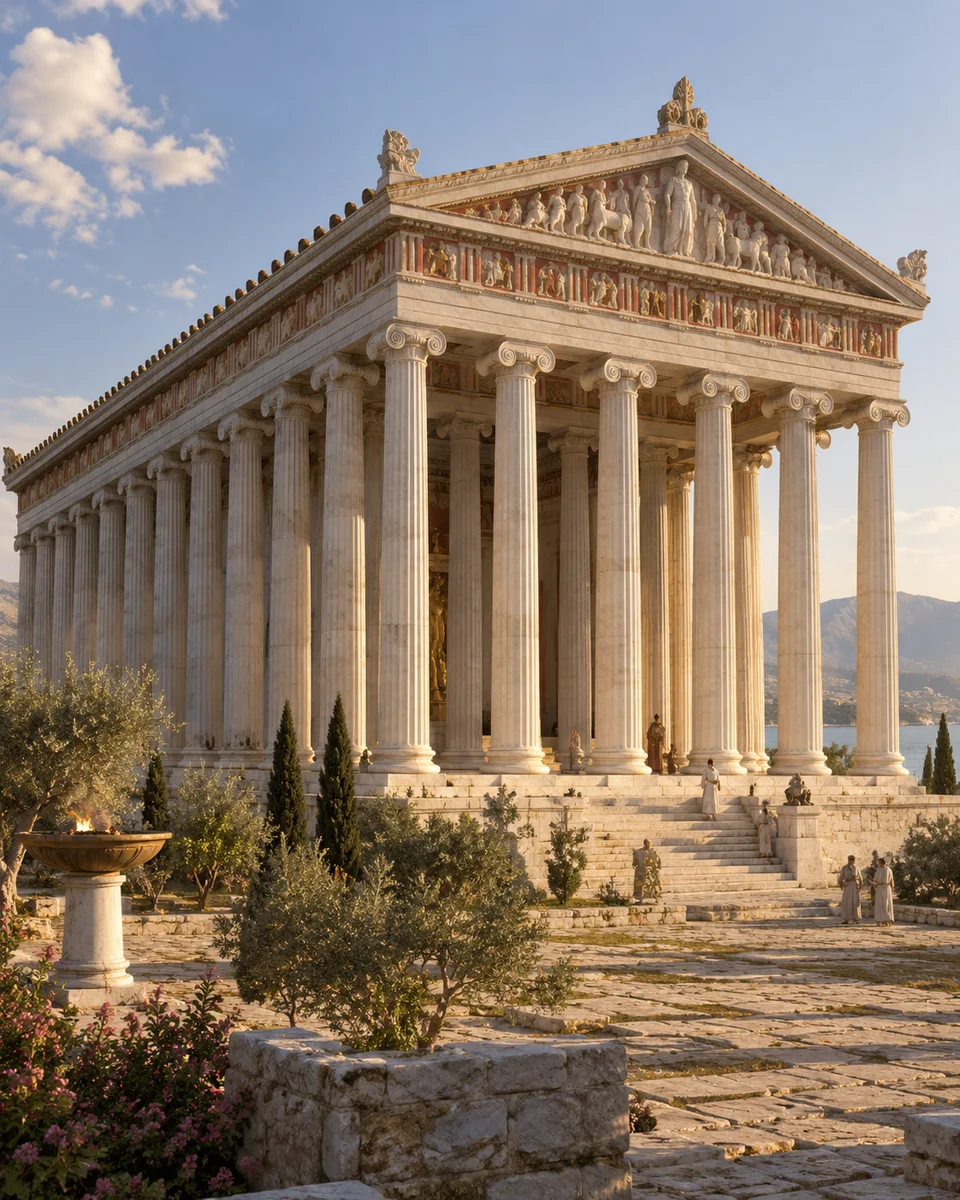
myAudience · AI-generated original illustration · Original AI-generated illustration; not documentary evidence; no third-party artwork reproduced.
The sanctuary of Artemis at Ephesus was one of antiquity’s most celebrated religious sites. Its monumental temple is associated with the traditional Seven Wonders, but the sanctuary had a longer history of rebuilding. A single polished image should not combine every phase into one supposedly definitive building.
The British Museum’s marble Ionic capital combines surviving fragments with restoration. It belongs to an archaic temple phase, earlier than the later rebuilding commonly associated with the wonder, so it should not be treated as a complete sample of every phase. A capital forms the upper part of a column, helping connect the vertical support with the structure above. The fragment can support claims about carving and form more securely than it can establish the complete arrangement of every missing column and roof member.
A monumental colonnade required quarrying and preparing stone, moving large pieces and placing them in an ordered structure. Its construction was tied to resources and the sanctuary’s religious importance. The scale was not simply an aesthetic choice: it organized approaches and made the institution visible. Exact missing details, including surface colors and arrangements in a particular phase, require evidence of their own.
Our image is an imaginative reconstruction, not a measured restoration of the temple. Compare a documented fragment with a proposed whole: which features follow directly from surviving material and which fill a gap? The distinction does not diminish the achievement. It lets us admire the makers’ skill while acknowledging that one beautiful capital cannot supply every answer about an enormous lost building.
Image: speculative AI reconstruction; uncertain details.