A tomb that became a name
By Wonders, built by people · myAudience
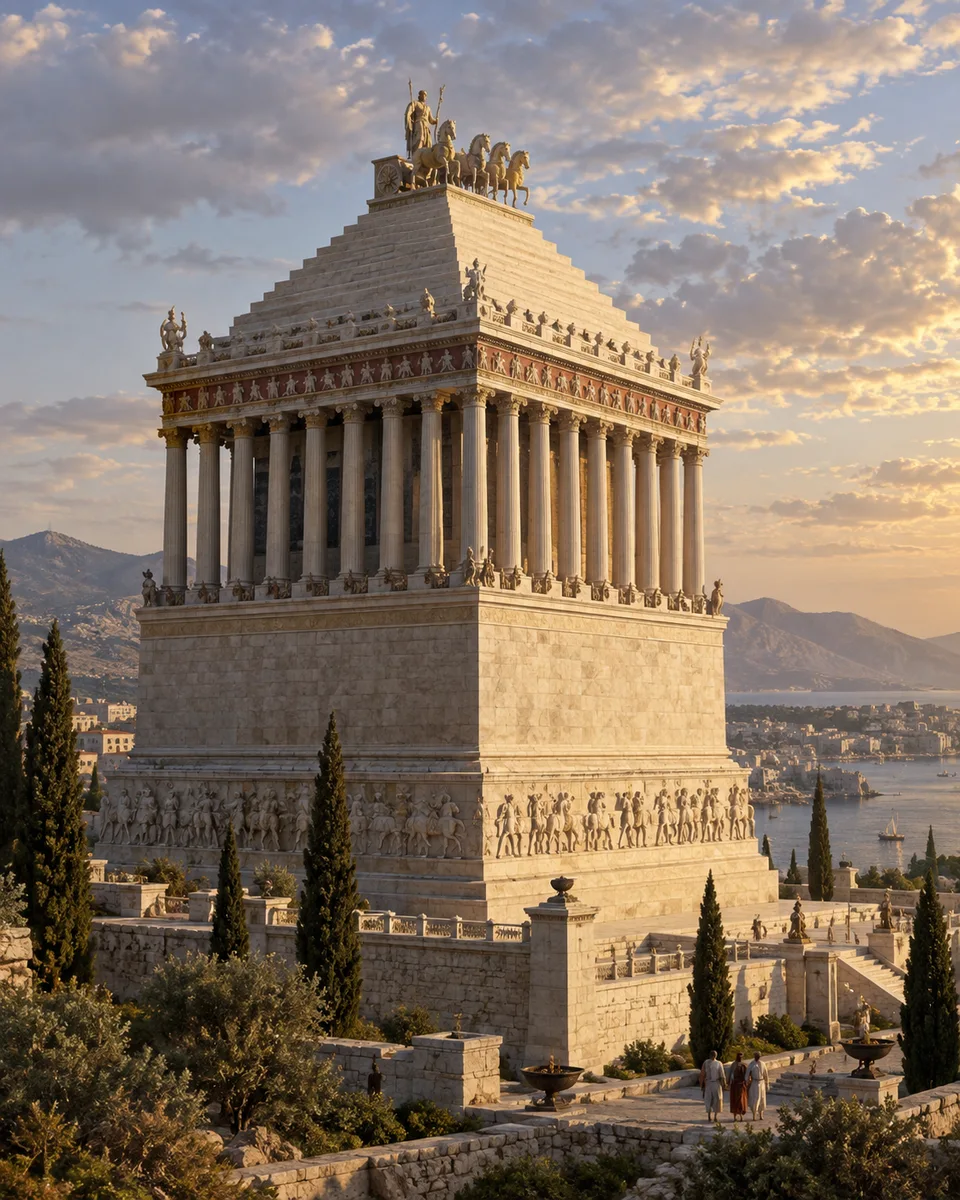
myAudience · AI-generated original illustration · Original AI-generated illustration; not documentary evidence; no third-party artwork reproduced.
The Mausoleum at Halikarnassos was a monumental tomb associated with Mausolos, a fourth-century BCE ruler in Caria, in present-day Türkiye. Its reputation made it one of the traditional Seven Wonders and gave later languages a name for grand tombs. The familiar word can obscure that it began with a particular person, political setting and building.
The structure combined architecture with extensive sculptural decoration. Surviving fragments in the British Museum include material that helps researchers investigate the building and its images. They do not amount to an intact upper structure. Reconstructing the whole involves combining excavated remains, fragments and ancient descriptions, whose information and reliability are not identical.
Making such a monument meant coordinating stone construction and sculptural work. A tomb could also present a ruler’s status and relationships to viewers long after death. Its achievement should therefore be read through craft and commemoration together, rather than as an abstract competition for the biggest building. The surviving sculpture is evidence of skilled making as well as an expression of power.
Our terraces and statue positions are illustrative, not a settled measured plan. Compare a documented fragment with the full silhouette: which dimension or decorative feature can it constrain, and what remains a proposal? Keep the tomb’s original setting distinct from later museum display and rebuilding. Acknowledging those gaps allows the lost monument to be studied in detail without pretending that every stone’s position is known.
Image: speculative AI reconstruction; uncertain details.