A Moon above the rooftops
By A sky worth slowing for · myAudience
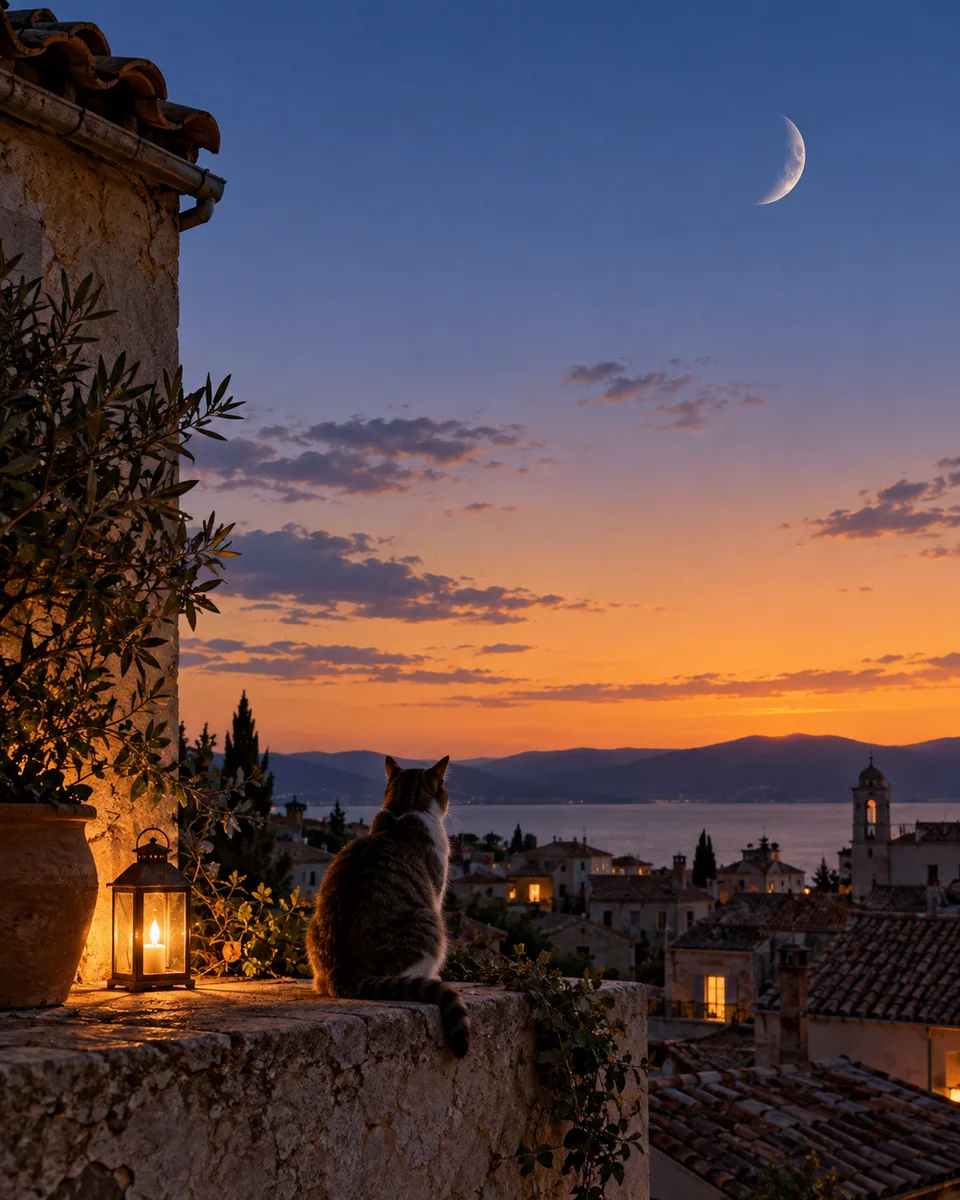
myAudience · AI-generated original illustration · Original AI-generated illustration; not documentary evidence; no third-party artwork reproduced.
The Moon is a rewarding first observing subject because a useful record can begin without a telescope. Draw the visible lit shape and note the time, date and direction. A repeated observation is more informative than a single attractive sketch: it lets you compare how the Moon’s position and appearance change rather than relying on memory. The sky in this illustration is not a prediction for tonight.
The changing phase comes from our view of the sunlit part of the Moon as it orbits Earth. The boundary between light and dark on its surface is called the terminator. Near that boundary, shadows can make relief stand out in genuine close views. A full Moon looks bright but does not always reveal surface form as clearly as a phase with longer shadows. Brightness and useful detail are different qualities.
Choose a viewing spot that is safe and repeatable, then make three observations on different clear evenings. Label any missed date rather than filling it with an invented drawing. If using a phone photograph, record whether the phone applied a night mode or other processing; a processed picture is not identical to what you saw unaided. Keep the exercise about changes you can actually compare, not about producing an impressive image.
A simple ball-and-lamp model can help explain your records, but do not expect it to represent true distances. Consult NASA’s phase explanation when the geometry is confusing. Ordinary phases should not be explained as Earth’s shadow, which belongs to eclipse geometry. Your observation log can end with two questions: what repeated pattern did I see, and what would I need to know to predict the next observation accurately?
Image: illustration, not a documentary photograph.