The sky as a pattern
By Zodiac, stories and symbols · myAudience
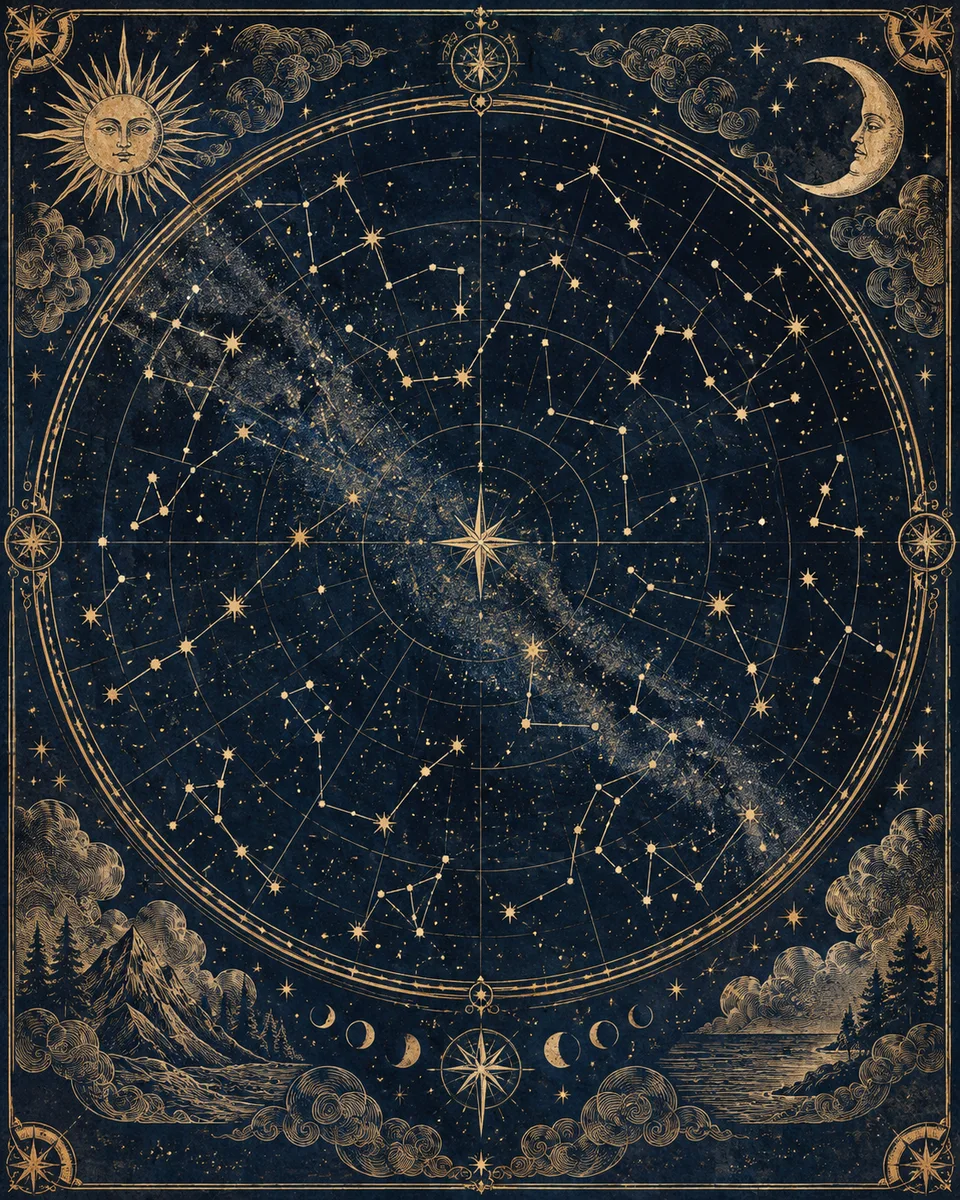
myAudience · AI-generated original illustration · Original AI-generated illustration; not documentary evidence; no third-party artwork reproduced.
A map of the sky can serve several purposes: locating objects, recording measurements, telling stories or decorating a page. It is important to identify which purpose a particular map serves before trying to use it. The imagined sheet in this image is decorative. Its arrangement cannot guide an observation, identify a real star position or establish the age of a historical object.
Stories associated with star patterns differ between cultures and periods. Connecting dots is a human interpretation placed over observed lights, not a physical wire linking stars in space. Objects that seem adjacent from Earth can be at very different distances. That distinction allows a story to remain meaningful as a cultural artefact without being mistaken for a literal model of the galaxy.
Try making two versions of one simple dotted pattern on paper. In the first, label positions without adding a figure. In the second, invent a creature or object that connects some dots. Compare how the labels and drawing direct attention. This is an original design exercise, not a representation of a named culture’s sacred sky knowledge. When studying an actual tradition, use community or museum sources rather than replacing its story with your invention.
For historical research, begin with an identified object such as the British Museum’s Babylonian zodiac list, and separate its surviving inscription from a modern explanatory drawing. Ask what information the object actually preserves and what a curator has supplied to make it understandable. For observing, use an up-to-date astronomical chart appropriate to your location. Decorative maps, historical diagrams and measured charts can all be compelling while answering different questions.
Image: illustration, not a documentary photograph.