A valley through a train window
By Europe through the window · myAudience
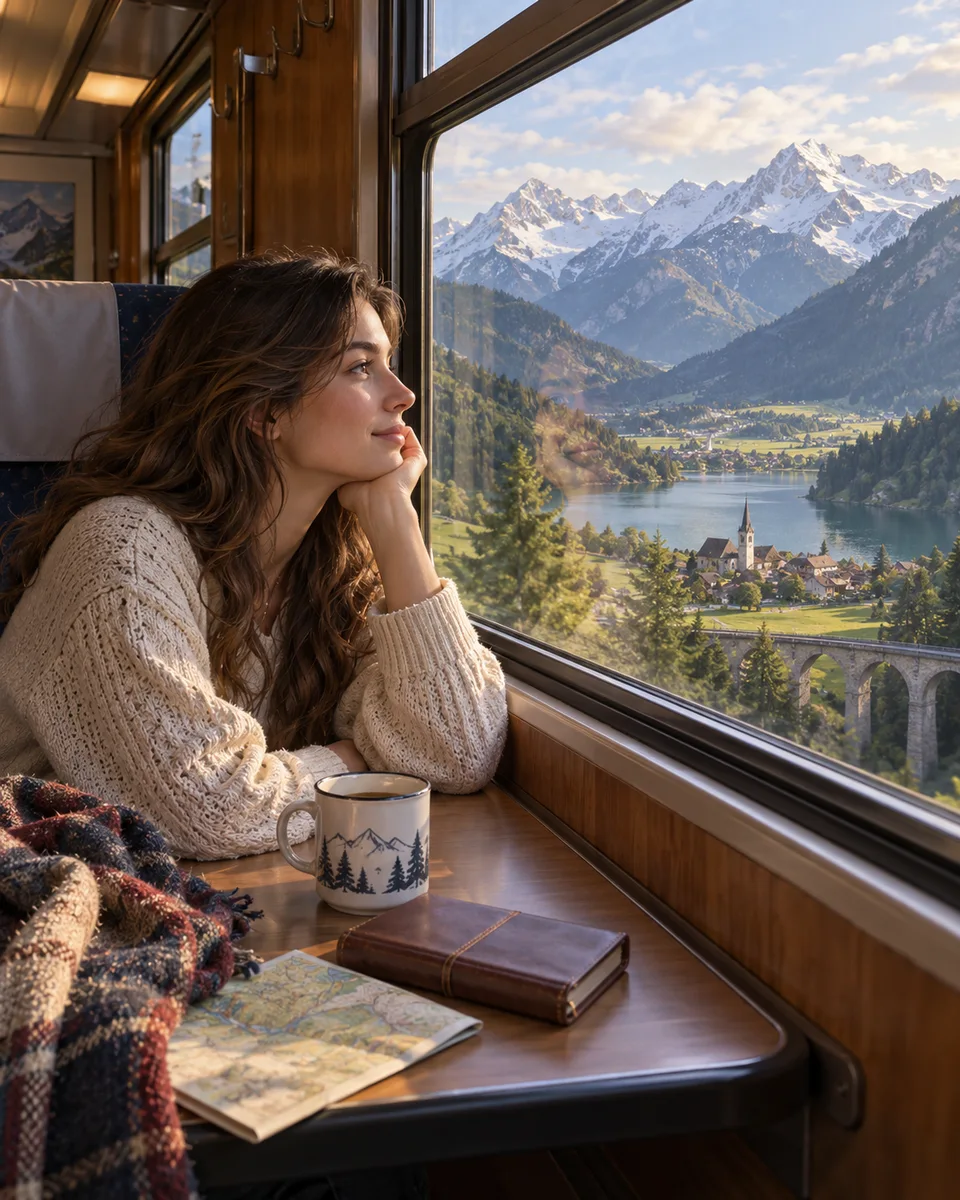
myAudience · AI-generated original illustration · Original AI-generated illustration; not documentary evidence; no third-party artwork reproduced.
A rail journey through a mountain region is shaped by engineering as much as scenery. A railway needs a workable gradient and curves that suit its vehicles, so the route may follow a valley, climb gradually or pass through tunnels. The view from one seat is only part of that geography. A dramatic carriage illustration cannot identify a real service or promise a particular window, landscape or weather.
Plan the connection before planning the photograph. Write down departure and arrival stations, not only city names, because a city may have several stations. Check whether each train requires a reservation and whether your ticket covers the specific service. A pass and a reserved seat are not automatically the same thing. Read the operator’s conditions rather than assuming another traveller’s old itinerary still applies.
Build a simple journey sheet with the connection you intend to take and one later alternative. Leave enough time to find platforms, manage luggage and make an unfamiliar transfer. Save essential details so they are available without mobile data. This is particularly helpful when crossing a border or moving between operators, where a ticketing app, station sign and spoken announcement may use different names or languages.
EU rail passenger-rights information is a useful starting point for disruption questions, but coverage and remedies depend on the service and circumstances. Check the applicable official guidance rather than turning this illustration into legal advice. Keep the day’s goal modest: one feasible journey with a clear arrival plan. The valley is an artistic invitation to travel, while a current timetable and your actual ticket are the evidence needed to do it.
Image: illustration, not a documentary photograph.