Time for one smaller town
By Europe through the window · myAudience
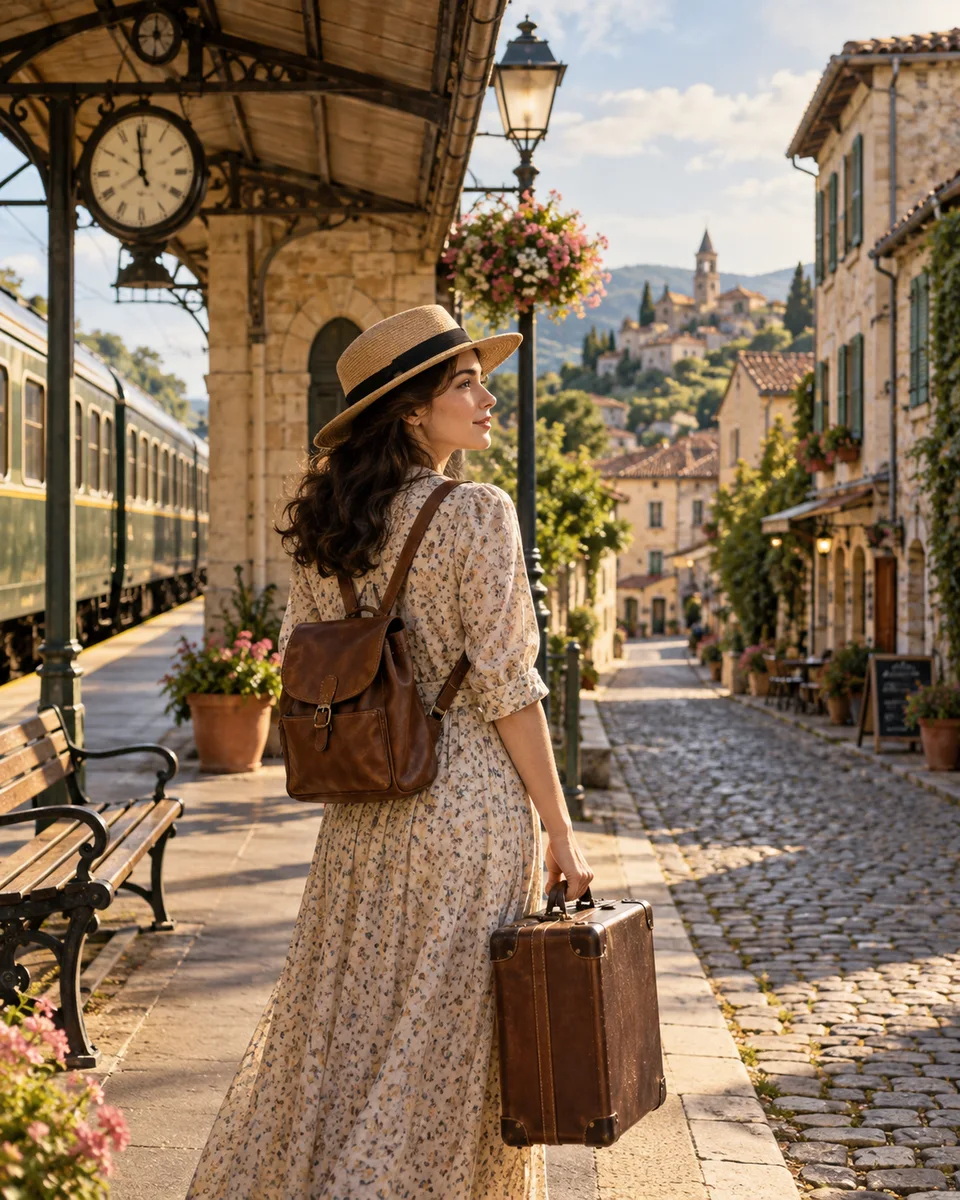
myAudience · AI-generated original illustration · Original AI-generated illustration; not documentary evidence; no third-party artwork reproduced.
A smaller-town stop works best when it has one clear purpose: a walk, a local collection, a square or a meal, rather than a list that assumes every attraction will be open. Begin with the distance from station to the place you want to explore. A picturesque street can conceal hills, steps or a long approach, so check a real map and relevant access information instead of treating the image as an itinerary.
The onward journey sets the frame for the visit. Record a realistic return-to-station time as well as the train departure. Include the route back, the possibility of a different platform and a useful alternative service where available. A short outing with a reliable return can provide more room to look closely than a rushed attempt to reach every landmark named in a guide.
Choose one detail to investigate once you arrive: a building material, a market layout, a bridge or the relation between a square and surrounding streets. Compare what the detail does with how it looks. A shaded arcade, for example, is both a visual feature and a way of organising movement and shelter. Take notes about what you observe directly, and label any historical explanation that comes from a sign or guide.
No current price, opening time or transport frequency is implied by our invented town. Check the relevant operator and attraction sources before leaving, and use official passenger-rights information for disruption questions where it applies. The aim is not to collect a postcard view identical to the picture. It is to create a manageable visit in which travel, a focused observation and a clear route home all fit together.
Image: illustration, not a documentary photograph.