A table of aromas
By Stories around the table · myAudience
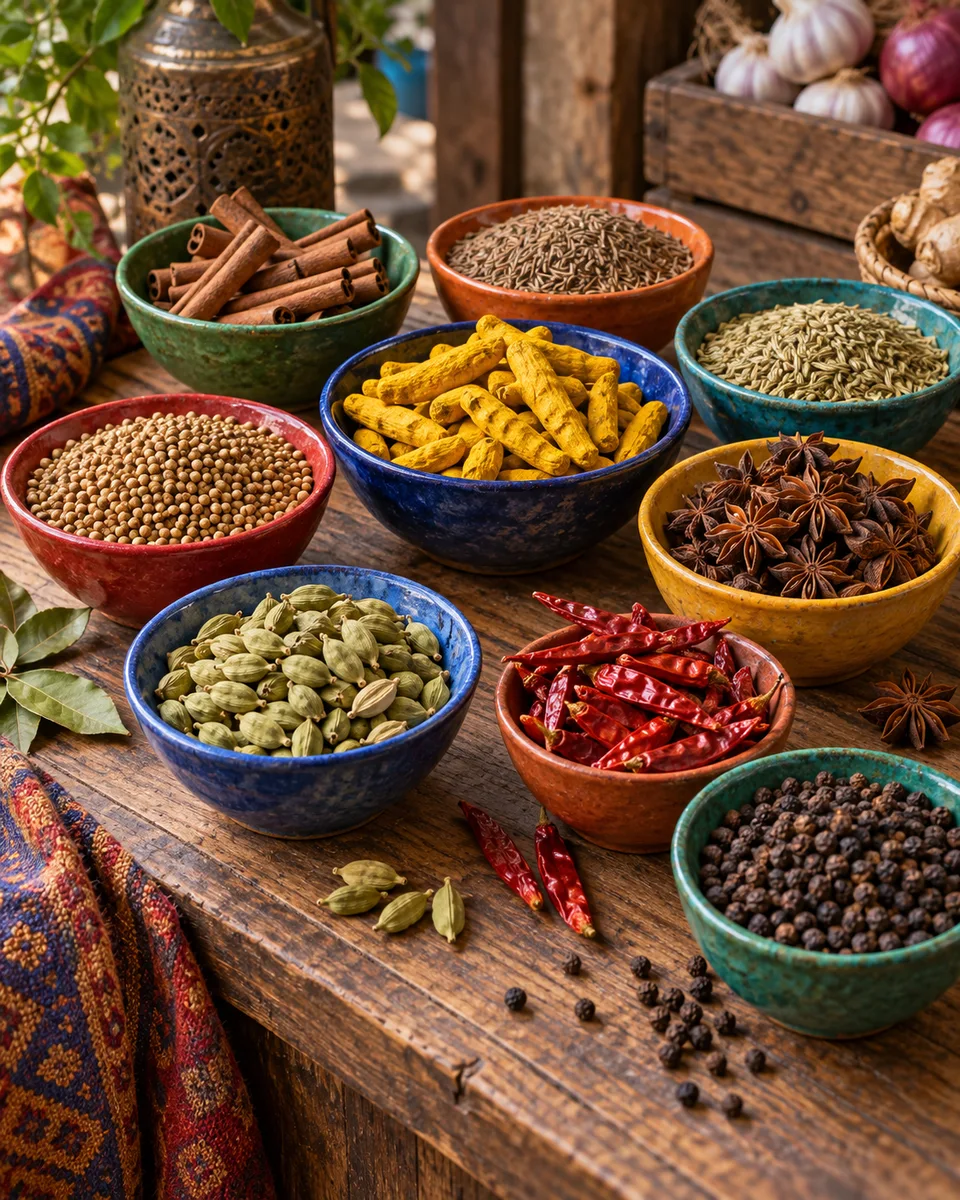
myAudience · AI-generated original illustration · Original AI-generated illustration; not documentary evidence; no third-party artwork reproduced.
Spices work through aroma as well as the sensations usually described as taste. Warmth, grinding and storage can change which aromas are noticeable, so a small comparison teaches more than adding every jar at once. Begin with two familiar labelled ingredients. Smell them separately, then consider which part of a dish each might support. This is an exercise in noticing, not a claim that one spice blend represents an entire cuisine.
Whole and ground forms behave differently in cooking and storage. Grinding increases exposed surface area, while a whole ingredient may release flavour more gradually. Fat, water and cooking conditions also affect how compounds are distributed through a dish. These ideas explain why the same seasoning can seem different in a sauce, soup or dry topping without requiring a fixed rule that every spice must be treated identically.
Try a tiny comparison using a food you already prepare safely: set aside two small portions and change just one seasoning in one portion. Keep the rest the same and describe the difference before deciding which you prefer. Check labels for allergens and blends with hidden ingredients. Avoid tasting raw flour, raw meat or any ingredient whose preparation instructions require cooking; the comparison should use suitable ready-to-eat portions.
A colourful market image tells you little about a product’s identity, storage history or provenance. Read the label and follow its storage instructions, using clean utensils and avoiding cross-contact when cooking for someone with an allergy. Our scene is generated artwork, not an inspected stall. Curiosity about food traditions is best supported by named cooks and regional context rather than treating visual abundance as proof of authenticity or safety.
Image: illustration, not a documentary photograph.