A bowl built in layers
By Stories around the table · myAudience
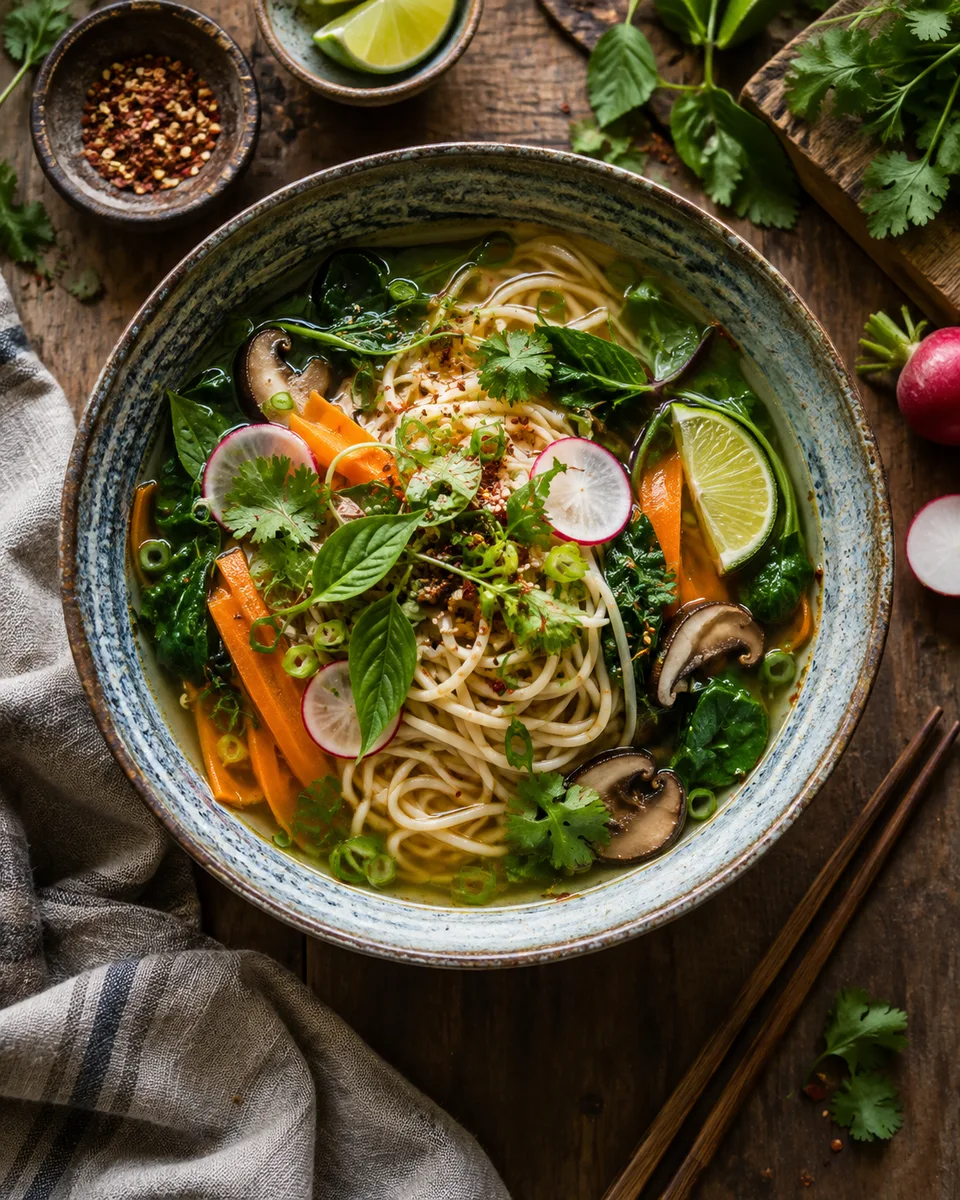
myAudience · AI-generated original illustration · Original AI-generated illustration; not documentary evidence; no third-party artwork reproduced.
A noodle bowl can be designed as a set of contrasting elements rather than an ever-longer ingredient list. Noodles supply the base, vegetables offer texture, and a sauce distributes seasoning. The balance depends on what you enjoy and the instructions for the particular ingredients. This original assembly idea does not claim to reproduce a named traditional dish or to provide a complete nutrition plan.
Texture is often controlled before everything reaches the bowl. Different vegetables soften at different rates, and noodles continue changing when held in liquid. Prepare components with a clear order rather than assuming one cooking time suits them all. If using a packaged sauce, read its ingredients: soy, wheat, sesame or other allergens may be relevant, and a familiar-looking bottle is not enough to establish that it suits every guest.
For a simple version, cook the chosen noodles according to their packet, prepare vegetables using a suitable method, and combine a small amount of sauce with the cooked components. Taste before adding more. If you want to compare textures, reserve one portion with the vegetables mixed in and another with them added at the end. The exercise changes assembly, not the safety requirements of an ingredient that needs thorough cooking.
Wash hands and produce as appropriate, keep raw animal ingredients separate from ready-to-eat components, and refrigerate leftovers promptly. Follow authoritative temperature guidance when cooking or reheating relevant foods rather than judging doneness from the illustration. The glossy bowl is imagined. Its useful lesson is that a meal can feel varied through temperature, texture and arrangement even when it is built from a modest number of ingredients.
Image: illustration, not a documentary photograph.