Bread made for sharing
By Stories around the table · myAudience
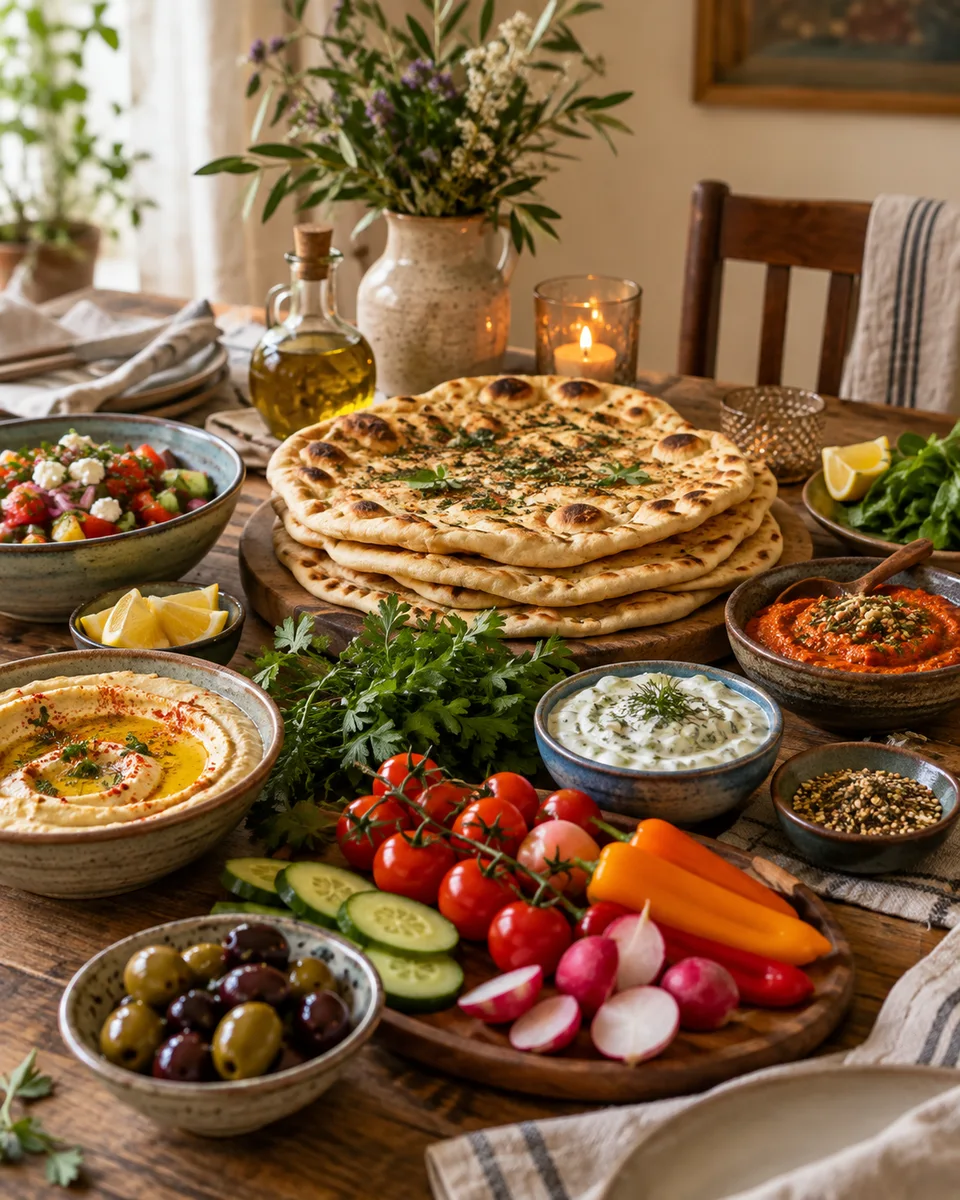
myAudience · AI-generated original illustration · Original AI-generated illustration; not documentary evidence; no third-party artwork reproduced.
Flatbreads appear in many food traditions, with different grains, shapes, leavening and cooking methods. Similar appearances do not make them interchangeable cultural objects. A bread’s name and preparation context matter. This serving idea starts with a purchased bread whose label you can read, rather than presenting an invented formula as an authentic version of a whole region’s cooking.
Bread can act as a neutral base, a carrier for a topping or a way of sharing several dishes. Think about texture: a soft bread folds, a firmer one supports a topping, and a crisp piece can contrast with a smooth dip. If you warm it, follow its instructions and watch how the texture changes. The goal is to understand an ingredient you have, not force it to behave like a different bread shown in a photograph.
Arrange a small table with the bread, a prepared vegetable dip and washed salad ingredients. Keep sauces separate so people can choose what they add, and use separate serving utensils where needed. Check ingredients for wheat, sesame, milk or other relevant allergens; absence of an obvious nut on the plate does not establish that a dip or bread is suitable. Ask about requirements rather than guessing from appearance.
Keep foods that require chilling at safe temperatures and handle leftovers according to official guidance. The illustration documents no real meal or tested recipe. To explore a specific tradition further, choose a clearly attributed recipe from a cook or reliable collection and learn why its ingredients and method fit that setting. Sharing can begin with a simple table, while cultural accuracy begins with names, sources and attention to differences.
Image: illustration, not a documentary photograph.