Two colors change a frame
By See like a designer · myAudience
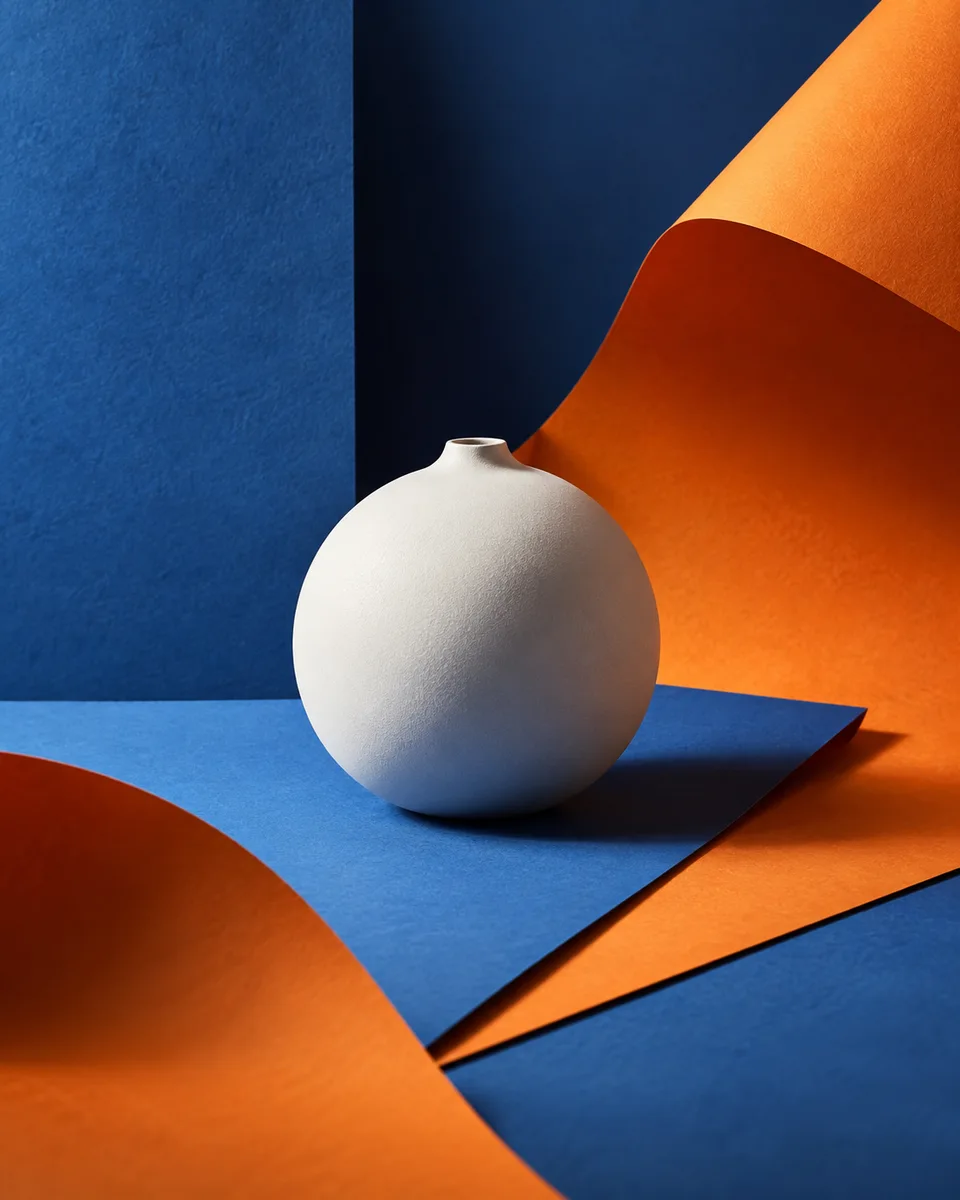
myAudience · AI-generated original illustration · Original AI-generated illustration; not documentary evidence; no third-party artwork reproduced.
Two colours can create a very different composition depending on how much space each occupies. A half-and-half arrangement presents a balanced comparison; a narrow strip against a large field may become an accent. The colours have not changed, but their visual roles have. This makes coloured paper a useful exercise because it removes many distractions while leaving proportion, edges and contrast available to study.
Colour is also affected by light and capture. A paper seen under a warm lamp may not look the same beside a window, and automatic white balance can change the recorded appearance. Compare photographs made under the same conditions before attributing every difference to composition. An attractive result does not establish a universal emotional response to a colour, and no image should be used to infer the viewer’s mental state.
Place two sheets on a flat surface and make three frames: equal areas, mostly the first colour and mostly the second. Keep lighting and camera position as consistent as possible. Then compare the boundary: does a diagonal make the frame feel different from a horizontal division? Write what changed in attention or balance rather than naming one frame objectively best. Your observations can guide a later poster, photograph or interface layout.
Our blue-and-orange arrangement is original illustration, not a calibrated colour reference. A screen’s settings can also change what you see, so avoid using it to choose a paint formula or print specification. The deeper design lesson is economical: hierarchy can come from proportion and placement, not only from adding more objects, labels or effects. A controlled two-colour experiment helps make that principle concrete.
Image: illustration, not a documentary photograph.