A second scene in a puddle
By See like a designer · myAudience
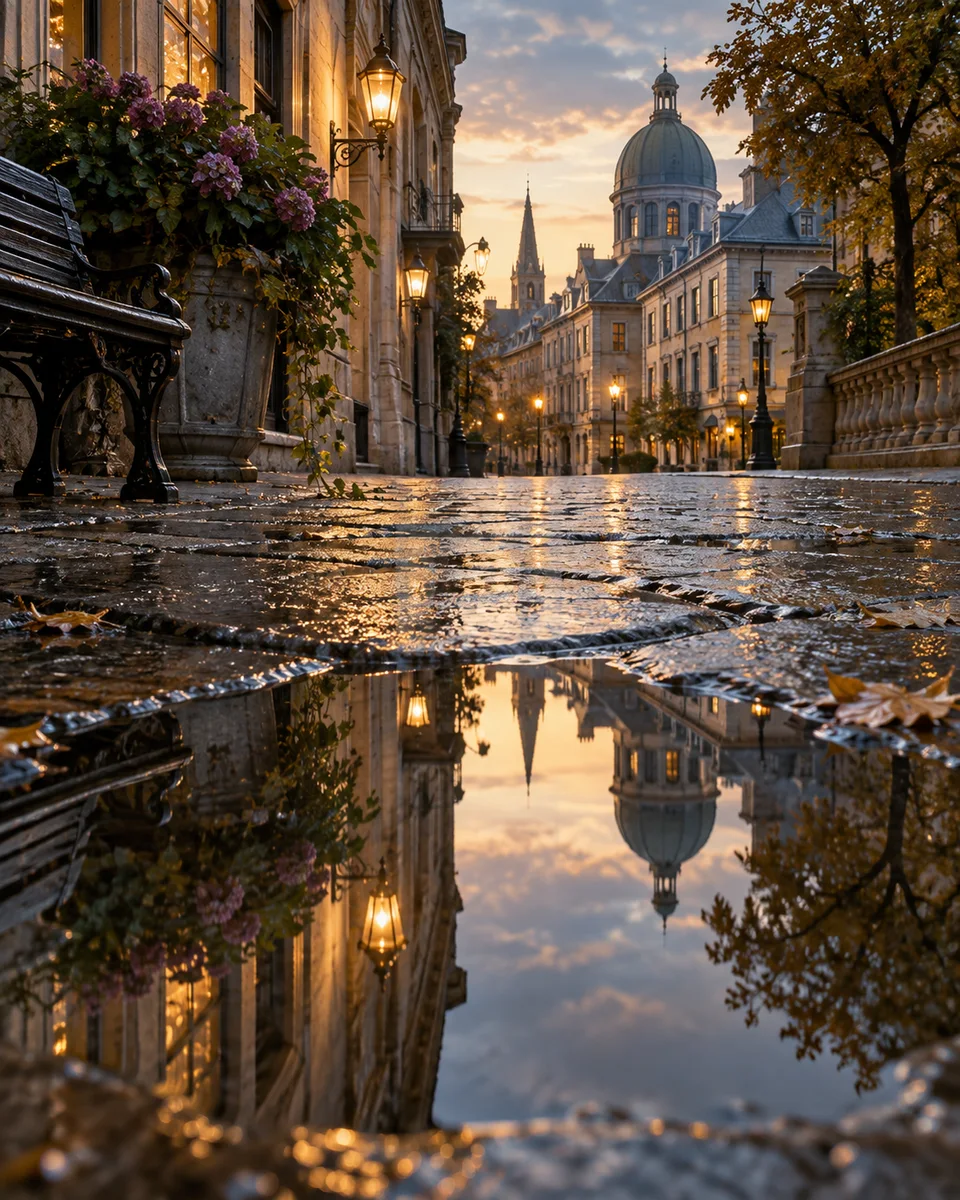
myAudience · AI-generated original illustration · Original AI-generated illustration; not documentary evidence; no third-party artwork reproduced.
A reflection can add a second view inside a photograph. A puddle may show sky or a facade while the surrounding pavement supplies a different set of textures. The camera angle determines what is reflected, so the image is not simply a smaller copy of whatever stands beside the water. Moving a little can bring a distant feature into the reflecting surface or remove it entirely.
Choose whether the reflection should be read as a mirror, an abstract shape or a clue to the wider street. Include a pavement edge if you want the viewer to understand the surface quickly; crop it away if the comparison you are studying is primarily shape. Neither choice is automatically more artistic. Focus and exposure need attention because the reflected scene and nearby ground can compete for the camera’s automatic decisions.
From a safe, stationary position away from traffic, take a high and a lower viewpoint without stepping into the road. Compare the visible reflected area and the relationship of real and reflected lines. If your phone permits it, select the reflection as the focus/exposure target and check the outcome. Respect other people’s privacy and local rules; a successful frame is not a reason to create a hazard or obstruct a walkway.
The illustrated street and puddle are invented, not a geolocated documentary image. Their value is to introduce an optical and compositional question you can explore almost anywhere suitable. For a follow-up, rotate a copy of your own photograph and notice when the reflected world becomes harder to distinguish from the real one. Label any edited orientation if presenting it as a record rather than letting a visual experiment become a misleading claim.
Image: illustration, not a documentary photograph.