The Hanging Gardens: a wonder with an unresolved location
By Wonders, built by people · myAudience
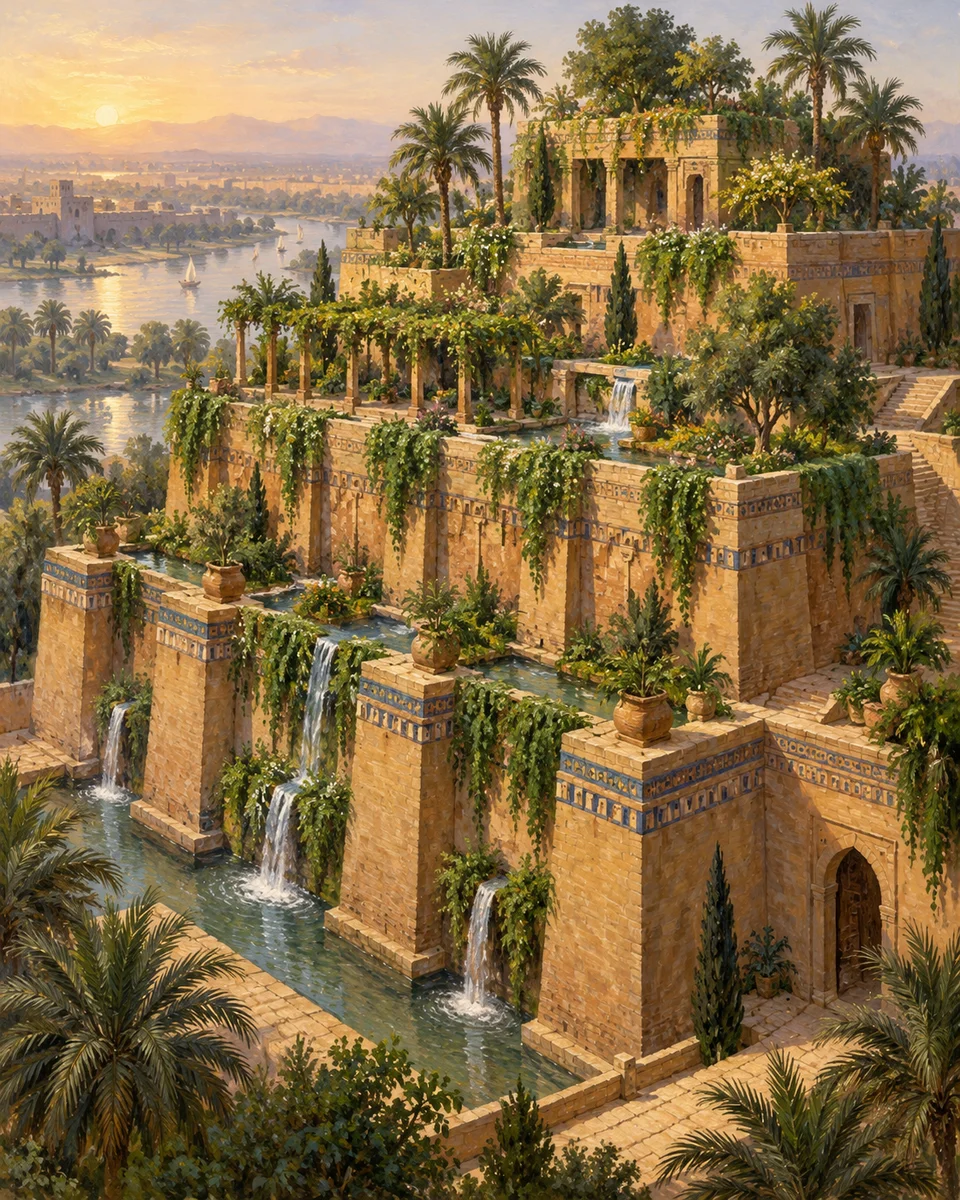
myAudience · AI-generated original illustration · Original illustration generated for myAudience; not documentary evidence. Depicted monument and landmark rights are not granted by this credit.
The Hanging Gardens belong to the traditional Seven Wonders, but their location and even the relationship between the literary descriptions and a particular real garden remain disputed. The familiar name links them with Babylon. Another scholarly proposal connects the tradition with Nineveh in Assyria. Those possibilities should be presented as competing interpretations, not combined into one confidently identified building.
A raised garden would require support for soil and plants, a supply of water and a way to protect the structure from leakage. Those are real engineering demands. They allow us to examine what an account would imply, but they do not prove that a specific pump, terrace arrangement or waterproofing system was used at an identified site. A workable modern model is evidence of feasibility, not automatically evidence of ancient construction.
Ancient descriptions were written in different circumstances, sometimes long after the supposed building. Their authors, wording and dependence on earlier accounts matter. Archaeology at Babylon establishes a substantial royal and religious city, yet a city’s documented importance does not resolve every famous story attached to it. We should distinguish remains, texts and later artistic tradition.
Think about a terrace after watering: wet soil is heavy, and water must reach the plants without weakening the support beneath them. That connection between gardening and structural engineering makes the tradition worth investigating. What evidence would distinguish a real irrigation arrangement from one invented to make a reconstruction look convincing?
Image: speculative AI reconstruction; uncertain details.