The Colossus: bronze, memory and an uncertain silhouette
By Wonders, built by people · myAudience
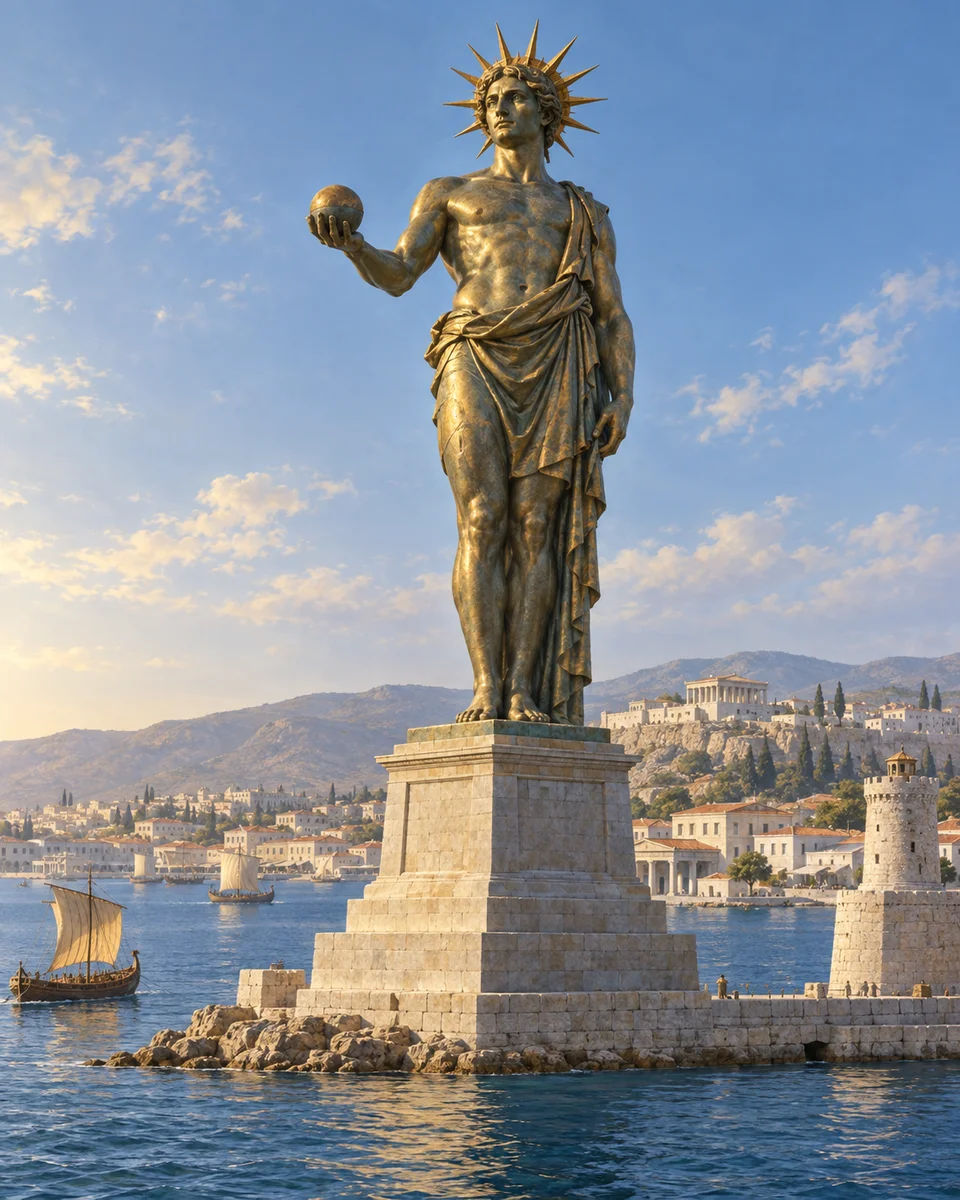
myAudience · AI-generated original illustration · Original illustration generated for myAudience; not documentary evidence. Depicted monument and landmark rights are not granted by this credit.
The Colossus was a monumental bronze statue of Helios associated with Rhodes in the third century BCE. It belonged to the traditional Seven Wonders and commemorated a city’s survival after a siege. Its meaning was therefore tied to a particular community and conflict, not merely to the ambition of making an exceptionally tall human figure.
A colossal bronze work raises a different structural problem from a solid marble statue. Its exterior had to be supported, joined and anchored, while the weight and forces of an enormous form had to be managed. Ancient descriptions help frame discussions of its construction, but the exact internal arrangement and working sequence are not fully recoverable. Proposed methods should remain proposals when the evidence cannot establish each detail.
The statue fell after an earthquake and did not survive intact for modern study. Its precise pose, appearance and location remain uncertain. The popular image of the figure straddling a harbor entrance is a later tradition, not a securely supported reconstruction. Repetition in paintings does not make a detail ancient evidence.
A statue can remain famous even when its physical form is lost. Try separating three kinds of evidence: an ancient account of its collapse, a later picture of its pose and a modern calculation of how it could stand. Each answers a different question. The sphere, pose and setting in this illustration are imagined details, not recovered features of the Colossus.
Image: speculative AI reconstruction; uncertain details.