The Great Wall is a network with a long history
By Seven wonders, chosen in 2007 · myAudience
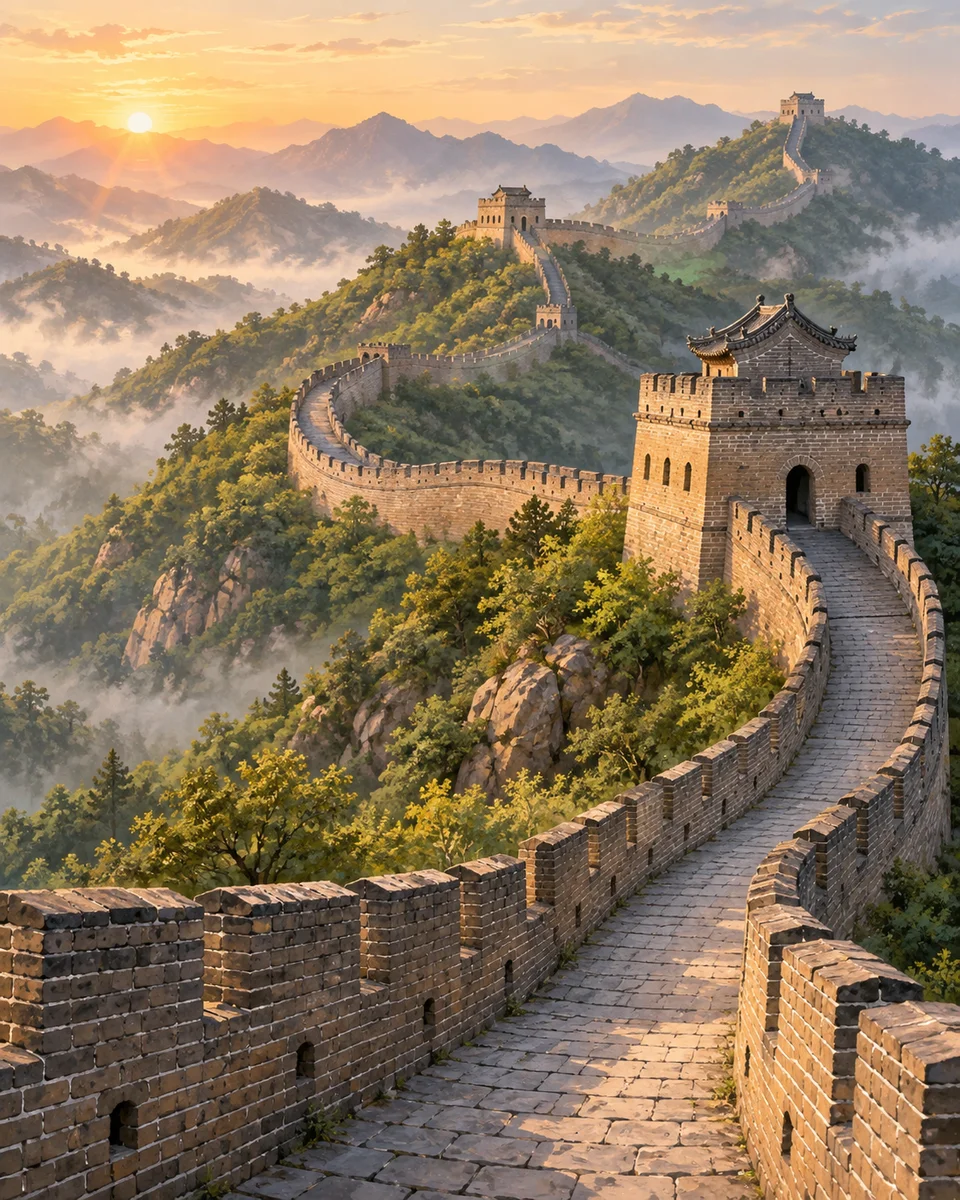
myAudience · AI-generated original illustration · Original illustration generated for myAudience; not documentary evidence. Depicted monument and landmark rights are not granted by this credit.
China’s Great Wall is best understood as a history of fortifications built and rebuilt in different periods, not one uninterrupted wall made by one ruler. Earlier walls and later Ming defenses differed in material and arrangement. Familiar photographs show only selected stretches. A single skyline cannot represent the whole changing network of barriers, towers and routes.
Construction responded to local materials and terrain. Rammed earth, stone and brick could serve different sections, while towers and passes organized movement and observation. Building required foundations, material transport and a labor force capable of working across difficult ground. A ridge might offer visibility and a defensible position, but it also complicated supply and construction.
The defenses related to military organization, border management and communication. A wall alone did not perform every function: people staffed, supplied and repaired its associated installations. Nor should the presence of a boundary be mistaken for a timeless division between unchanged peoples. Political control and relationships across the frontier shifted over the long history of these structures.
In the illustration, a Ming-style brick wall follows a mountain ridge between towers. Notice how the winding route responds to the ground rather than forming a straight geometric border. A useful question is how supplies and people reached each tower. This view is one architectural interpretation; it does not represent every period or section of the Great Wall.
Image: illustration, not a documentary photograph.