Petra: carved facades and a managed water landscape
By Seven wonders, chosen in 2007 · myAudience
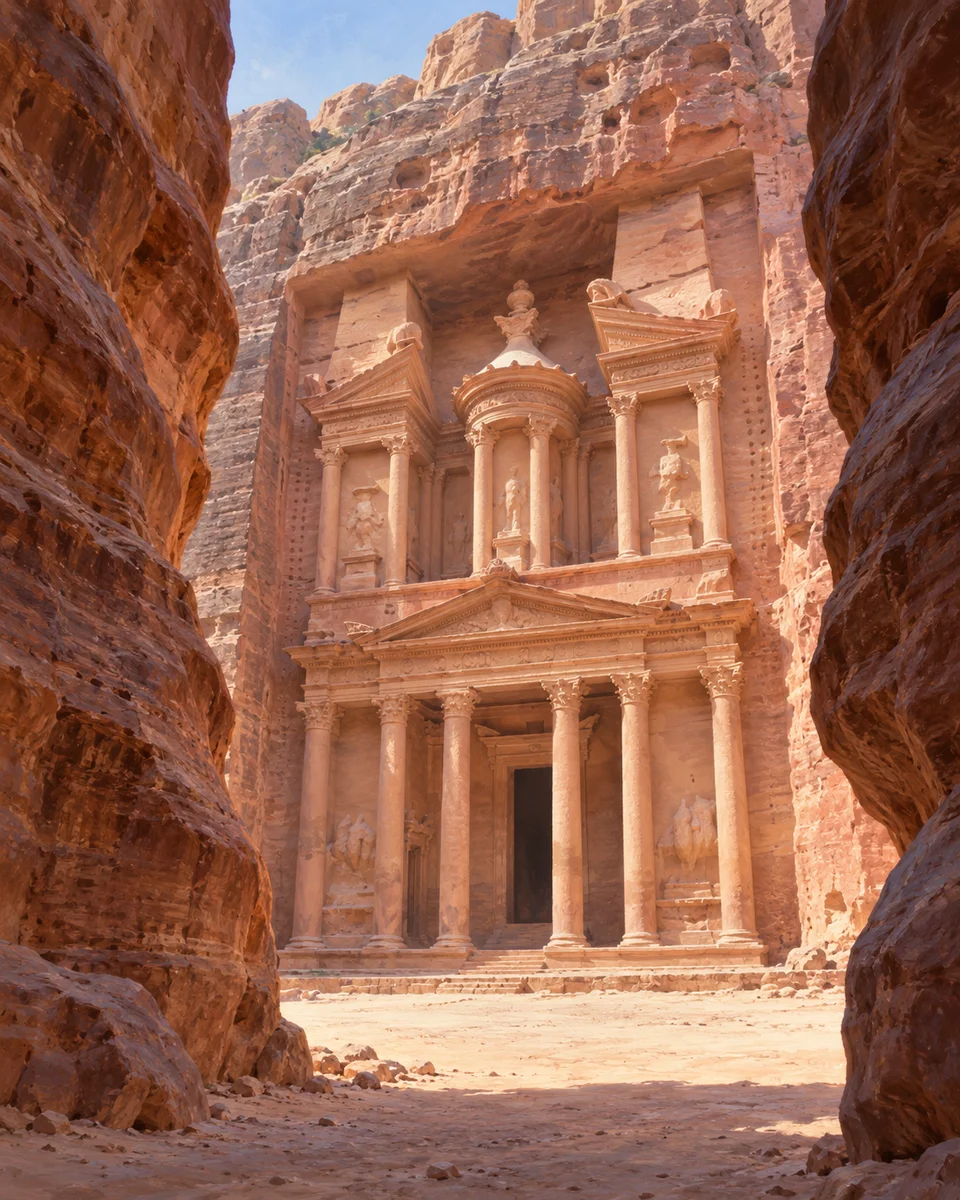
myAudience · AI-generated original illustration · Original illustration generated for myAudience; not documentary evidence. Depicted monument and landmark rights are not granted by this credit.
Petra, in present-day Jordan, was an important Nabataean center. Its rock-cut architecture became famous, but the city cannot be reduced to a single ornate facade. Tombs, streets, religious places and water infrastructure belonged to a wider settlement linked with exchange. A spectacular entrance is one part of that history, not a complete portrait of its inhabitants.
A rock-cut building reverses the familiar process of assembling separate walls: stone is removed from an existing mass to create space and an architectural surface. Carvers had to consider the rock’s condition and the sequence of removal. Decorative columns on a facade do not always function like free-standing supports in a building assembled from blocks.
Water management made settlement in this landscape practical. Channels, storage and other installations had to respond to both scarcity and sudden flows. That infrastructure is an achievement alongside the sculpture. A flourishing city depended on supply, routes and institutions as well as the appearance of its monuments.
The illustration shows the rock-cut facade commonly called Al-Khazneh, or the Treasury. Its later name does not establish that it stored treasure. Notice the contrast between the decorated surface and the enclosing rock: one was carved out of the other. Then imagine the less visible work of collecting and directing water that helped sustain the wider city.
Image: illustration, not a documentary photograph.