Chichen Itza: a city beyond the famous pyramid
By Seven wonders, chosen in 2007 · myAudience
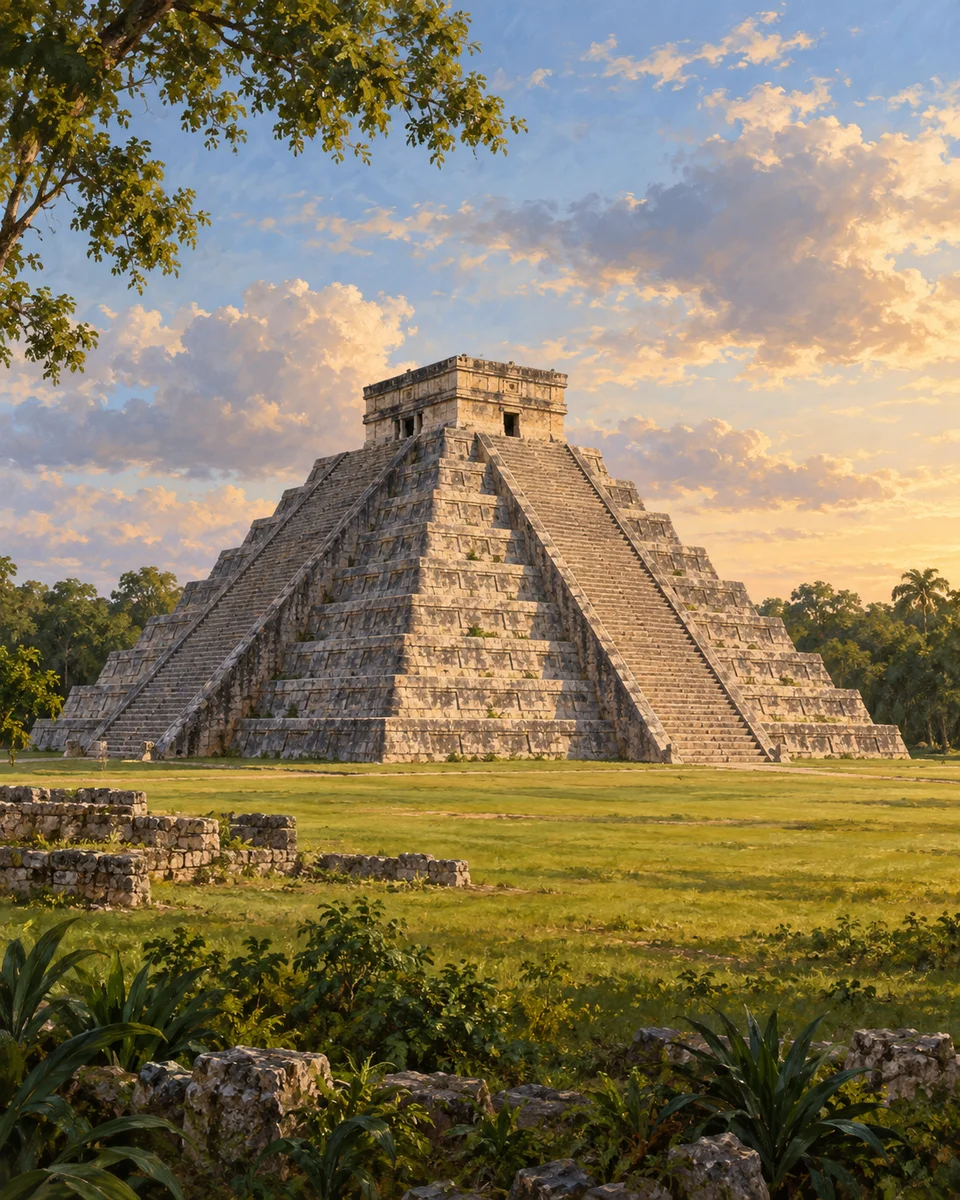
myAudience · AI-generated original illustration · Original illustration generated for myAudience; not documentary evidence. Depicted monument and landmark rights are not granted by this credit.
Chichen Itza is a major Maya archaeological site on Mexico’s Yucatán Peninsula. The famous stepped building known as El Castillo is only one part of a city with ceremonial spaces, a large ball court and other substantial architecture. Its surviving remains reflect development and interaction over time, rather than one timeless example of every Maya community.
Masonry construction joined prepared platforms, walls and carefully arranged surfaces. Stone had to be quarried or gathered, shaped and moved; lime-based materials added another chain of preparation. Looking at a completed pyramid can conceal that repeated work. A structural explanation should consider stairs, retaining mass and the relationship between the platform and building above, not only the outline against the sky.
Buildings and sculpture can express religious and political ideas, but their interpretation requires dated evidence and comparison. Impressive numerical or astronomical claims should not be accepted merely because a modern tour repeats them. An alignment, a count of reconstructed features and an identified ancient intention are different claims and may have different levels of support.
The illustration focuses on El Castillo in its familiar surviving form. Consider how much work is hidden beneath a finished surface: preparation of a stable platform, movement of material and repeated maintenance. How would a site plan change the impression made by this single view? The city included many important spaces beyond the building that has become its best-known silhouette.
Image: illustration, not a documentary photograph.