Machu Picchu: stonework, terraces and mountain water
By Seven wonders, chosen in 2007 · myAudience
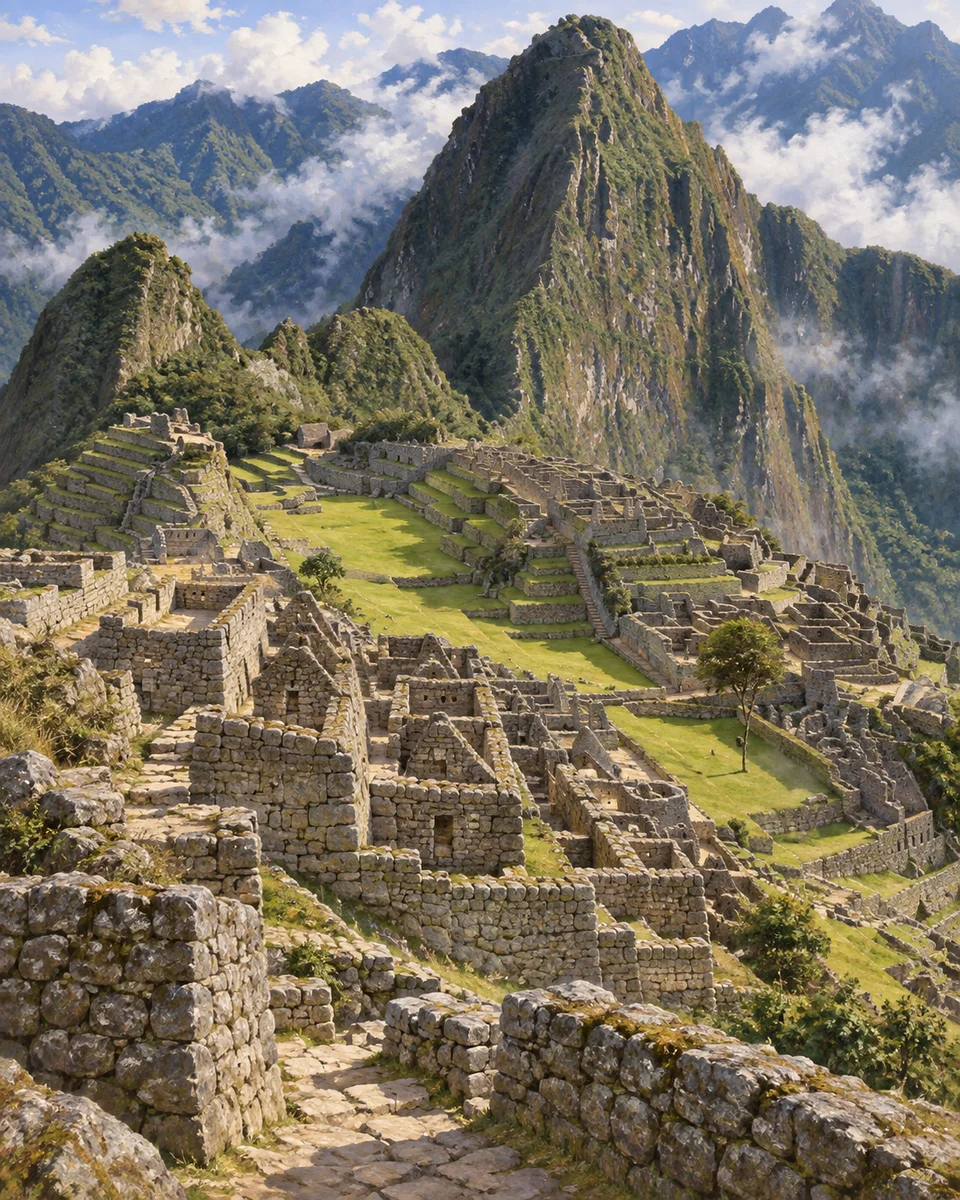
myAudience · AI-generated original illustration · Original illustration generated for myAudience; not documentary evidence. Depicted monument and landmark rights are not granted by this credit.
Machu Picchu is an Inca site in the mountains of present-day Peru, built in the fifteenth century. It combines constructed spaces with steep terrain and a broader landscape. The often-used phrase “lost city” can obscure the knowledge and presence of local people before its international publicity. Its history should not begin with a modern visitor’s discovery narrative.
Terraces were more than scenic steps. Their construction helped manage soil and water in a demanding environment, while buildings and routes occupied carefully prepared areas. Stonework and drainage have to be understood together: retaining a slope and giving excess water a path are connected practical tasks. The site’s achievement includes work beneath and between the surfaces most often photographed.
Buildings used different forms of masonry and arrangement for different purposes. A finely fitted wall does not by itself tell us the exact use of every room. Archaeology can constrain interpretations, but the site’s precise roles and aspects of daily life remain subjects of research. Avoid substituting one simple label—palace, fortress or mystical retreat—for the questions that evidence must answer.
Trace a terrace across the slope in the illustration, then look for the buildings and paths above it. The question is not simply how a wall stood upright, but how a whole inhabited landscape handled steep ground and rainfall. This illustration interprets surviving ruins and terrain; it does not establish the original use of every room or show a fully reconstructed Inca city.
Image: illustration, not a documentary photograph.