The Colosseum: an organized building for a difficult spectacle
By Seven wonders, chosen in 2007 · myAudience
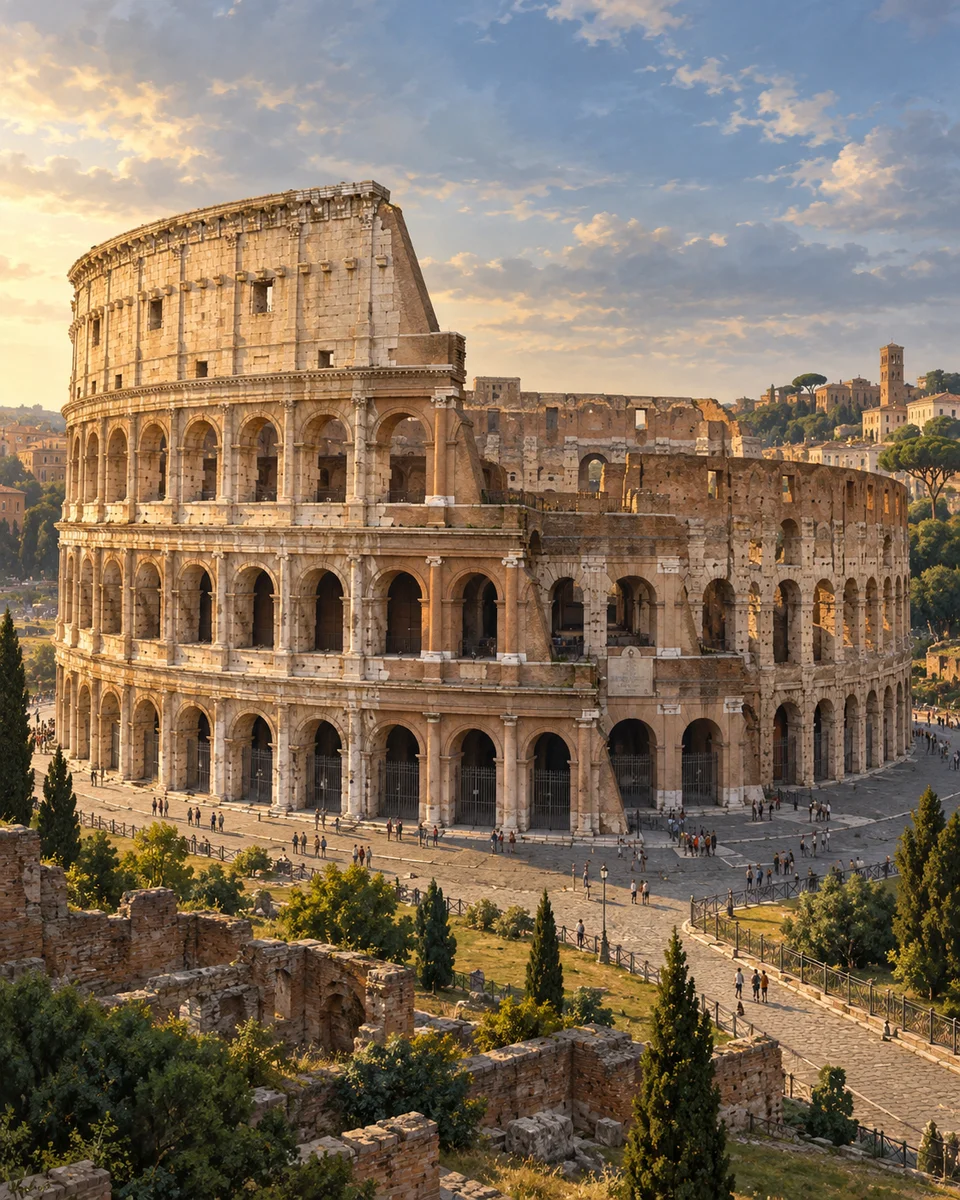
myAudience · AI-generated original illustration · Original illustration generated for myAudience; not documentary evidence. Depicted monument and landmark rights are not granted by this credit.
The Colosseum, or Flavian Amphitheatre, was constructed in first-century CE Rome. Its surrounding seating and central arena make it an amphitheater, distinct from a theater arranged toward one main performance area. The building’s scale is impressive, but explaining its architecture should not conceal the violence and unequal social order of the spectacles held there.
Arches, vaults and multiple levels organized structural support and circulation. Stone, brick and concrete served different parts of the building. Entrances and corridors mattered because spectators had to reach their allocated areas; the arena also depended on working spaces and arrangements that changed over time. The visible outer wall is only one element of the system.
The site’s later history includes damage, reuse and removal of building materials. Today’s ruins therefore do not show the complete original seating, surfaces or surrounding structures. Official conservation research distinguishes ancient fabric from repair and investigates phases of construction and use. A reconstructed full outline must acknowledge that evidence rather than treat every missing part as certain.
The illustration presents surviving ruins, rather than a complete original amphitheater. Follow the repeated openings around its curved exterior. Arches could carry loads while making room for movement, but the outer view cannot reveal the whole circulation system. Compare that visible pattern with the task of getting many people to different seating levels safely and efficiently.
Image: illustration, not a documentary photograph.