The Taj Mahal: a tomb, a garden and many kinds of skilled work
By Seven wonders, chosen in 2007 · myAudience
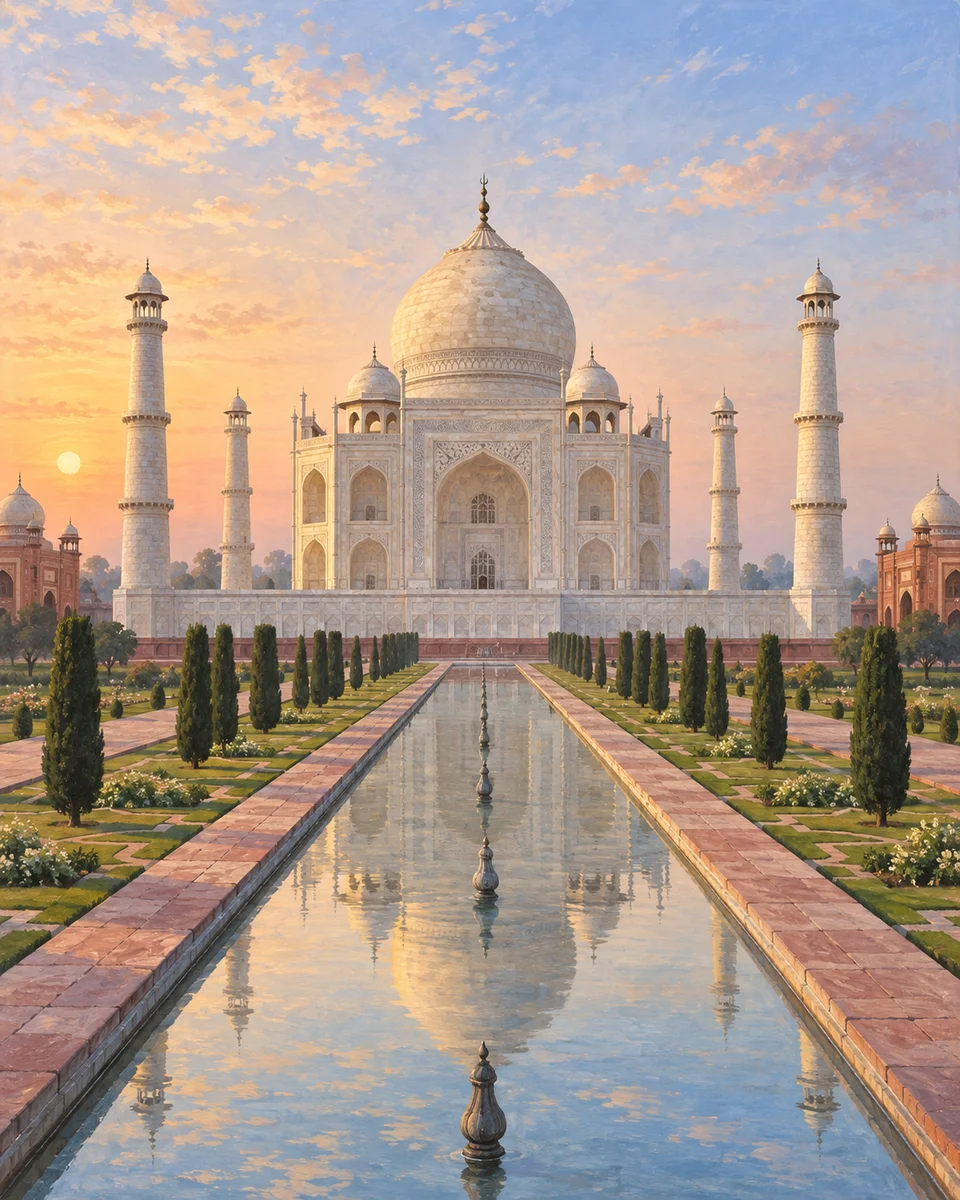
myAudience · AI-generated original illustration · Original illustration generated for myAudience; not documentary evidence. Depicted monument and landmark rights are not granted by this credit.
The Taj Mahal at Agra was commissioned by the Mughal emperor Shah Jahan in memory of Mumtaz Mahal during the seventeenth century. The white marble tomb is part of a larger complex, including a garden, gateways and other buildings. Explaining only the central dome misses the organized approach and the relationship between architecture, landscape and commemoration.
The building combines a substantial masonry structure with carefully worked facing and decoration. Stone cutting, inlay, carving and calligraphy required distinct forms of expertise. A surface that appears unified can therefore be the result of many materials and skilled operations. The complex also used red sandstone as well as marble, so it should not be described as one solid block of white stone.
Layout and symmetry direct attention, but different parts had different functions. The site was both a royal monument and a place of burial and religious significance. Its creation drew on extensive resources and workers; a single romantic story about a ruler cannot account for all that labor or for the wider Mughal setting.
The illustration emphasizes the garden approach, water, central dome and surrounding minarets. Look at how the route frames the tomb before a visitor reaches it. Symmetry can organize an experience as well as a plan. The image is an architectural interpretation, with no reproduced inscription; the materials and craftsmanship of the actual complex require closer examination than a distant view provides.
Image: illustration, not a documentary photograph.