Rome: republic, empire and the people sustaining both
By Rome beyond the arena · myAudience
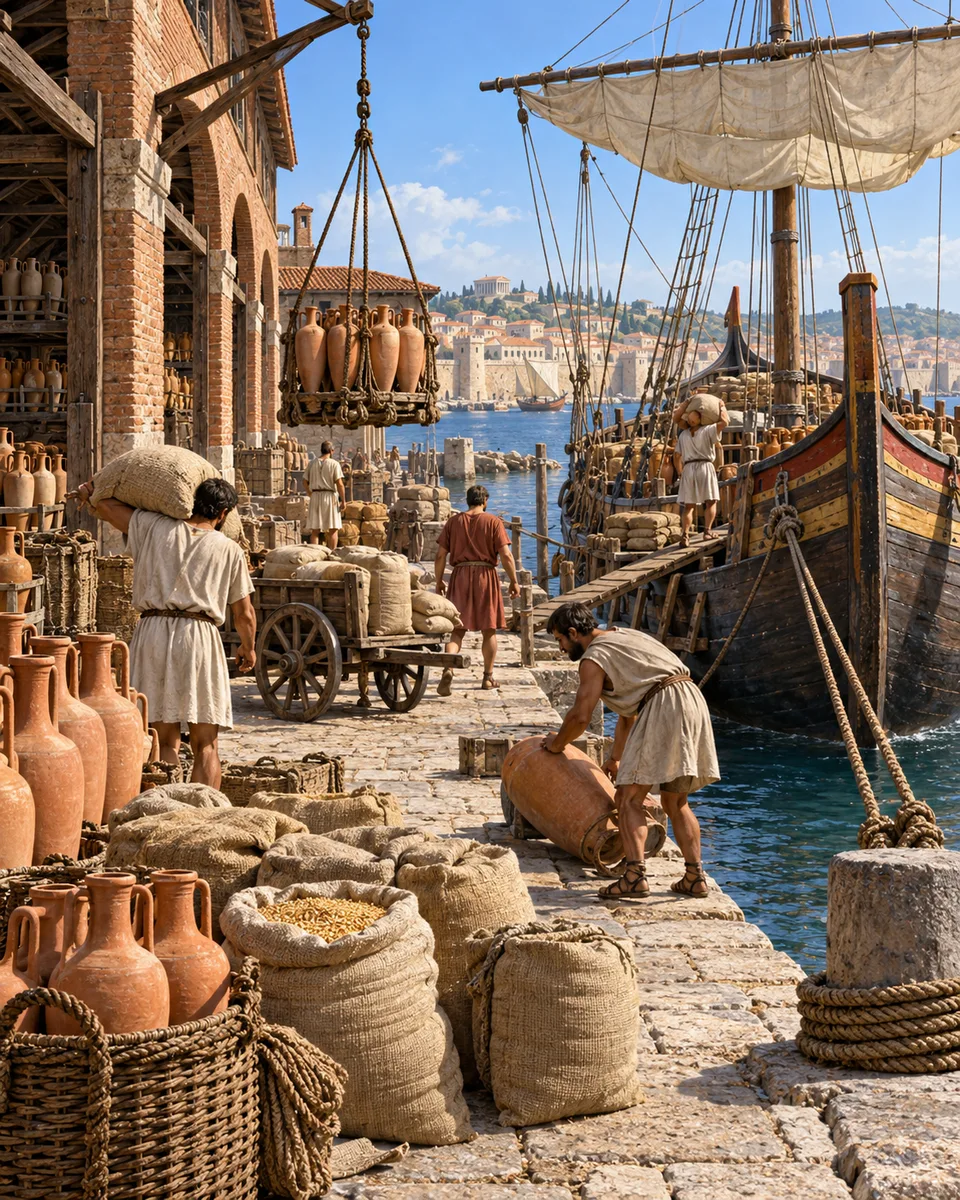
Original AI illustration generated for myAudience · AI-generated illustration; no claim of documentary evidence or authenticated likeness
Rome's institutions changed profoundly between republic and imperial government. Julius Caesar's first-century BCE career belongs to civil conflict in the Republic; Trajan ruled as emperor more than a century later. A shared Roman collection must preserve that distance rather than portraying them as colleagues within one identical constitutional system.
Expansion supplied resources while imposing warfare, tribute and enslavement. Roads, ports and aqueducts connected cities and supported administration, but required ongoing maintenance. Engineering was a social achievement involving specialised workers and organised resources. It did not guarantee equal access to water, citizenship, wealth or political authority.
Imperial monuments promoted military success and a well-ordered public world. Temples, baths, theatres and housing reveal varied activities, while elite homes and tombs preserve selected experiences. The presence of magnificent buildings should be read beside evidence for crowding, labour and hierarchy rather than as proof that every Roman enjoyed the same comforts.
Grain was a major item in Roman trade, alongside oil, textiles, glass, metals and other goods. Exchanges also reached beyond the empire, including routes towards India and China. Infrastructure mattered because people and cargo had to move repeatedly, not merely because a road or harbour looked impressive. The commercial connections behind a city’s supplies make its monuments part of a much larger working system.