Trajan: a life in context
By Rome beyond the arena · myAudience
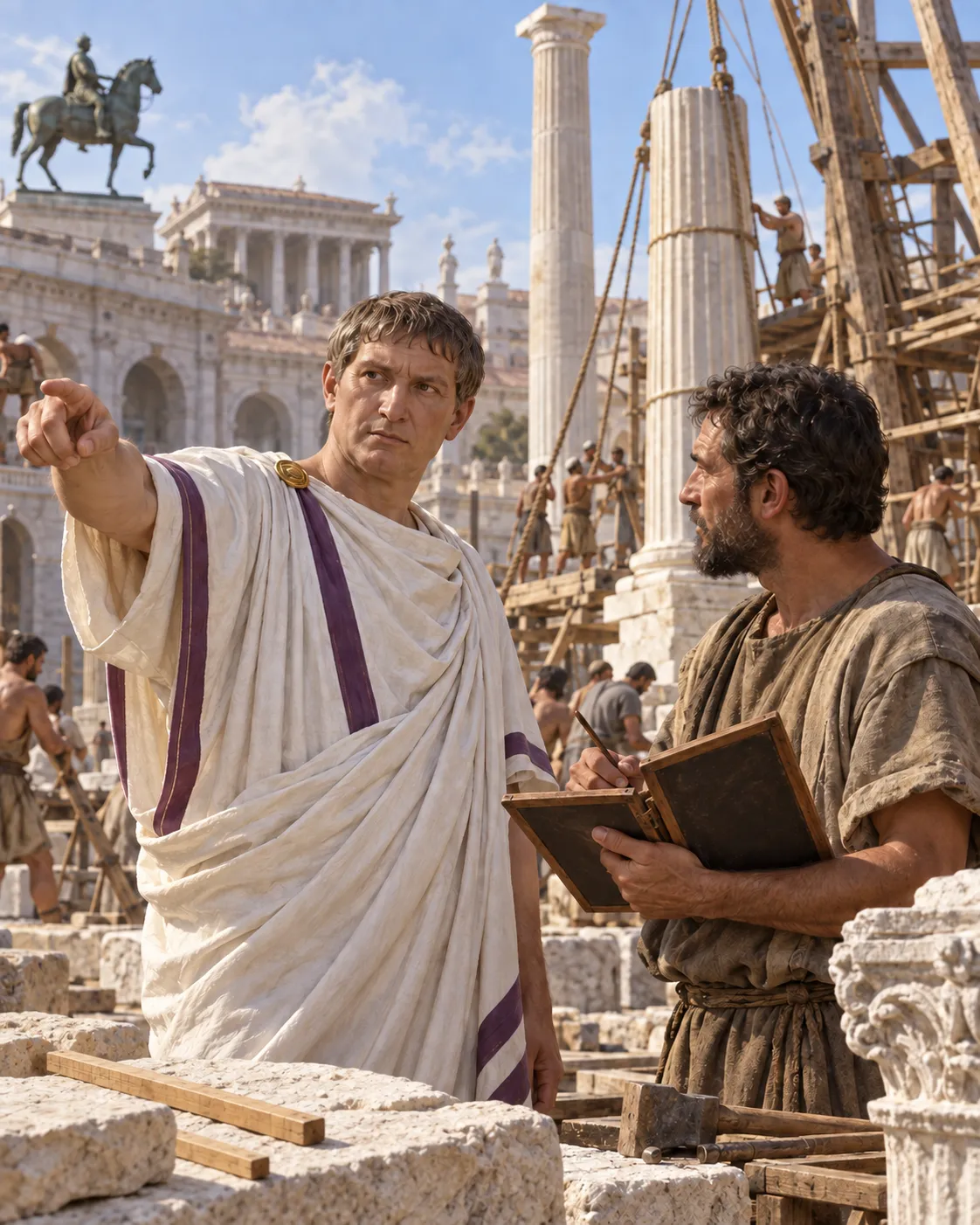
myAudience · original generated contextual illustration · Original generated illustration; not a documentary photograph or authenticated portrait; no source artwork copied.
Trajan ruled the Roman Empire from 98 to 117 CE. His reign is associated with territorial expansion and major public building, within institutions inherited from earlier emperors. The power to undertake those projects depended on taxation, labour and military organisation.
Wars in Dacia and campaigns towards the eastern Mediterranean and Mesopotamia enlarged imperial claims. Maximum territory is not the same as secure long-term administration, and conquest imposed violence and disruption on affected communities.
Trajan's Forum and Column promoted imperial authority through architecture and carved narrative. The column is an important representation of warfare, not a neutral photographic sequence. Its selection and arrangement of scenes belong to the message it was built to convey.
The column's value lies partly in what it chooses to represent. A reader can examine the prominence of soldiers, constructions, ceremonies and the emperor without assuming the relief is a complete campaign diary. Repetition and placement can convey an image of orderly command, while destruction and civilian experience may appear only selectively. Compare that visual message with a dated narrative or administrative trace before accepting it as a full account. This exercise turns an impressive monument into historical evidence with a purpose, rather than allowing visual realism to make imperial claims seem automatically neutral.
Later praise of a good emperor preserves an influential reputation rather than a universal verdict from his subjects. Compare official monuments with administrative and regional evidence, asking how benefits and burdens were distributed.