Egypt across dynasties: river, labour and political change
By Egypt along the Nile · myAudience
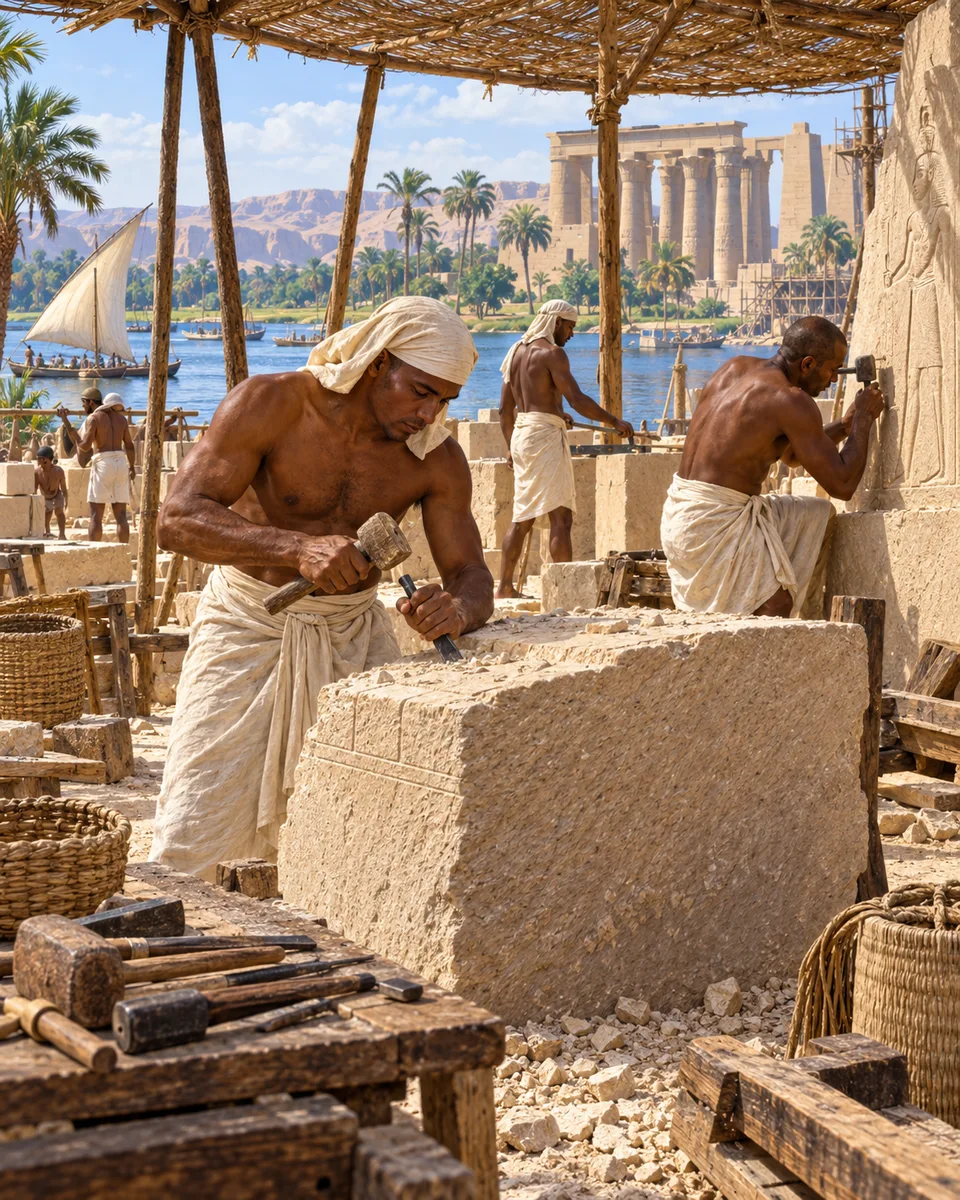
Original AI illustration generated for myAudience · AI-generated illustration; no claim of documentary evidence or authenticated likeness
Ancient Egyptian history spans thousands of years, divided into changing kingdoms and periods of fragmented authority. The pyramids at Giza, Ramesses II's New Kingdom and Cleopatra VII's Ptolemaic court are widely separated in time. A shared Nile landscape does not make every famous monument contemporary with every famous ruler.
River conditions supported agriculture, movement and state resources. Administration and storage connected agricultural production with temples and royal projects. Building required skilled people, food supplies, materials and transport. It is misleading to explain all labour through a single label of slavery or to assume monumental scale proves that everyone benefited equally.
Temples and tombs combine construction with religious and political representation. Inscriptions often proclaim royal success, while surviving objects preserve selected experiences shaped by status and burial practice. A highly finished tomb is not a typical household. Paint traces and later repairs also complicate the imagined pristine stone world of popular reconstructions.
Cleopatra ruled a kingdom established after Alexander's conquest and interacted with the Roman Republic's conflicts. That context differs sharply from Ramesses II's. Compare monuments, administrative records and outside narratives with their dates clearly stated. Egypt's long history becomes more legible through these contrasts than through a timeless sequence of pyramids and royal portraits.