Ramesses II: a life in context
By Egypt along the Nile · myAudience
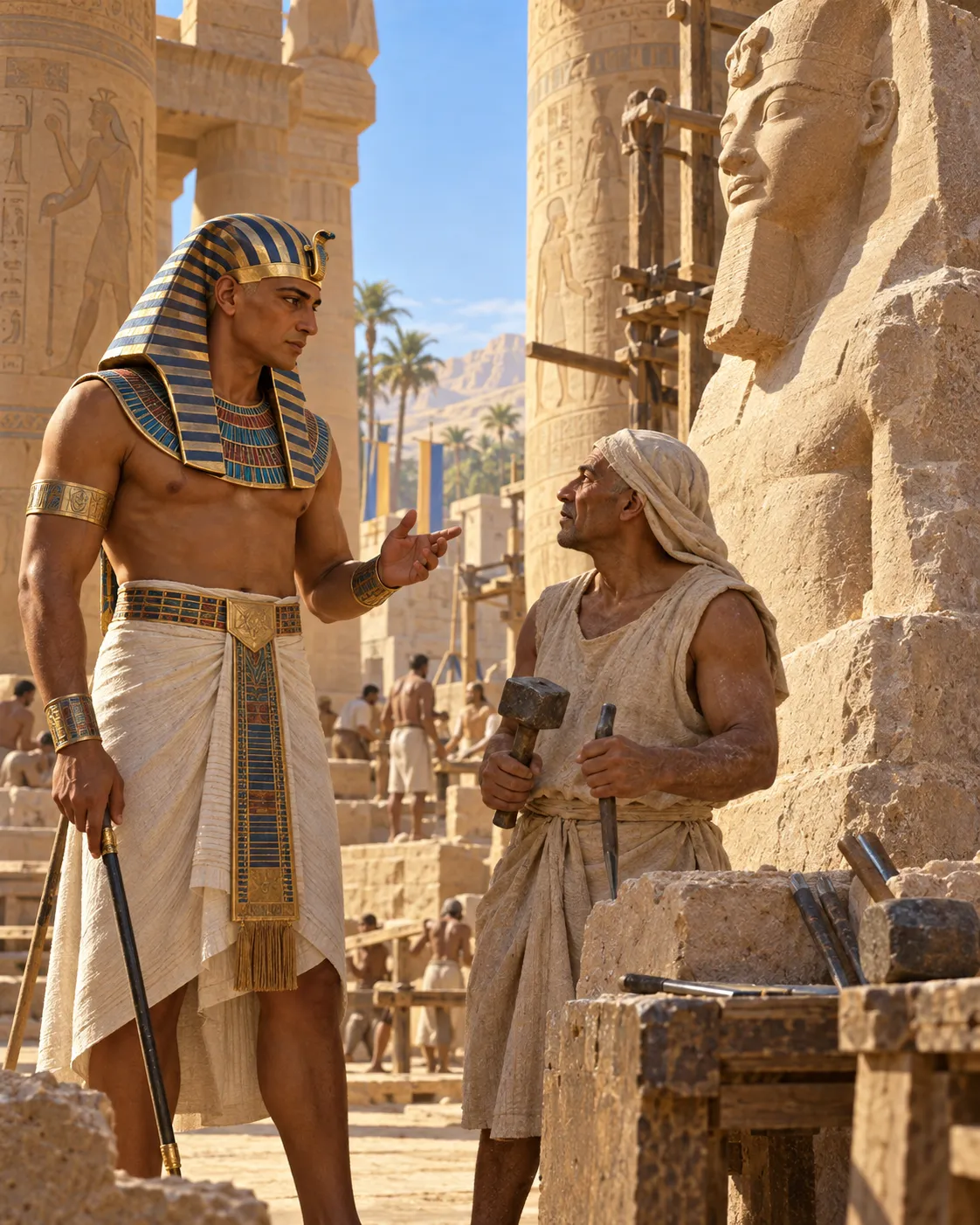
myAudience · original generated contextual illustration · Original generated illustration; not a documentary photograph or authenticated portrait; no source artwork copied.
Ramesses II ruled Egypt during the New Kingdom's Nineteenth Dynasty. His long reign belongs many centuries after the construction of the Giza pyramids. Famous monuments across Egyptian history should not all be attributed to him or placed inside one royal lifetime.
He supported extensive building and commemorative projects, drawing on existing institutions and skilled labour. Repeated royal names and images expressed legitimacy and presence. A monument's claim must be distinguished from the date and work of every earlier or later building phase.
Accounts of the battle of Kadesh glorified his actions, while conflict with the Hittites later involved a treaty. The royal version of military success is not a neutral account of every outcome. Diplomacy is as important as battlefield imagery in understanding the reign.
Royal commemoration often makes a complex encounter appear as the ruler's personal triumph. The educational task is to distinguish the message of that representation from the outcome that other evidence can establish. Place the Kadesh narrative beside the later diplomatic relationship and ask how each supports a different claim about kingship. A treaty and a victorious image need not tell the same story, because they serve different purposes. Likewise, a royal name on a building must be considered with its construction phases before every stone is assigned to one reign. This turns monuments into evidence instead of treating them as automatic confirmation.
Abu Simbel and the Ramesseum are named projects associated with his reign. Their monumental images expressed royal presence in different settings: Nubia and the area of Thebes. Neither belongs to the much earlier building of the Giza pyramids. Associating specific monuments with specific periods preserves the depth of Egyptian history instead of making one famous name the builder of everything.