Greek city-states: shared connections, distinct governments
By Greece in the making · myAudience
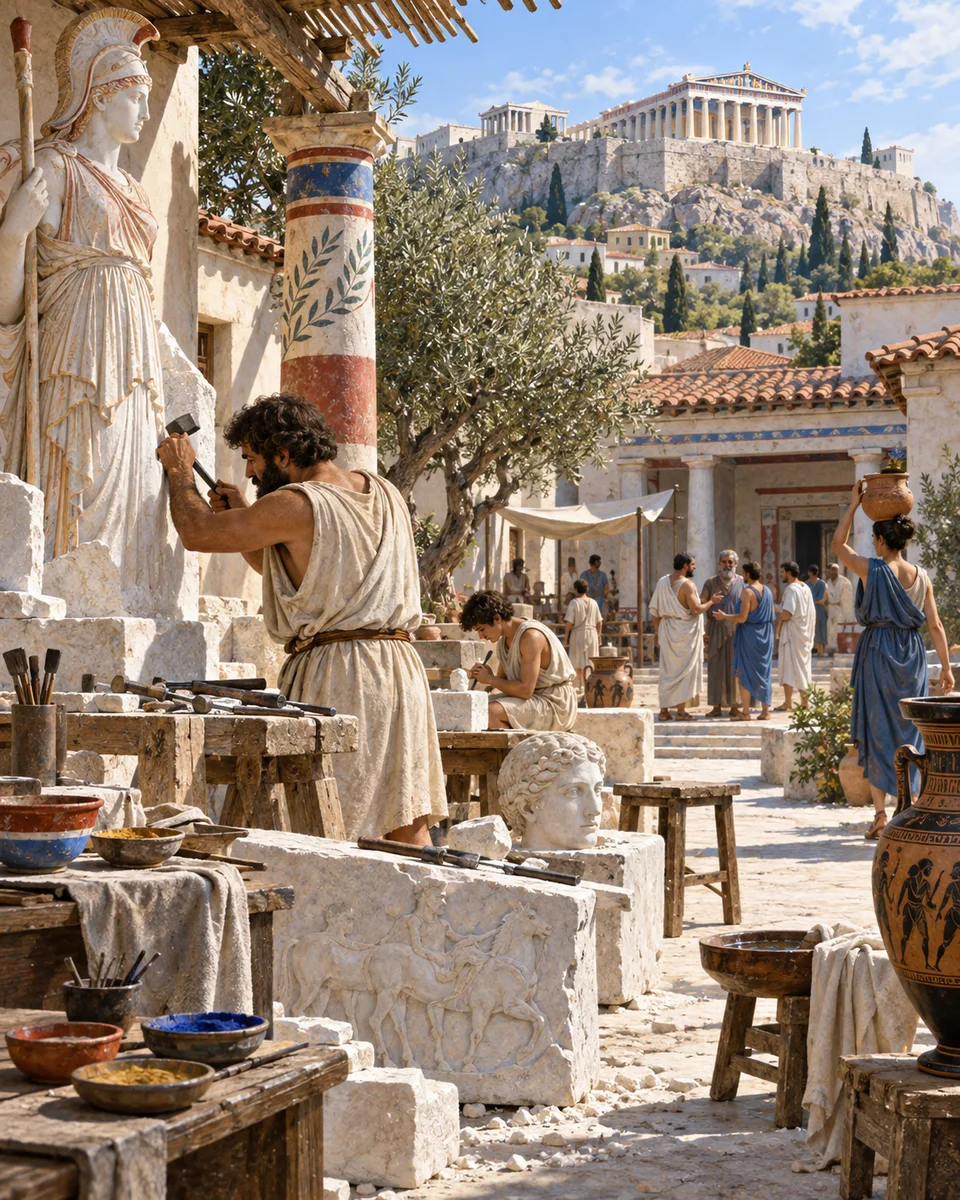
Original AI illustration generated for myAudience · AI-generated illustration; no claim of documentary evidence or authenticated likeness
Ancient Greek communities shared languages and cultural connections but were divided among many city-states. Athens and Sparta were not districts of one permanent Greek empire. Settlements and exchange extended beyond the modern country of Greece. A useful overview distinguishes these political worlds rather than assigning one city's institutions to everyone.
In Classical Athens, assemblies and courts gave male citizens important roles in government. Women, enslaved people and resident foreigners were excluded from assembly voting and these public political roles. Calling it democracy is historically meaningful, but equating it with universal modern voting rights erases the limits that made the system possible for its citizen body.
Temples, theatres and public buildings required resources, skilled work and organisation. Their purposes joined religious practice, civic identity and political display. Pericles belongs to Athens, while Gorgo belongs to Sparta's royal setting. Sculpture and surviving stone should not be assumed to preserve every original colour or all the activities once surrounding them.
Literary accounts, inscriptions and objects offer uneven evidence. A speech transmitted by a historian is not necessarily a verbatim recording, and a luxurious vessel does not represent every household. Compare institutions city by city and date by date. Shared cultural life makes the Greek worlds connected, but their differences and conflicts are essential to understanding them.