Pericles: a life in context
By Greece in the making · myAudience
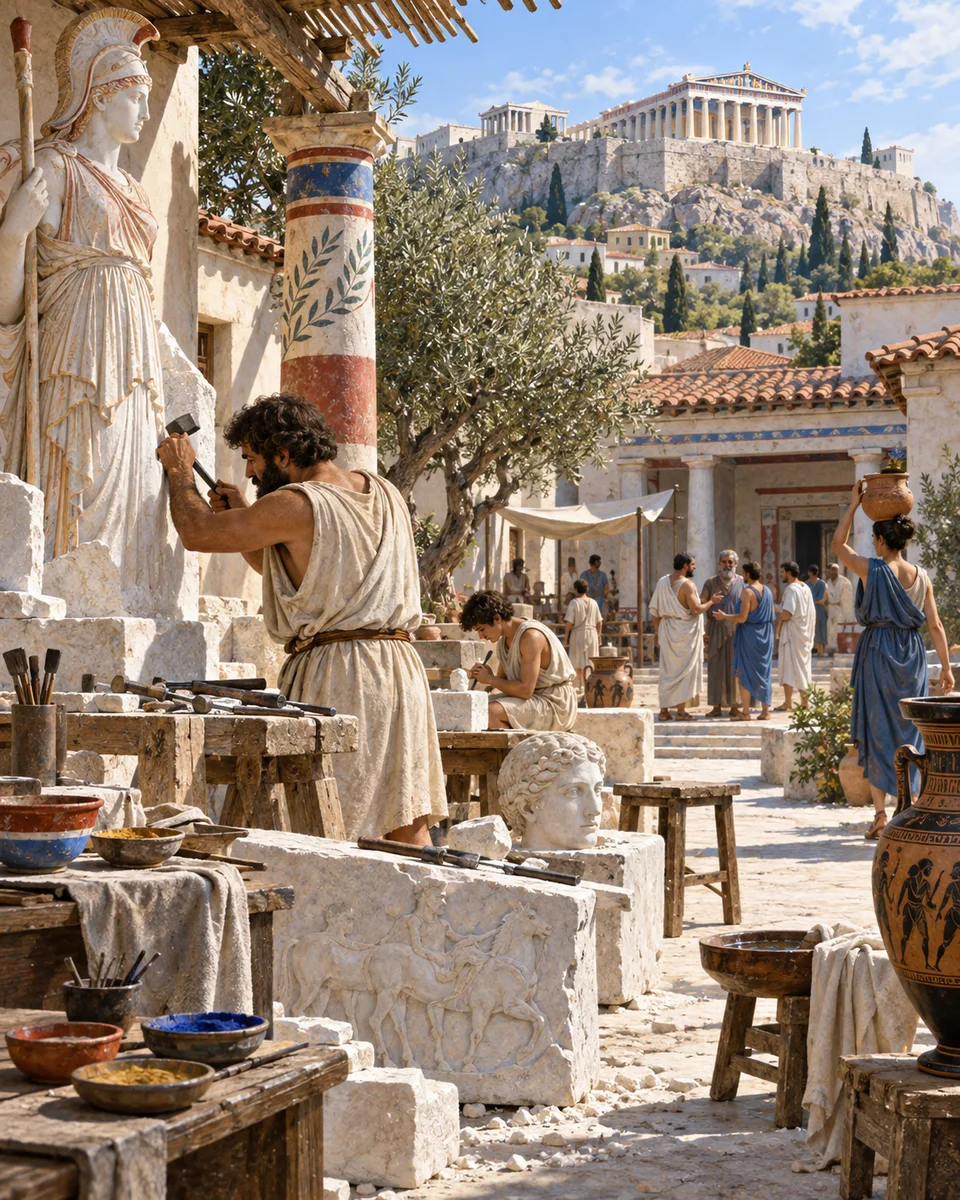
Original AI illustration generated for myAudience · AI-generated illustration; no claim of documentary evidence or authenticated likeness
Pericles was an influential Athenian politician and general in the fifth century BCE. He repeatedly held elected military office within a civic system; he was not a hereditary king governing all Greek communities. His career depended on institutions and political support.
Athens developed public participation among male citizens while excluding women, enslaved people and resident foreigners from assembly voting and public political office. Its wider maritime power imposed unequal relationships on allies. Democratic practice at home and domination abroad could coexist.
Major building projects on the Acropolis formed part of civic and religious display during his period of influence. Craftspeople, resources and political choices made them possible. Architectural splendour is not proof of universal prosperity or approval.
Public building connects the Athenian citizen body with the city's wider power. A monument could express common civic identity while drawing on resources whose collection or distribution was contested. Ask how a decision was authorised, who performed the work and who was excluded from the deciding community. The answers may reveal democratic participation and inequality at the same time. That is more informative than judging ancient Athens solely by whether it resembles a present-day democracy. Institutions should be examined in their own setting without turning their limitations into an excuse to ignore those excluded.
Thucydides is a crucial source, but the famous speeches he presents should not be treated as audio transcripts. Compare narrative, inscriptions and material remains. Pericles' reputation illuminates political ideals as well as a particular historical career.