Gorgo: a life in context
By Greece in the making · myAudience
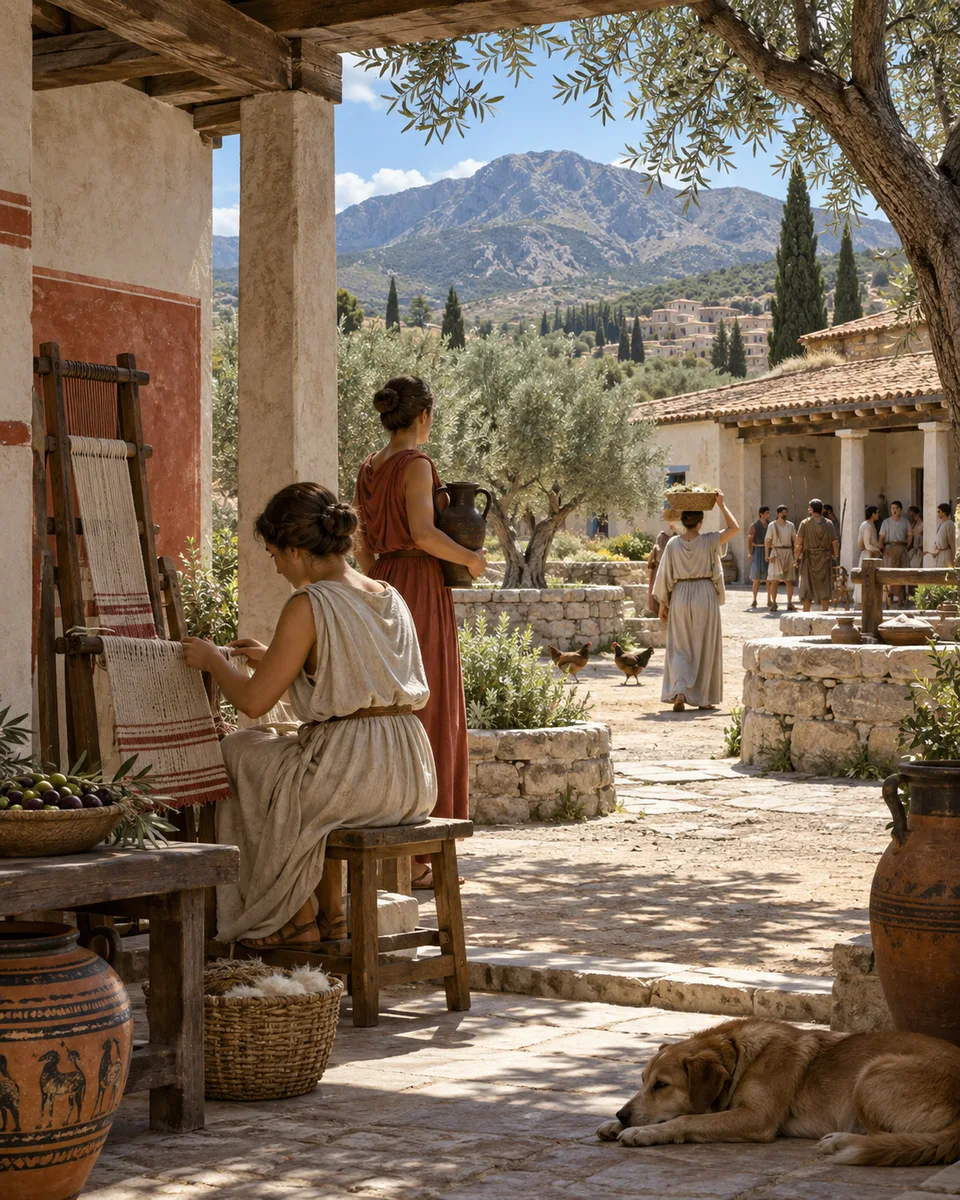
Original AI illustration generated for myAudience · AI-generated illustration; no claim of documentary evidence or authenticated likeness
Gorgo was the daughter of the Spartan king Cleomenes I and wife of Leonidas I. Surviving accounts place her within Sparta's royal family during the period of conflict with Persia. The evidence is too limited to reconstruct a complete personal life.
Herodotus attributes advice and perceptive responses to her, including an episode involving a concealed warning. These stories make her intelligence visible within the narrator's account, but they are literary evidence rather than a direct record of her own words.
Spartan royal women could possess status and influence, yet Gorgo's example cannot establish identical freedom for all women. Society also depended on deeply unequal institutions, including the coercion of helots. Elite agency must be distinguished from universal rights.
Her surviving stories can be read on two levels. One concerns the possibility of elite women's participation in advice and political knowledge; the other concerns why a narrator chose a perceptive woman as the centre of an anecdote. Neither level proves that every reported exchange happened exactly as written. Rather than filling the silence with a fictional governing programme, identify the relationships the account actually gives: daughter, wife, interlocutor and royal participant. This preserves her agency while keeping the scale of the evidence visible, which is particularly important when the reader first encounters her through a vivid image.
A careful biography explains the source limits instead of filling silence with invented military commands or private conversations. A game role or modern portrait is an interpretation, not evidence that she governed every Spartan institution.