Babylon: law, canals and competing royal claims
By Between two rivers · myAudience
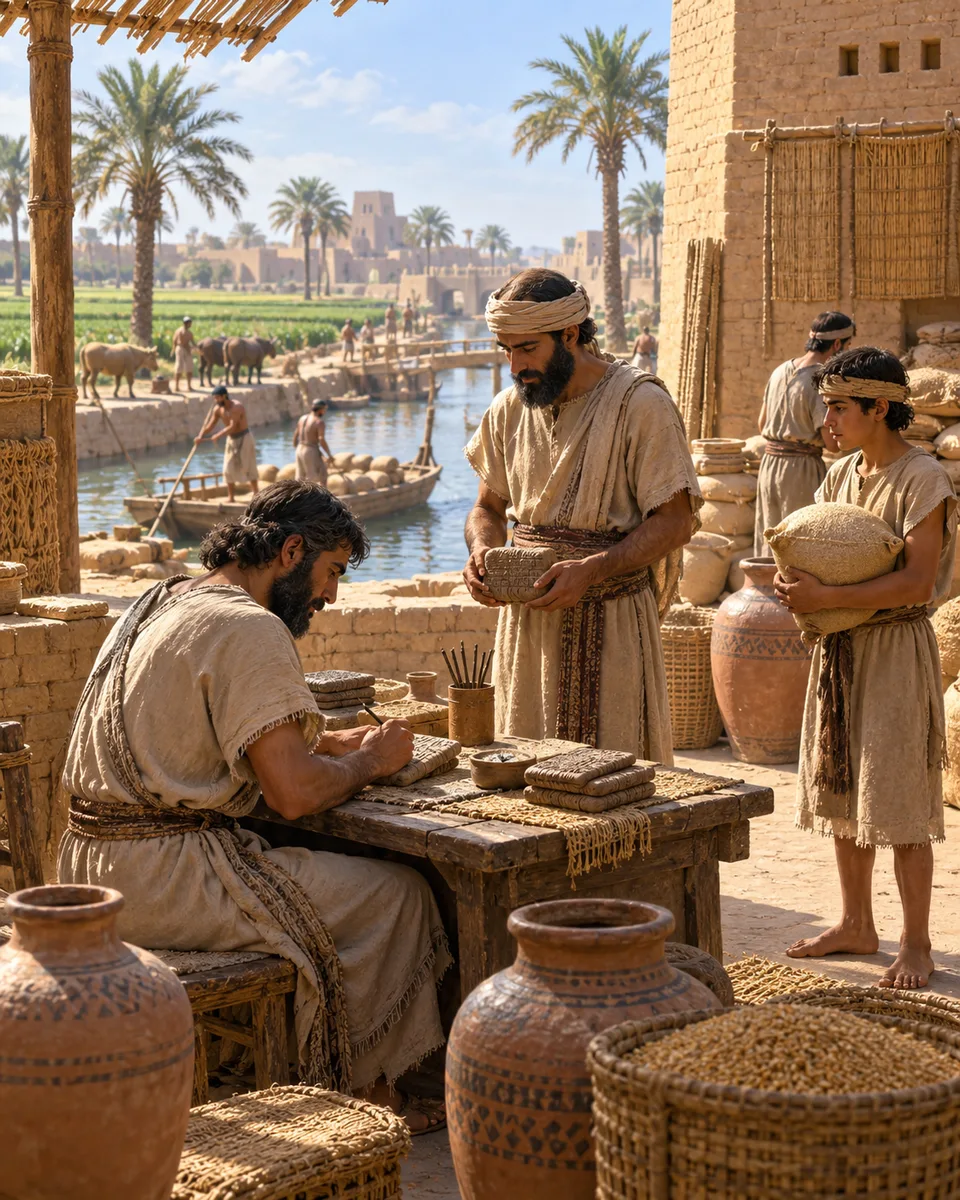
Original AI illustration generated for myAudience · AI-generated illustration; no claim of documentary evidence or authenticated likeness
Babylon was a city whose political importance changed across centuries. Hammurabi ruled in the eighteenth century BCE, while the monumental city associated with Nebuchadnezzar II belongs to a much later kingdom. Mixing their buildings and actions into one reign removes the very historical change that makes the city interesting.
Agriculture depended on river water and maintained irrigation works. Cities linked production, exchange, temples and administration. Clay tablets recorded many transactions and disputes, giving glimpses of ordinary obligations as well as royal projects. Water management required ongoing coordination; canals were not permanent solutions that could simply be built and forgotten.
The inscription commonly called Hammurabi's Code presents royal justice through selected legal cases and a powerful image of kingship. Penalties distinguished social positions, challenging an easy assumption of universal equality before the law. It was neither the first law collection nor a complete record of every judgment actually delivered.
Babylon's later walls and ceremonial gateways expressed another kingdom's power. Archaeological remains and reconstructed museum displays must be distinguished. Compare a royal inscription with a business tablet: one announces an ideal, while the other documents a particular interaction. Together they illuminate institutions without proving that every subject experienced the city as its rulers wished to describe it.