Sumerian cities: water, writing and remembered kings
By Between two rivers · myAudience
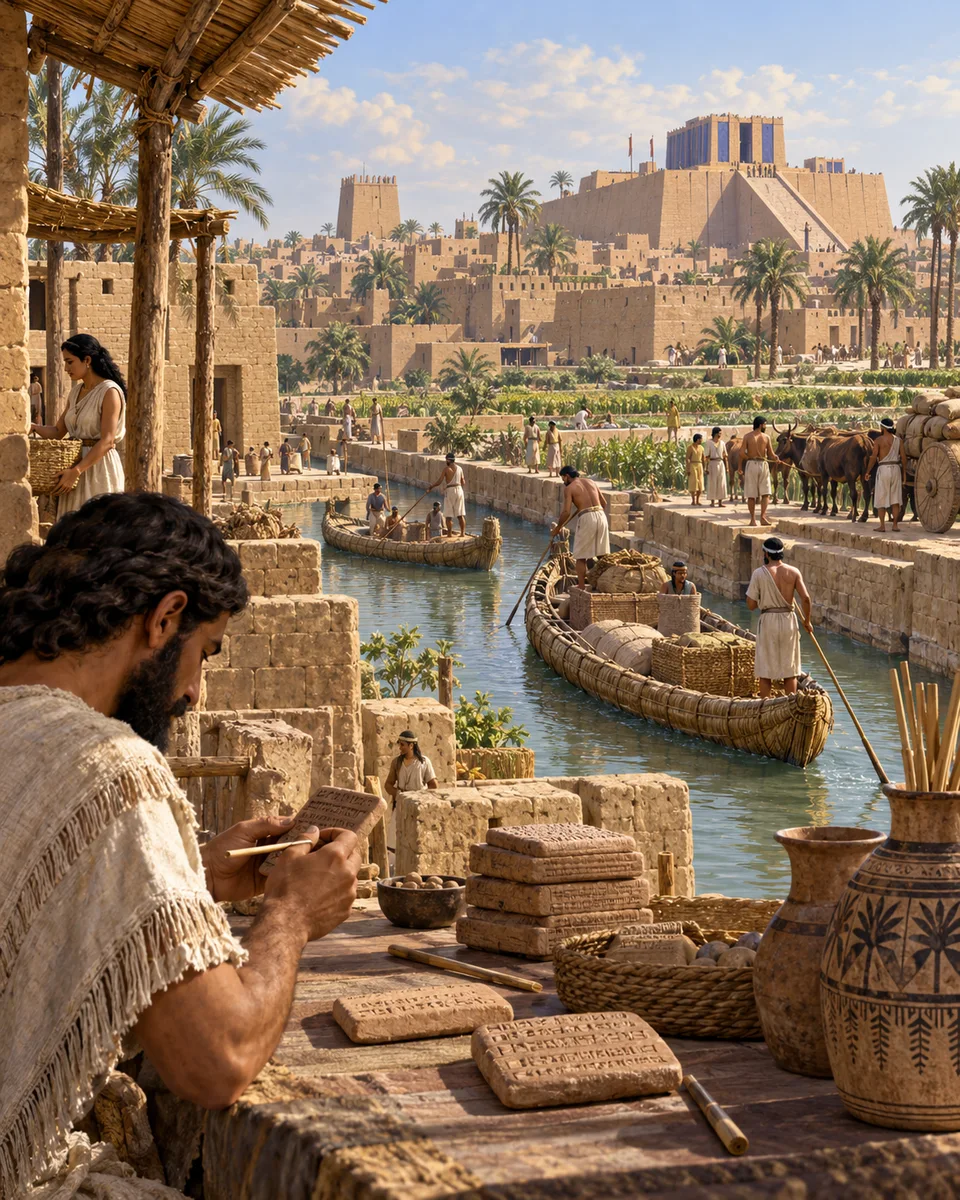
Original AI illustration generated for myAudience · AI-generated illustration; no claim of documentary evidence or authenticated likeness
Sumer refers to an ancient cultural and linguistic setting in southern Mesopotamia, including cities such as Uruk and Ur. These cities were not always governed by one unified empire. Competition and changing alliances shaped political life, while shared practices connected communities across the river landscape.
Irrigation supported agriculture but needed regular maintenance and coordination. Urban institutions organised resources, craft production and exchange. Clay tablets record administrative activity and the development of writing. Counting and recording were practical accomplishments connected to society's organisation, not an isolated invention produced instantly by a single famous person.
Temples and monumental platforms expressed institutional and religious importance. Their construction required preparing materials, organising labour and supplying workers. Surviving buildings and objects reveal selected activities; they do not establish that every household possessed the wealth or authority represented in elite and sacred settings.
In the Gilgamesh stories, friendship with Enkidu gives way to grief and a search for escape from death. Gilgamesh seeks Utnapishtim, associated with a flood story and exceptional survival. These are literary episodes, not verified adventures of a named king. Their enduring questions about loss and the limits of power help explain why later Mesopotamian readers preserved and reshaped earlier tales.