Gilgamesh: a life in context
By Between two rivers · myAudience
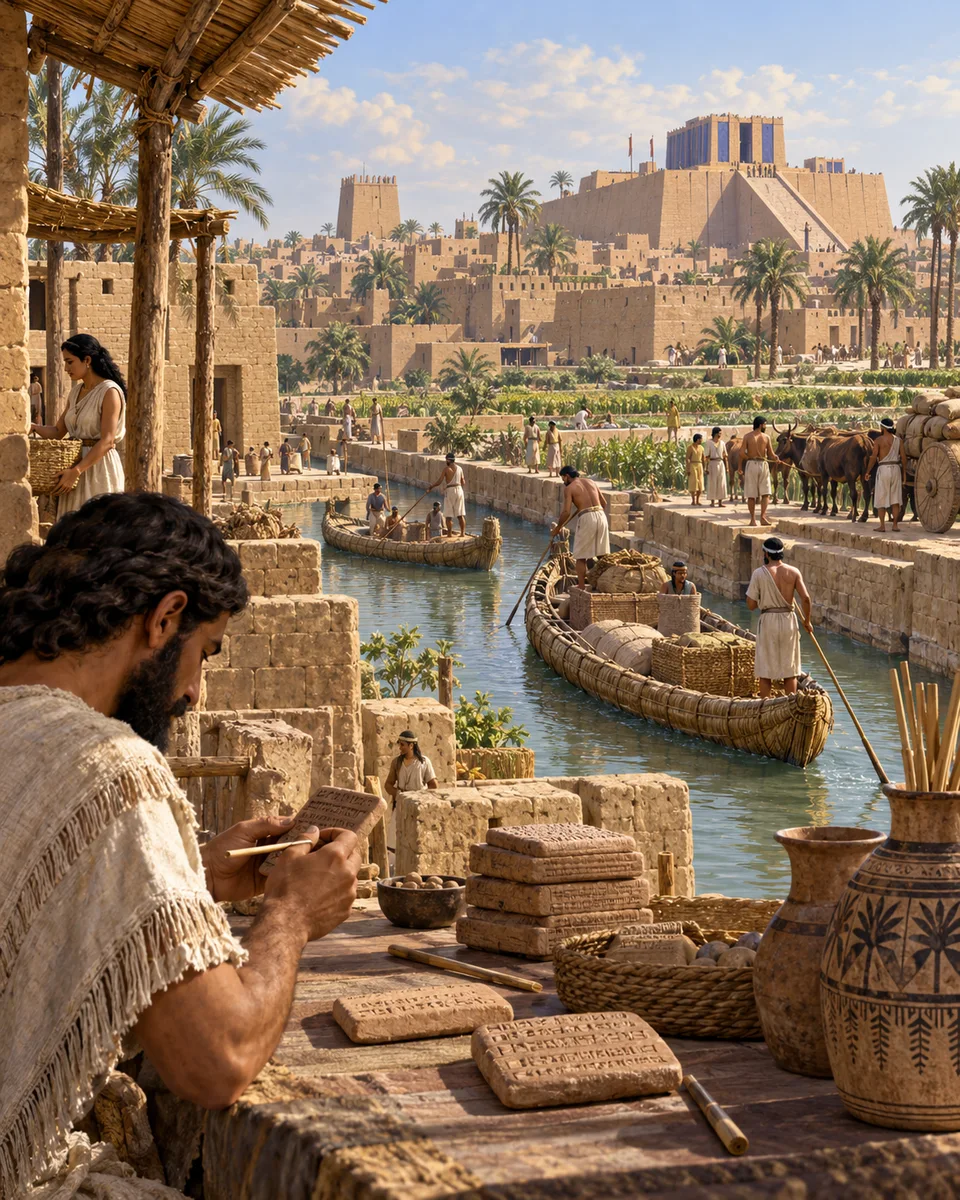
Original AI illustration generated for myAudience · AI-generated illustration; no claim of documentary evidence or authenticated likeness
Gilgamesh is associated with Uruk in Mesopotamian king traditions and appears as the central figure of celebrated literary works. A historical ruler may lie behind the tradition, but the surviving stories do not provide a secure contemporary biography of every episode.
The literary Gilgamesh is powerful and troubled by the limits of kingship. His relationship with Enkidu and later search concerning death make the narrative a reflection on friendship, authority and mortality. These themes are not evidence that supernatural events occurred.
Versions of the stories were composed and transmitted across different periods and languages. Tablets preserve particular stages of that transmission, rather than one unchanged original text written during a demonstrable lifetime.
The epic's concern with mortality provides a meaningful reading activity without claiming supernatural history. Ask how the protagonist's understanding of power changes when strength cannot solve loss or prevent death. That is literary interpretation, not a diagnosis of a historical individual. A separate question concerns the tablets: where a surviving version belongs in the long process of composition and transmission. Putting those questions beside a king tradition shows how an ancient society could remember kingship through several kinds of text, each preserving knowledge without functioning as the same sort of historical record.
Compare the purpose of a king list with that of an epic. Both matter historically, but neither grants permission to present literary adventures as documentary fact. Any reconstruction should be labelled interpretation rather than a recovered portrait of the king.