South Asian histories: distant periods, different institutions
By Ancient South Asian cities · myAudience
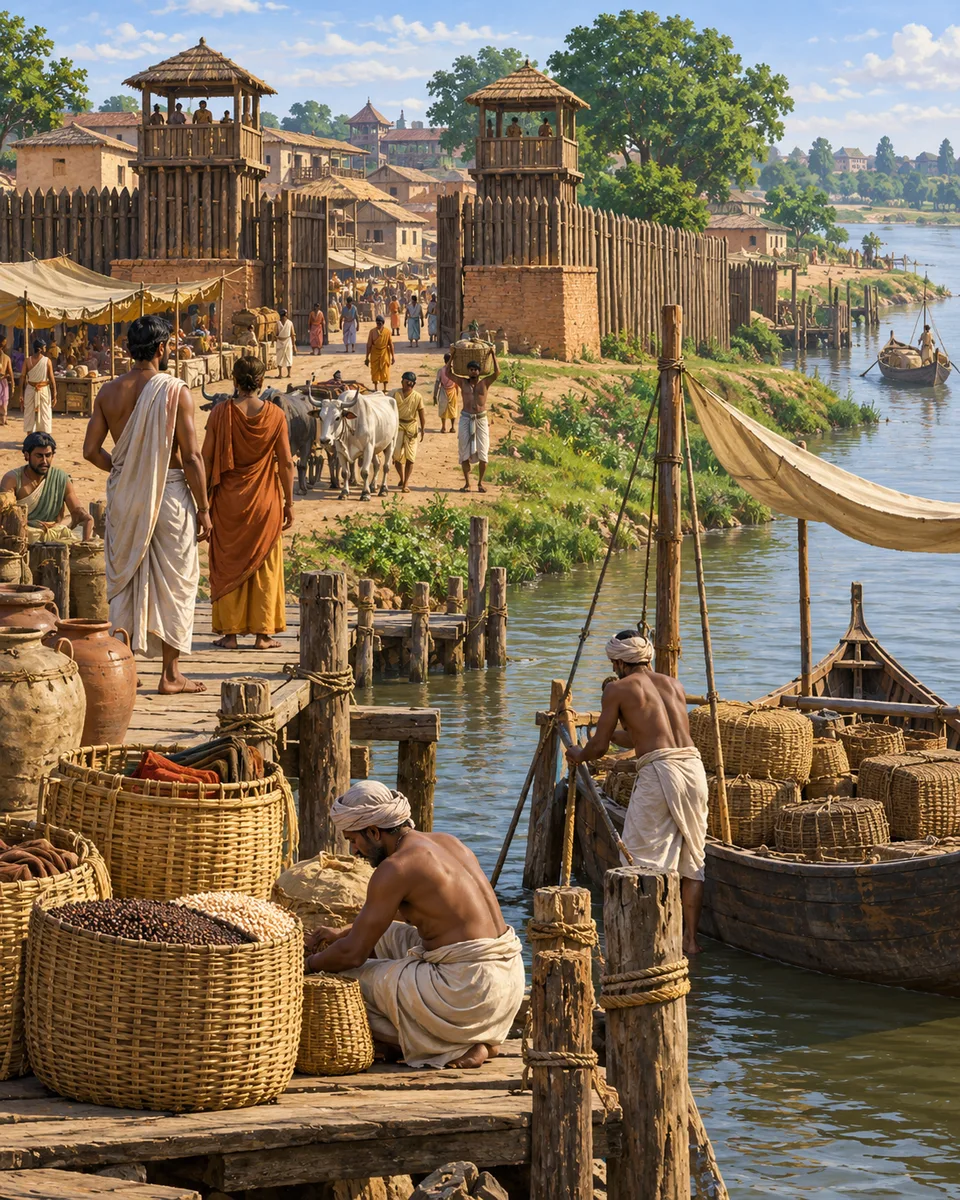
Original AI illustration generated for myAudience · AI-generated illustration; no claim of documentary evidence or authenticated likeness
South Asian history includes many states, languages and communities. Chandragupta Maurya's late fourth-century BCE empire and Gandhi's twentieth-century political activity are separated by more than two thousand years. They should not be presented as rulers of the same unchanged polity. Indus cities belong to an earlier archaeological world again.
The Mauryan state developed across a large and diverse region, relying on institutions, revenue and relationships with local societies. Urban centres and routes connected exchange and administration. Texts associated with government need careful dating and interpretation; a theoretical prescription is not automatically proof that every rule was applied throughout imperial territory.
The independence movement confronted British colonial rule through many organisations and strategies. Gandhi's campaigns made nonviolent mobilisation internationally prominent, but other participants and competing visions were essential. Independence and Partition in 1947 brought new states, enormous displacement and violence; freedom from colonial government did not solve every social conflict.
Gandhi’s 1930 Salt March made an everyday substance a focus of civil disobedience against colonial authority. That practical campaign belongs to a different political world from Mauryan royal inscriptions. The contrast is useful: one asks how people could mobilise against a state, while the other preserves how a ruler addressed subjects across an extensive territory.