Chandragupta Maurya: a life in context
By Ancient South Asian cities · myAudience
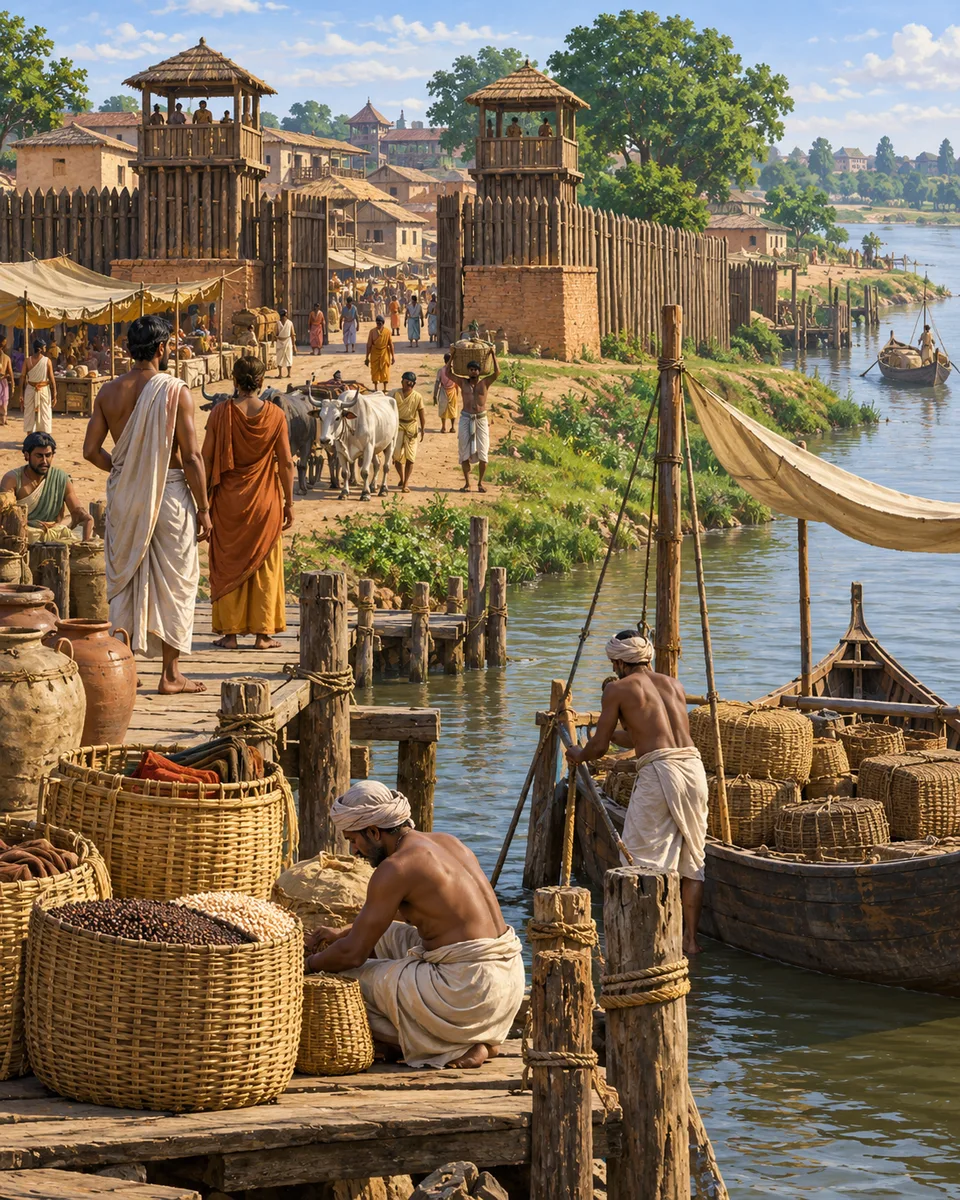
Original AI illustration generated for myAudience · AI-generated illustration; no claim of documentary evidence or authenticated likeness
Chandragupta Maurya established a major state in South Asia near the end of the fourth century BCE. His rise followed conflict in a region changed by earlier powers and Alexander's campaigns. He did not inherit the much earlier Indus urban civilization as an unchanged kingdom.
The Mauryan realm required resources, administrative relationships and military organisation. Traditions associate his rise with Chanakya, but narratives from different periods should not be combined into one unquestioned contemporary biography. A theoretical statecraft text is not a daily record of his government.
Relations with Seleucus I linked his political world to the successors of Alexander. Diplomatic arrangements show interaction across regions, rather than a history confined to one modern border. Later accounts also associate Chandragupta's final years with Jain tradition.
Distinguishing prescription from operation is especially important for ancient statecraft. A text can describe how a ruler ought to organise revenue or authority without proving that its full programme was applied in Chandragupta's reign. A diplomatic account likewise shows one observer's contact rather than a census of every region. Put source type, date and audience beside each claim before combining them. This allows an overview of state formation to remain informative even where the personal biography is sparse, instead of filling every missing administrative detail with the neat system imagined by a later text.
The association with Jain retirement survives in later religious traditions whose details and interpretation are disputed. It belongs beside, rather than in place of, the evidence for relations with Seleucus. A state founder remembered through different religious and political texts cannot be reconstructed simply by merging every surviving story into one continuous eyewitness account.