Chinese dynasties: continuity through substantial change
By China through objects · myAudience
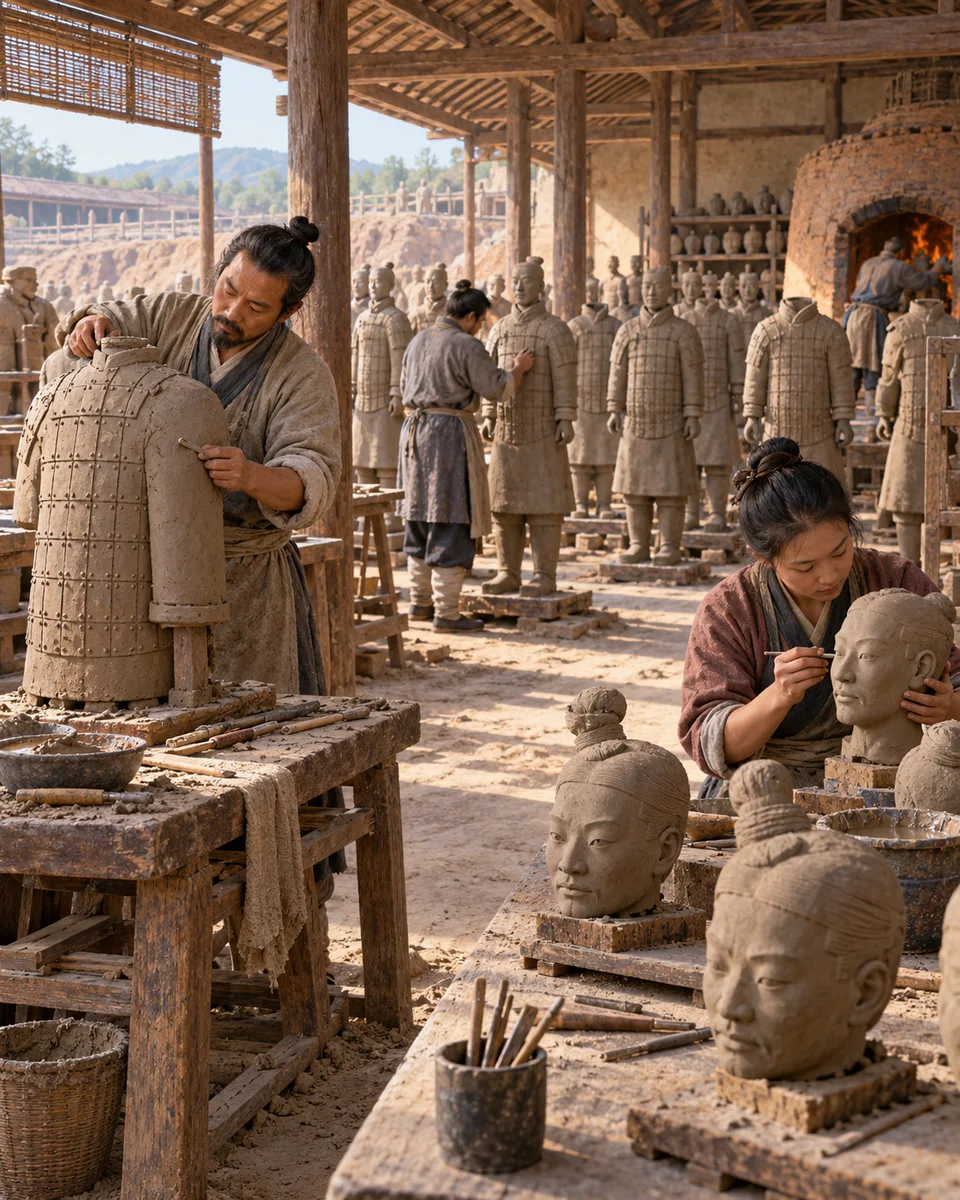
Original AI illustration generated for myAudience · AI-generated illustration; no claim of documentary evidence or authenticated likeness
Chinese history includes many states and dynasties rather than one unchanging empire. Qin unification in 221 BCE, Wu Zetian's rule centuries later, the Mongol-led Yuan dynasty and the Ming court of Yongle belong to distinct settings. Shared cultural traditions do not make their institutions, borders or political problems identical.
The Qin state pursued central administration and standardisation while mobilising extensive labour. Later dynasties adapted inherited systems and developed new practices. Agriculture, craft production, taxation and transport supported government at scale. The people carrying out these tasks were essential to imperial power, even when court histories foreground the emperor.
Writing, monuments and administrative objects can reveal both ambition and practical organisation. The terracotta army belongs to Qin funerary construction, not every Chinese dynasty. The Ming capital's monumental architecture belongs to another period. Placing objects in sequence prevents a visually impressive collection from turning into a historically impossible mixture.
Kublai Khan connects Mongolian and Chinese political histories without making the Yuan simply equivalent to either all earlier China or the whole Mongol Empire. Read a dynastic claim alongside local evidence and ask what changed in governance and daily life. This overview supplies a chronological framework for separate lessons, not complete coverage of a vast and diverse historical region.