Yongle: a life in context
By China through objects · myAudience
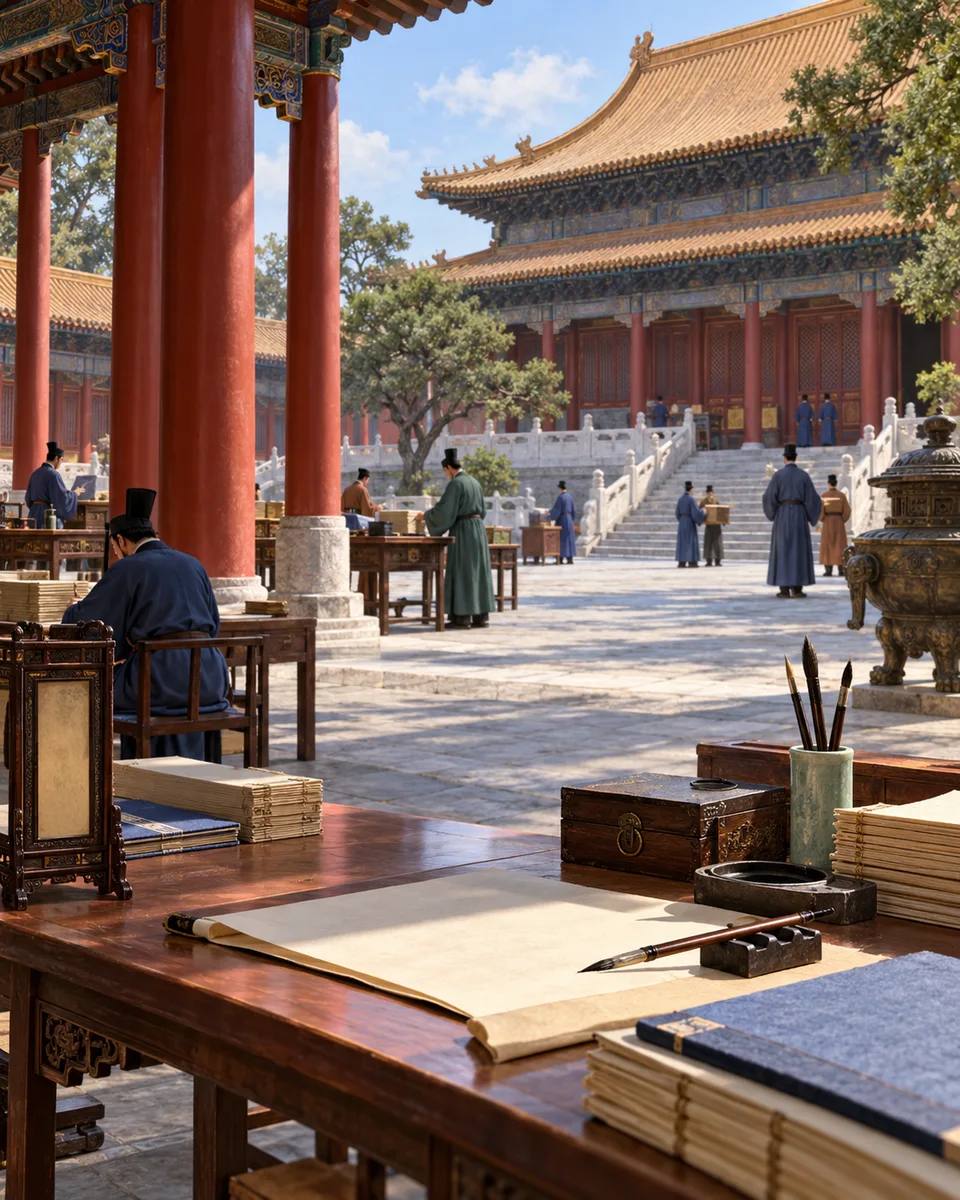
Original AI illustration generated for myAudience · AI-generated illustration; no claim of documentary evidence or authenticated likeness
The Yongle Emperor ruled Ming China after taking power through a civil conflict. His reign from 1402 to 1424 followed the dynasty's founding under another emperor. Royal legitimacy and succession were therefore contested, not simply inherited without political consequences.
He supported major construction associated with the capital at Beijing, including the imperial palace complex. Such projects required immense resources, skilled work and administration. Their splendour should be considered together with the obligations placed on people supplying labour and materials.
The maritime expeditions led by Zheng He expressed courtly and diplomatic ambitions across existing trading worlds. They did not discover societies previously unknown to their own inhabitants. The voyages involved many specialists and political relationships beyond one emperor's curiosity.
Monumental construction and maritime expeditions both express organised state capacity, but they involve different mechanisms and effects. A palace required materials, specialist work and sustained provision at a concentrated site; a voyage required movement, navigation and relationships across distant ports. Comparing those processes makes the achievements intelligible rather than simply large. It also creates questions about cost and participation that courtly celebration may leave unanswered. The ruler's patronage matters, while the knowledge and work of other people must remain visible, particularly when an illustration could otherwise make an entire project look like a personal act of royal imagination.
The capital’s construction between 1407 and 1420 connected Beijing with supply arrangements through the Grand Canal. It was a sustained administrative undertaking alongside maritime expeditions, rather than a palace appearing through one royal command. His father had founded the Ming dynasty; Yongle’s contested accession and rebuilding programme belong to a later phase of that political history.