Maya cities: writing, landscapes and varied political lives
By Maya cities and living heritage · myAudience
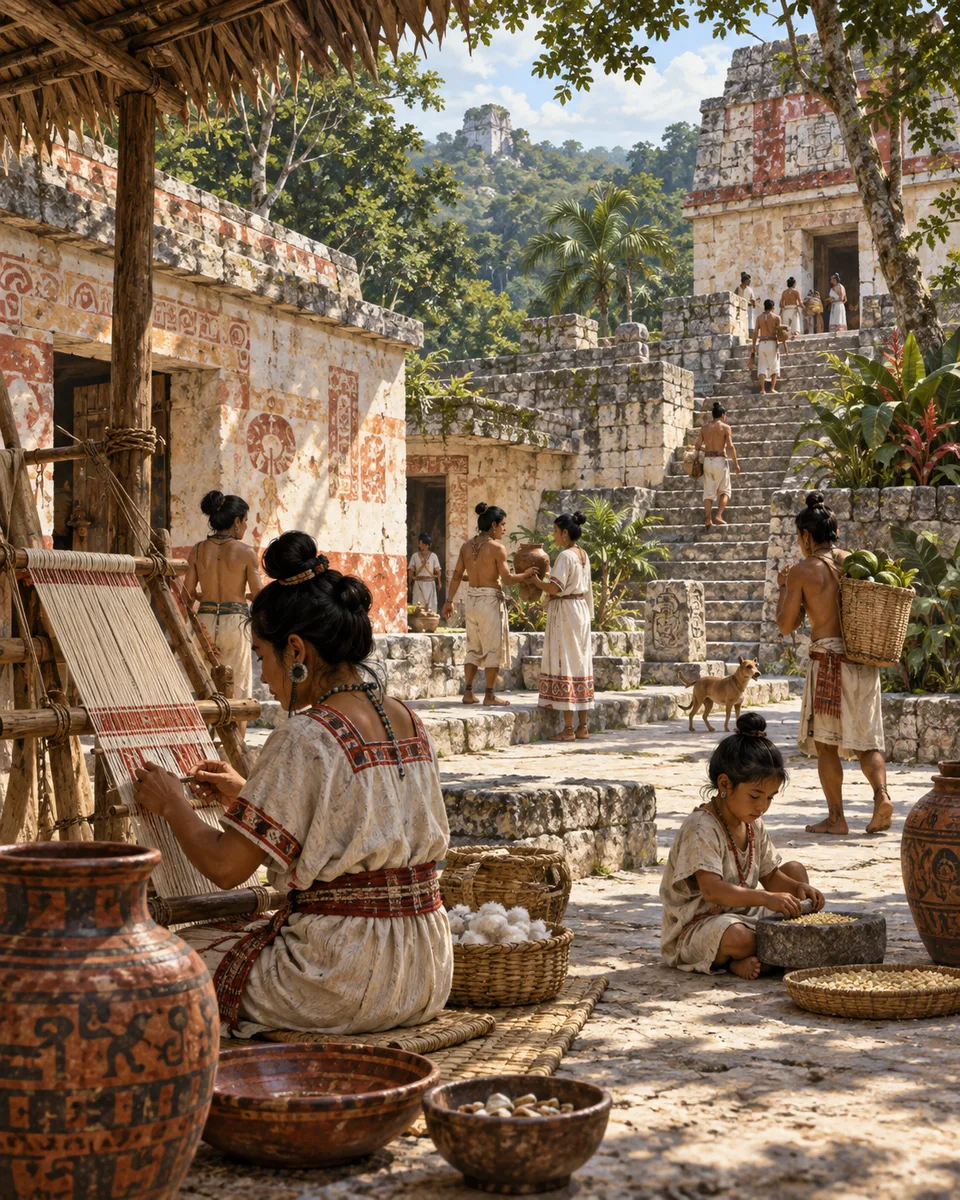
Original AI illustration generated for myAudience · AI-generated illustration; no claim of documentary evidence or authenticated likeness
Maya history concerns many cities and communities, not a single empire ruled from one capital. Classic-period rulers negotiated alliances, fought wars and commissioned monuments in different places. Maya peoples and languages continue today. Political decline in particular cities should not be described as the disappearance of an entire civilization.
Cultivation, water management and craft production supported urban life. Limestone buildings and plastered surfaces required quarrying, fuel, skilled work and maintenance. Local landscapes posed different challenges, so an engineering feature documented at one reservoir should not automatically be assigned to every Maya city or every period.
Maya writing records names, dates and events through a complex system combining signs for words and syllables. Royal inscriptions often foreground dynastic claims and ceremonies. Lady Six Sky belongs to the political history of Naranjo; her evidence cannot be substituted for the institutions of Tikal or all other cities.
The writing system could represent bʼalam, meaning jaguar, with a sign for the whole word or with syllabic signs bʼa, la and ma. This is why Maya glyphs are more than decorative pictures: different kinds of sign work together to record language. Reading names and dates in that system has helped restore individual histories to monuments once treated mainly as mysterious imagery.