Lady Six Sky: a life in context
By Maya cities and living heritage · myAudience
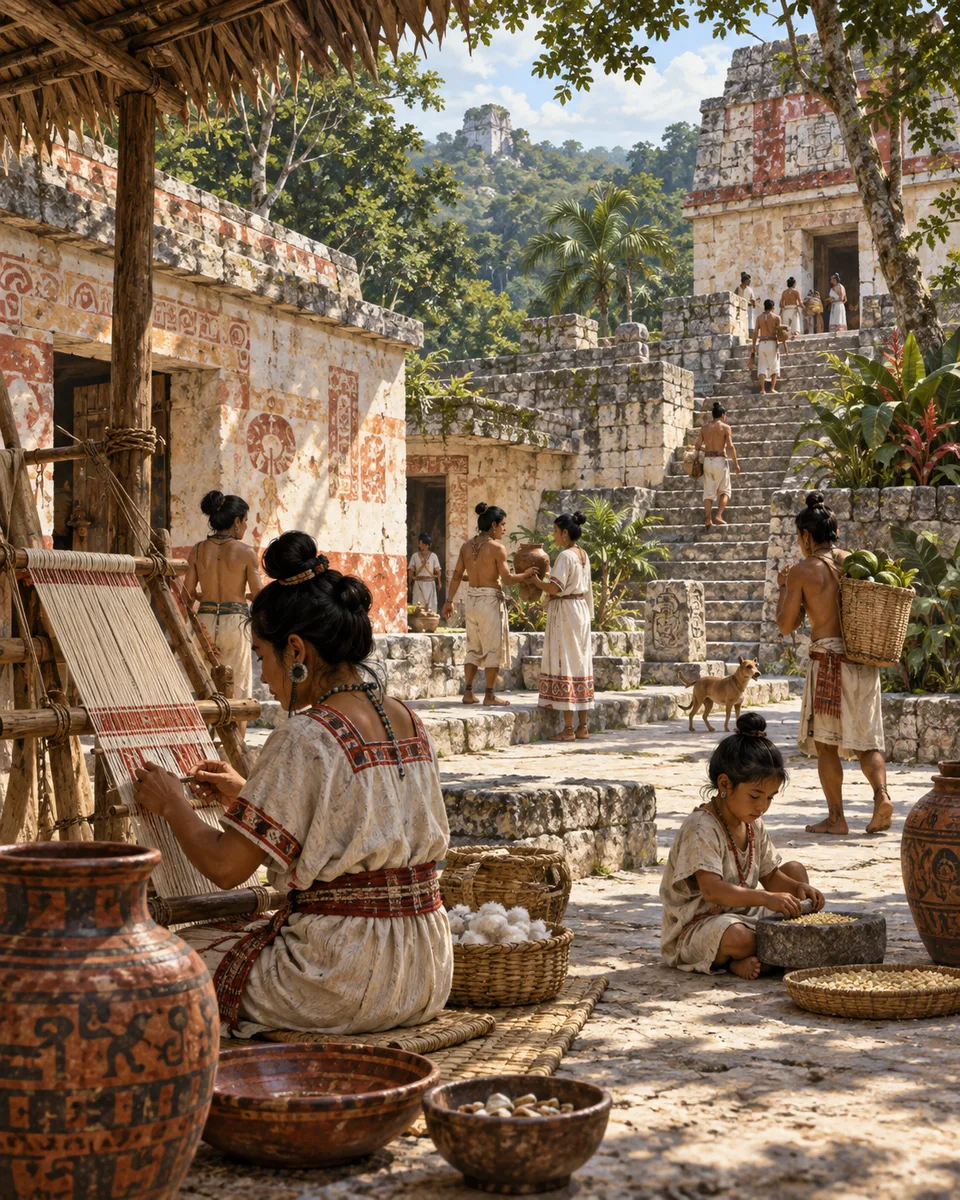
Original AI illustration generated for myAudience · AI-generated illustration; no claim of documentary evidence or authenticated likeness
Lady Six Sky was a Maya royal woman associated with Naranjo in the late seventh and early eighth centuries. Inscriptions connect her with origins at Dos Pilas and a significant role in Naranjo's dynastic history. Her presence is grounded in named monuments, not a general portrait of all Maya women.
Recorded arrival and ritual activity communicate political legitimacy and dynastic relationships. Such monuments were created for elite purposes, selecting events and representing authority. They are valuable sources but not a complete diary of personal intentions.
Her exact title and governing role require careful explanation rather than automatic translation into a modern queen ruling all Maya territory. Maya cities had distinct institutions and conflicts. Naranjo's narrative should not be substituted for Tikal's or every other city's history.
An inscription's precision about a date can coexist with uncertainty about the modern label applied to a role. The useful sequence is to identify what the text and image actually record, explain their political setting, and then mark the interpretation being proposed. A ritual represented prominently might support authority without revealing the full division of daily governing work. That makes epigraphy a powerful but bounded source. Readers should learn why a named woman becomes visible through selected monuments while many other participants remain unnamed, rather than imagining that the surviving record is a complete and neutral account of the city's leadership.
Her arrival at Naranjo is recorded in 682. Stelae 24 and 29 preserve events connecting her with royal ritual and the birth of her son in 688, while her Dos Pilas title remained significant. Such named evidence is more informative than a generic image of a Maya queen: it links one life with a particular city’s dynastic relationships and leaves the exact division of governing responsibilities open.