The United States: institutions and unequal freedom
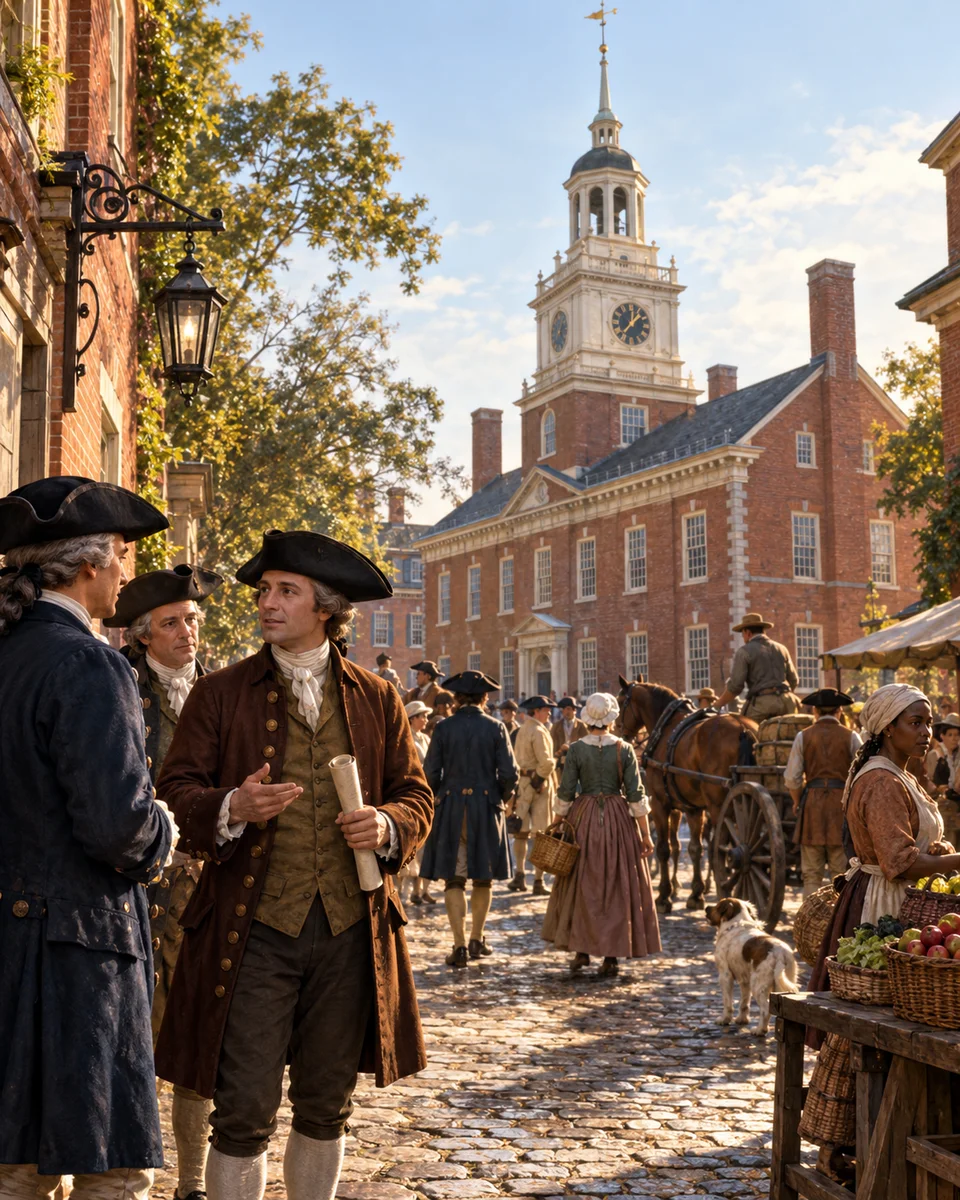
myAudience · AI-generated original illustration · Original generated artwork; not documentary evidence or a grant of landmark/cultural rights. No third-party image reproduced.
The United States emerged from British colonies, but its territory was already home to diverse Indigenous nations. Independence declared in 1776 created a political project rather than an empty land waiting to be built. The Constitution established federal institutions while leaving major conflicts over representation, sovereignty and slavery unresolved.
Expansion depended on settlement, transport and economic development, alongside Indigenous dispossession and forced labour. Railways and industry connected markets but also required land, investment and workers. A map of growing national territory therefore records changing power, not a harmless technical achievement or automatic consent from the people affected.
Slavery was central to the crisis that produced the Civil War of 1861–65. Abraham Lincoln's leadership mattered, as did enslaved people's actions, abolitionists and soldiers. The Thirteenth Amendment abolished slavery and involuntary servitude while retaining an exception for punishment after conviction; Reconstruction's struggles show that this did not instantly secure equal citizenship or protection from racial violence.
Theodore Roosevelt belongs to a later period of reform, conservation and overseas power. His career cannot stand in for every American experience. Read a constitutional claim beside a petition or personal account, asking who could exercise the promised rights. This overview introduces contested institutions and change; it is not a complete history of the many peoples within the country.
Image: speculative AI reconstruction; uncertain details.
Scene: Philadelphia-inspired civic street, eighteenth century; tower details interpretive, not a verified original building state.