Ayyubid power: cities, schools and craft
By Arabian and Ayyubid worlds · myAudience
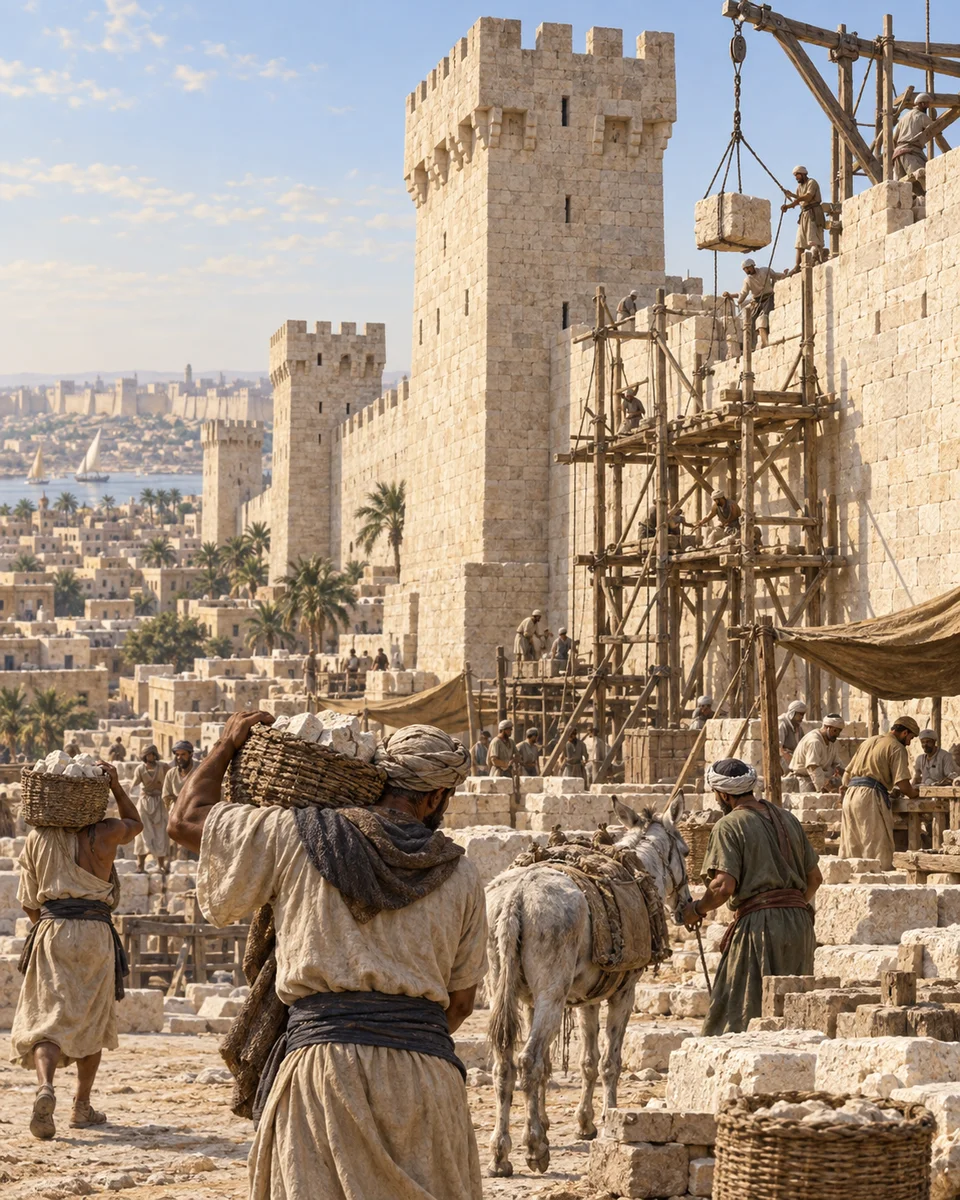
myAudience · AI-generated original illustration · Original generated artwork; not documentary evidence or a grant of landmark/cultural rights. No third-party image reproduced.
Saladin, a Kurdish commander, established the Ayyubid sultanate in Egypt in 1171 after ending Fatimid rule. His dynasty also gained territory in Syria. The name Arabian worlds is a collection heading, not a claim that the dynasty came from the Arabian Peninsula or governed one culturally uniform population.
Ayyubid patrons supported fortified citadels, religious schools and skilled craft production. Surviving metalwork includes silver-inlaid brass; some pieces carry Christian imagery. Buildings commissioned by Saladin’s sister and by Shajar al-Durr also show women acting as architectural patrons. These examples widen the story beyond a commander and his battles.
A school, a citadel and a decorated vessel answered different needs. Read them together as evidence of defence, education and patronage, rather than assuming that every object served the same political message. Religious associations do not make an artisan’s work a straightforward statement of that person’s private convictions.
The Met’s overview connects these objects with the dynasty, but does not provide a complete account of every province or household. Jerusalem changed hands during this period, and Egyptian Ayyubid power ended with the rise of the Mamluks in 1250. Distinguish the lifespan of a dynasty from the continued use of its buildings and techniques.
Image: speculative AI reconstruction; uncertain details.
Scene: Ayyubid Cairo fortification construction, late twelfth to early thirteenth century; workers and machinery interpretive.